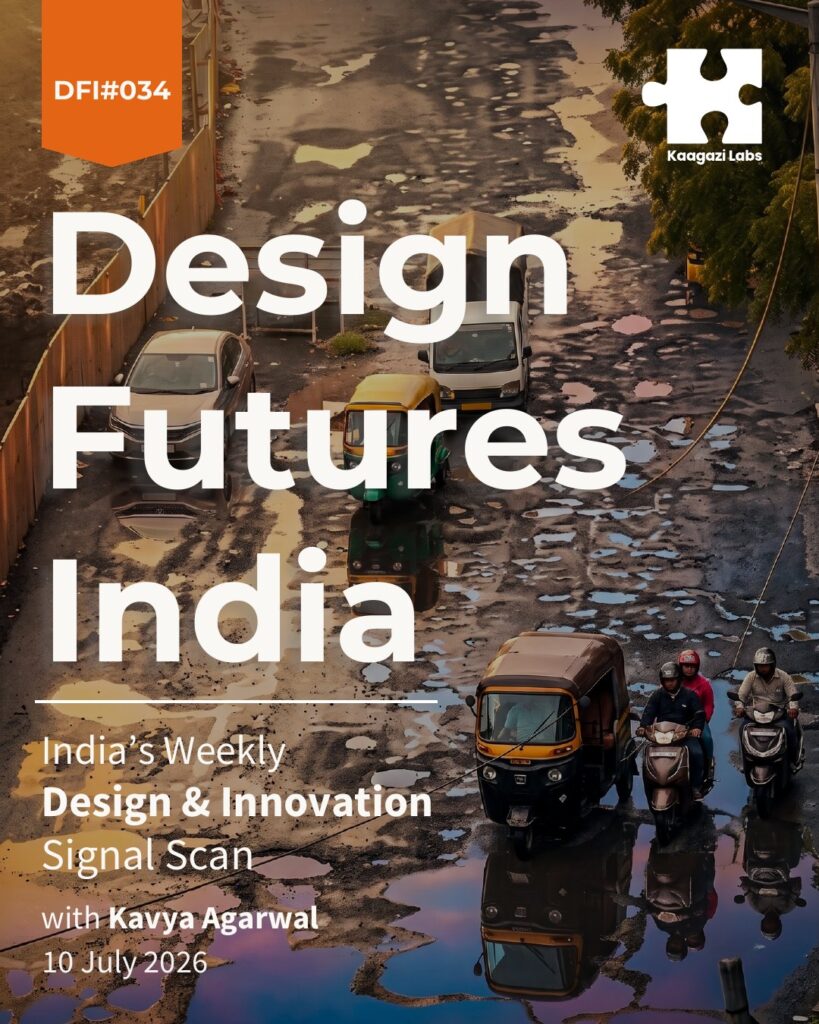
Design Futures India · 10 July 2026
DFI #034
In this edition: India’s financial capital drowns in it’s bad civic design; Why is no one talking about India’s UX4G Design System?; The Delhi EV Policy 2026; and more.
-
India’s financial capital drowns in it’s bad civic design

India’s flood problem is not a lack of plans. It is a lack of intent and accountability. On paper the disaster framework is coherent, from the national authority down to the city. In practice it breaks at the last body in the chain. Urban Local Bodies must keep drains clear and cities dry, yet they are under-funded, under-mandated and under-monitored. The 74th Amendment promised them authority. States kept it. So the drain that floods your street belongs to three departments yet, no one. Mumbai’s lakes sat near 10 percent this June while its streets drowned in July, one month short of water and swimming in it. Good systems assign responsibility and accountability. This one spread it until it belonged to none. The flood is not an engineering failure. It is an organisational one. India can desilt the same drains every July, or fix the law that that decides who is accountable to the people.
News Source: Down to Earth
From Design Futures India DFI #034, 10 July 2026. Read the full edition →
-
Why is no one talking about India’s UX4G Design System?
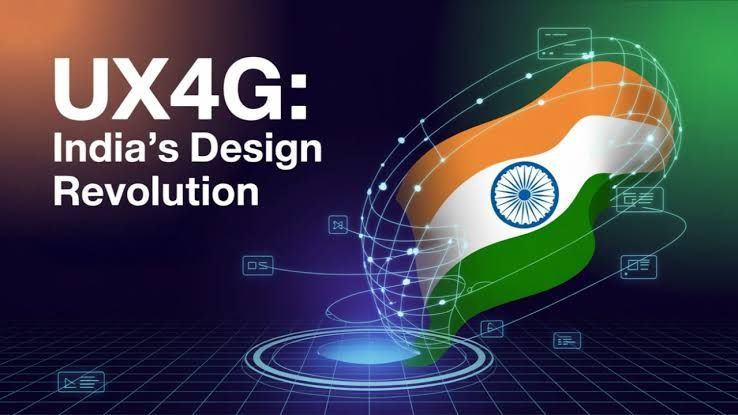
India has quietly built a UX design system for its own use and nobody in the design world is talking about it. UX4G, now in version 3.0, is a shared kit of 40-plus components, colours, fonts and accessibility rules that any department can drop into a website or app. It already sits under UMANG, DigiLocker, DIKSHA and Poshan Tracker. Built in: WCAG accessibility, dyslexia-friendly fonts, text resizing, screen-reader support. For a citizen, that layer decides whether a form can be read on a cheap phone, or by someone who cannot see well. The shift is from building isolated websites to standardising a citizen’s interaction experience with the state itself. The kit is free and open for all on GitHub and Figma, so anyone can build a product on the same accessible, government-grade foundation, no permission needed. The government has quietly brought design expertise to people and you should know about it!
News Source: ux4g.gov.in
From Design Futures India DFI #034, 10 July 2026. Read the full edition →
-
The Delhi EV Policy 2026
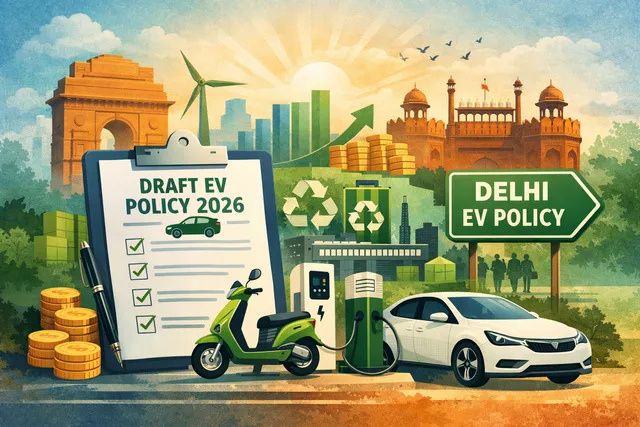
From 1 July, Delhi switched on an EV policy that runs to 2030, and it does one thing with unusual clarity. It picks pure electric and drops everyone else. Hybrid vehicles get no tax relief. New petrol and CNG two-wheelers cannot be registered from April 2028. Commercial autos and goods carriers hit a 2027 cutoff. Schools must electrify buses in stages to 2030. Subsidies flow through an Aadhaar-linked portal, ₹30,000 for a scooter, ₹50,000 for an e-auto, paid within 60 days. The real lever is not the cash benefit. It is the registration ban. Delhi is redefining the default choice so the clean energy becomes the only choice. That holds only if two things keep pace: the 32,000 promised charging points, and financing for the common driver who cannot absorb a costlier vehicle. A ban/constraint is easy to design. A transition is much harder. Delhi has drawn the deadline. Has it designed the infrastructure that gets everyone up to it?
News Source: Times of India
From Design Futures India DFI #034, 10 July 2026. Read the full edition →
-
AdiVaani, India’s indigenous tribal language AI platform

Most AI learns the languages that already dominate the internet. India is trying the opposite. Adi Vaani, a government-backed platform, builds AI translation for 22 tribal languages the larger models ignore, Santali, Mundari, Gondi, Bhili, tongues spoken by millions but barely present online. It moves them to and from Hindi and English, and digitizes folklore, oral histories and health advisories so speakers can meet the state in their own words and dialects. The design choice matters because AI is also becoming infrastructure for how languages are preserved and circulated. But preservation also carries a risk. To digitize an oral language, someone must fix a spelling, pick a dialect, settle on a standard, and that standardization can flatten the very diversity it means to save. For now Adivaani looks like a pivotal step towards inclusive digital governance and education, ensuring citizens can access information and services in their native languages.
News Source: DD News
From Design Futures India DFI #034, 10 July 2026. Read the full edition →
-
CBSE’s Three Language Design and its implications
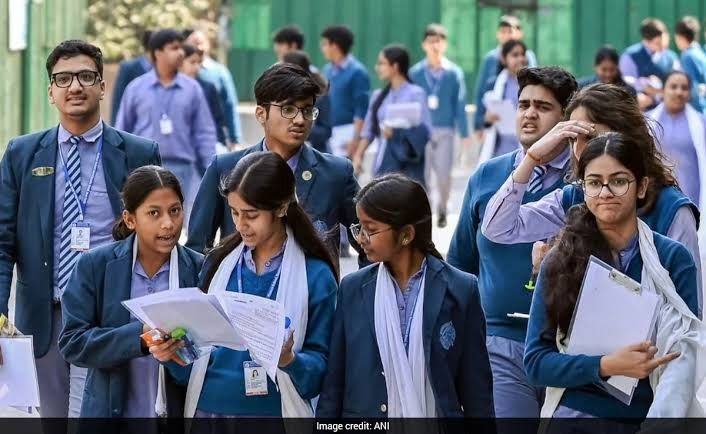
From July 2026, CBSE requires students entering Class IX to study three languages, at least two of them Indian, in line with the National Curriculum Framework. Urban parents protested. Petitions reached the Supreme Court, which declined to stay the policy. Then the Centre clarified the edge, calling it explanation, not rollback. Students already in Classes VII, VIII and IX who chose two foreign languages can continue to Class X. The two-Indian-language rule now applies only from Class VI, going forward. Officials say 98.5 percent already follow the formula, so the friction sits with a small minority. Like most recent education reforms,the rule was written before infrastructure was mapped, and much was left undesigned: the third-language teachers schools cannot hire, the R3 textbooks that are not ready, the unplanned transition. The real lesson is not what children learn but which schools can afford to teach the new “design of education.”
News Source: Times of India
From Design Futures India DFI #034, 10 July 2026. Read the full edition →
-
India has Ai jobs, but struggles with skills and capability
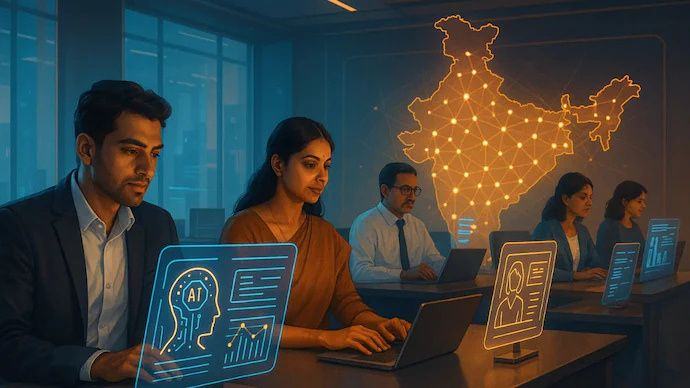
Ask an Indian graduate to define a neural network and many can. Ask them to build one, judge it, or distrust it, and many freeze. That gap is the whole story. The jobs are real, close to 2.9 lakh AI roles last year, climbing toward 3.8 lakh, AI skills now named in one advert in seven. Yet only four in ten graduates are judged industry-ready, and fewer than one in ten AI applicants can do the work. The shortfall is not coding. It is the inability to sense when a fluent machine is confidently wrong or misaligned. Syllabi turn over in years, tools turn over in months, so the curriculum keeps teaching the vocabulary and missing the skill. When the machine makes the answer, the scarce skill is discernment, judgement and human centered values. This is the ground design already stands on, asking what a tool is for, who it fails, and what it costs. This is where design education comes in. Not to teach the next tool, but to teach the judgement no tool can replace.
News Source: The Week
From Design Futures India DFI #034, 10 July 2026. Read the full edition →
-
AI & India’s Copyright Law

Type a prompt, get some art. Type another, get a logo. But who owns what AI has made? Indian law has no clear answers for this. It still defines an author as a person, and a 1994 clause written for CAD software credits whoever “causes the work to be created.” Generative AI breaks that logic, because the human feeds a line and the model does the thinking. In 2020 the Copyright Office registered an AI, RAGHAV, as co-author of an artwork, then withdrew it within a year. The case is back in court. For artists, creators and designers the stake is direct. Your AI-assisted work is protected only if you made real creative choices: prompt, curation, iteration, selection. The underlying signal to catch here is that authorship is quietly moving from the hand that renders to the judgment that directs the design. The machine can make the artefact. It cannot yet own it. Can you prove you do?
News Source: Mondaq
From Design Futures India DFI #034, 10 July 2026. Read the full edition →
-
A tribute to Girish Bhardwaj, the Bridgeman of India
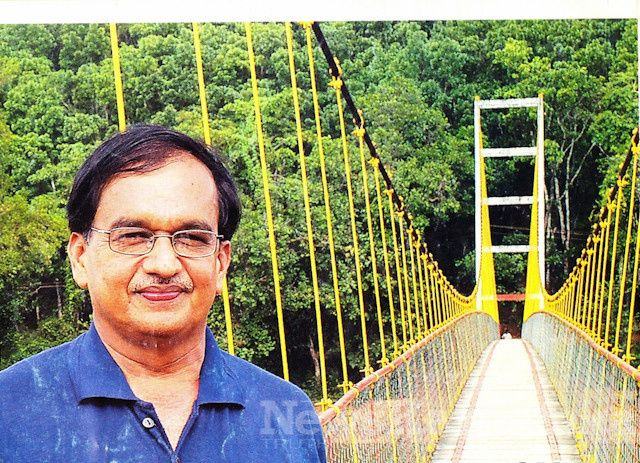
Girish Bharadwaj (2 May 1950 – 7 July 2026) was an Indian social worker often referred to as Sethu Bandhu and Bridgeman of India for building around 127 bridges in remote villages acros India. But a number does not tell you what a bridge meant there. For more than thirty years, Bharadwaj went to the places the map forgot. A river between a child and her school. A stream between a farmer and the market. He answered with a hanging footbridge, light, low-cost, made to last, and built with the very people who would walk it. in 2017, he was awarded Padma Shri for his contribution for literally bridging that gap for many villagers. We talk a lot about design as system, scale, disruption. Bharadwaj practised it. . No brand, no app, no launch. Just a bridge, and a village that could finally reach the other side. That is design service too. Perhaps of the truest kind. Girish Bhardwaj leaves behind an unabridged legacy, each one still standing.
News Source: The Week
From Design Futures India DFI #034, 10 July 2026. Read the full edition →