Design Futures India · 6 November 2026
DFI #045
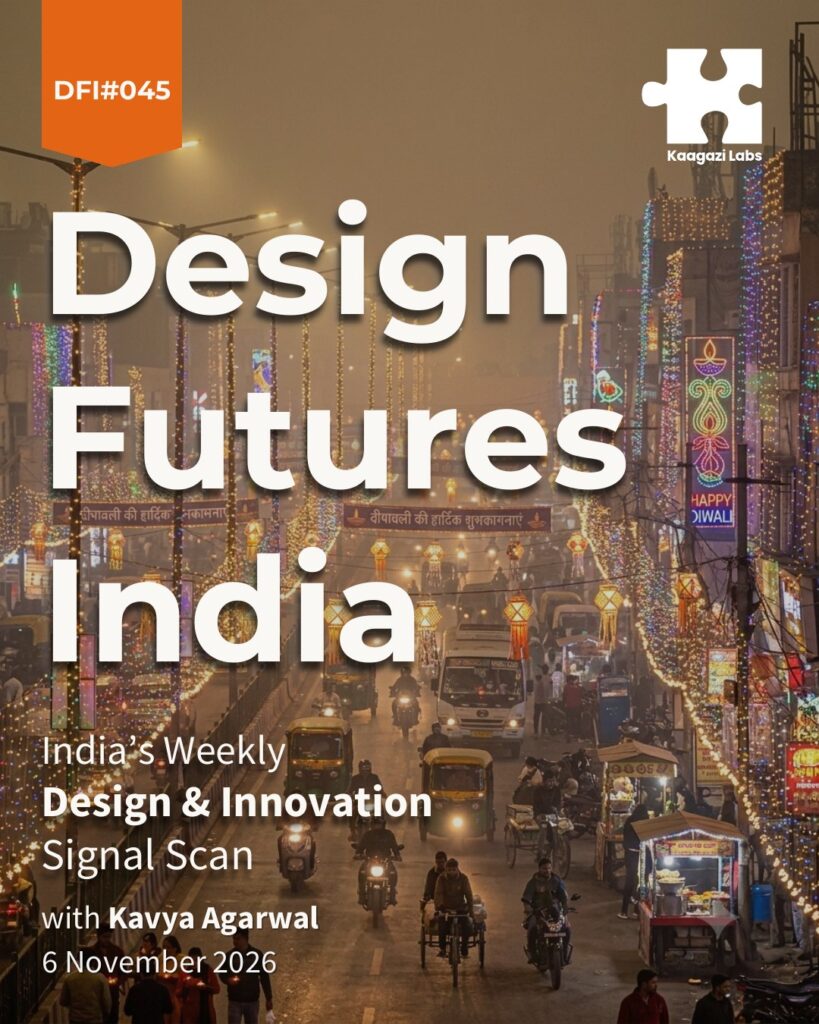
In this edition: Diwali waited 1,000 years for its first firecracker; Dhanteras was about health before it was about gold; Smog season is a design failure, not only weather; and more.
-
Diwali waited 1,000 years for its first firecracker
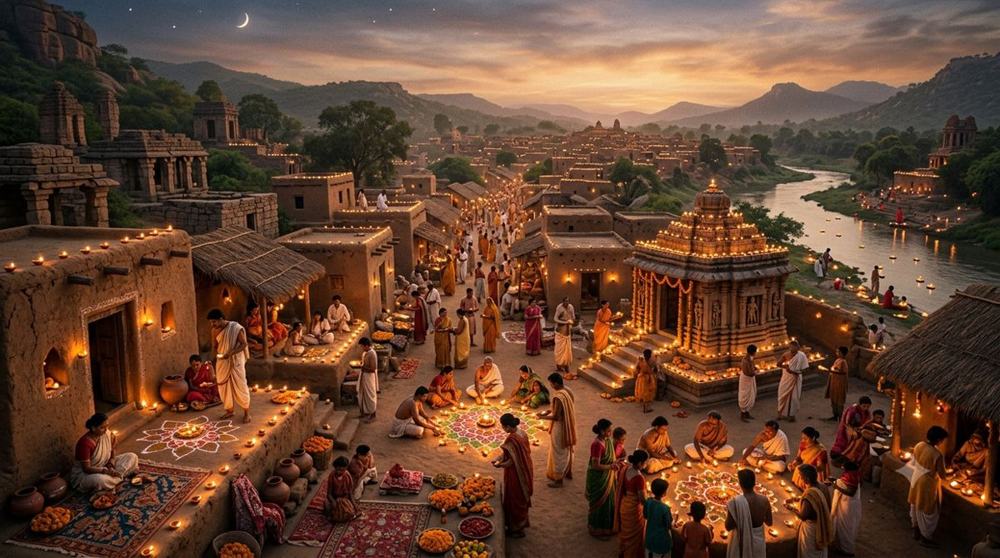
Diwali can be traced back at least 1,500 years, to a festival of lamps in the Kamasutra. The first record of fireworks however, is found in the Peshwa court in the mid-1700s. . Even the gunpowder came from China, and Chinese firework formulas reached India by the 15th century. Under the Raj, cheap Chinese and British imports spread crackers further. Then Sivakasi took over. Its factories, started in the 1940s, made crackers affordable forevery class, and their painted boxes sold them as festive. As late as 2016, cheap Chinese crackers still held nearly 40% of India’s market. When the Supreme Court halted Delhi’s cracker sales in 2017, critics called it an “attack on tradition”. However, if one looks at history a little more deeply they will find the gap between Diwali and firecrackers is more than a 1000 years. Traditions aren’t inherited, they are designed, marketed and sold back to us. The question this Diwali is simple: who designed your diwali tradition?
News Source: Scroll, Hindustan Times
From Design Futures India DFI #045, 6 November 2026. Read the full edition →
-
Dhanteras was about health before it was about gold

Dhanteras marks Dhanvantari, who in Hindu tradition rose from the churning of the ocean holding a pot of amrit and the knowledge of Ayurveda. Its evening lamp, the Yamadipadana, is lit facing south to ward off untimely death. From 2016, India marked Dhanteras as National Ayurveda Day, until 2025, when the date moved to a fixed 23 September because the lunar calendar kept shifting. Diwali, too, was never one story. Historian PK Gode’s research describes a festival that marked the end of the rice harvest and honoured Lakshmi, Rama, Krishna and, for Jains, Mahavira, celebrated differently across regions. Today, Dhanteras is better known as the day to buy gold, utensils and cars. Somewhere along the way, a festival about wellbeing became a sales season bonanza. What if we could collectively reimagine Diwali around health, harvest and light again? Do you think it would solve some of India’s problems?
News Source: Wikipedia, Daily Excelsior
From Design Futures India DFI #045, 6 November 2026. Read the full edition →
-
Smog season is a design failure, not only weather

Every November, Delhi turns clean air into an emergency drill. This week the AQI hit 451, and emergency curbs brought out sweepers, sprinklers and anti-smog guns. The evidence on these fixes is thin. When an anti-smog gun was tested at Anand Vihar, PM2.5 stayed between 421 and 509, and a CSE expert noted the effect fades once spraying stops. Delhi’s own pollution board told the National Green Tribunal that smog towers are ineffective, cutting pollution by about 17% within 100 metres. In October 2025, three cloud-seeding trials cost ₹1.07 crore and produced no measurable rain. Meanwhile, the real sources run all year. Vehicles make up more than half of Delhi’s local PM2.5, while farm fires added just 3.5% last winter. Yet 64% of the national clean-air funds spent so far went to road dust, and only about 13% to vehicles. Why does India keep buying weather fixes for a problem built into its roads?
News Source: Open Magazine
From Design Futures India DFI #045, 6 November 2026. Read the full edition →
-
“Don’t travel by air.” Then how do we get home?
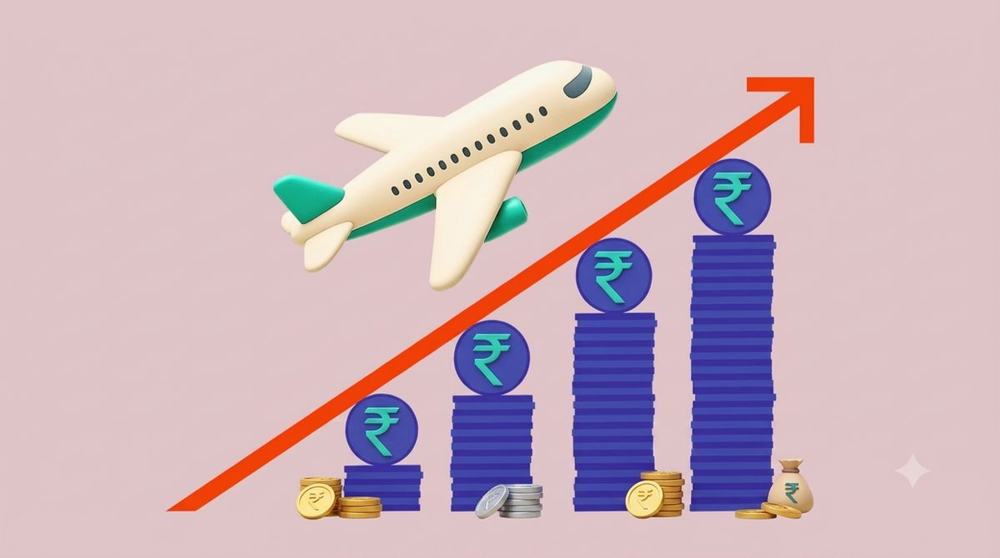
A Delhi to Kolkata ticket that usually costs about ₹10,000 was selling for ₹78,694 this week. When a petitioner asked the Supreme Court to step in, the bench replied: “Don’t travel by air. Next case.” No rule stops it. Airfares were deregulated in 1994, and the government can cap them only in an “extraordinary situation”. It did so last December, when IndiGo’s meltdown pushed fares past ₹1 lakh, fixing caps of ₹7,500 to ₹18,000. Diwali, the biggest homecoming of the year, does not qualify. Airlines point to costs: jet fuel rose from about ₹60 to ₹142 a litre this year. The aviation ministry argues that caps would keep new airlines out. A parliamentary panel wants the regulator to be able to impose temporary caps on exploitative pricing. New rules notified last week still leave “extraordinary” undefined. If a festival rush that comes round every year isn’t extraordinary, who is the system designed for?
News Source: Business Today
From Design Futures India DFI #045, 6 November 2026. Read the full edition →
-
Trust is built by the systems, not the speeches

In November 2024, a railway station canopy in Novi Sad collapsed and killed 16 people. Students turned that failure into a movement. On 25 October, Serbia’s longtime leader Aleksandar Vučić conceded defeat to their Student List, on the highest turnout in over 30 years. Days later, Israel’s election left Benjamin Netanyahu’s bloc with 53 of 120 seats, short of a majority. This week, Democrats swept the US Congress in a vote dominated by the cost of living. The common thread is that voters are judging leaders by how everyday systems perform. India is seeing the same shift at home. Voters are punishing leaders who capture institutions, and the bodies that count the votes have become the front line. For India, the lesson is about system design. A collapsed bridge or a disputed voter roll is never just an engineering or administrative failure. It is a test of public trust. Is India building systems that can pass it?
News Source: Al Jazeera
From Design Futures India DFI #045, 6 November 2026. Read the full edition →
-
India’s bullet train is now an Indian design problem
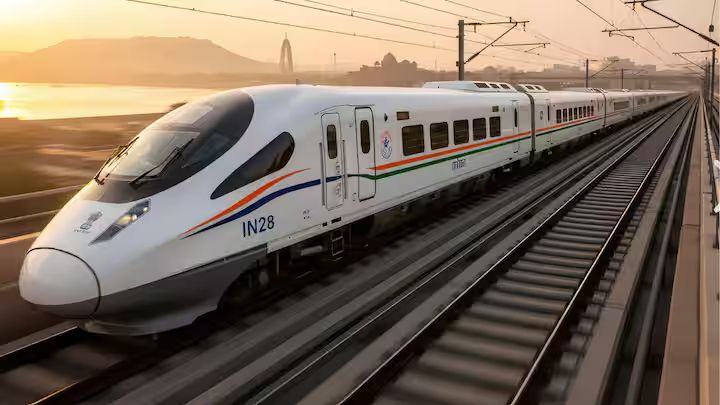
On 1 November, the Railway Minister said India’s first indigenous bullet train design, the B28, is ready, with a prototype expected early next year. That wasn’t the original plan. The Mumbai– Ahmedabad corridor began in 2017 as a Japanese system, due to open in 2022. When Japan’s next-generation E10 trains slipped to around 2034, India chose to build its own through a BEML-led consortium, running on open-standard European signalling. The first section is now due in December 2027, and the cost has nearly doubled to about ₹2 lakh crore. Owning the design means owning the learning, and the risk: Japanese experts have warned against mixing systems on one corridor. One question is missing from every update: who will ride it, and at what fare? In a week when flights home cost up to ten times the usual fare, will India’s fastest train be designed for its biggest journeys?
News Source: News on Air
From Design Futures India DFI #045, 6 November 2026. Read the full edition →