
Design Futures India · 1 May 2026
DFI #027
In this edition: The Significance of May 1; Maharashtra Day Special: The State is preparing to Tax the Sun; NITI Aayog publishes India’s DPI Roadmap to 2047; and more.
-
The Significance of May 1
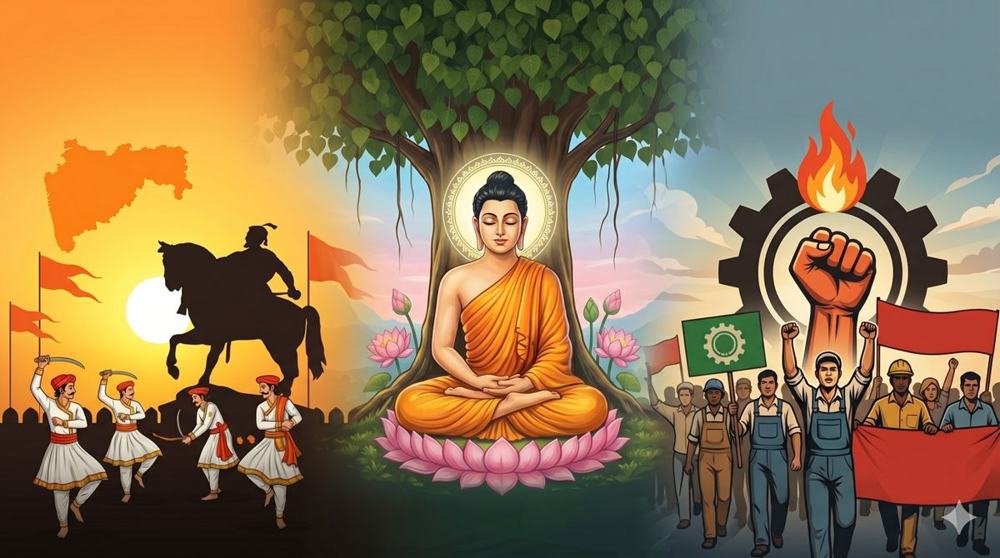 May 1 is doing a lot of work this year. It is Maharashtra Day — the day Bombay State was split in 1960 to give Marathi-speakers a state of their own. It is also International Workers’ Day, the day labour every year reminds the world it exists. And in 2026, the calendar lines up so that it is also Buddha Purnima. Three holidays. One question quietly running underneath all of them — who counts in a society, and who gets to decide? Editor’s Note: Kavya Agarwal This week’s stories are variations on that same question, dressed up in different policy clothes. Who counts as employed when AI takes 24,000 jobs from a single IT company in one year? Who counts as a worker when you drive an Uber? Who is fully visible in India’s first digital census, and what boxes does the form give you to tick? Who profits from the sun? Six signals from the past week. Read them with that question in mind. Who counts and who decides? Who counts and who decides?
From Design Futures India DFI #027, 1 May 2026. Read the full edition →
-
Maharashtra Day Special: The State is preparing to Tax the Sun
 On April 21, the Maharashtra government quietly issued a Government Resolution forming a seven-member committee to look into an electricity duty on rooftop solar power. The reason is purely financial Maharashtra’s discom, MSEDCL, is losing high-paying customers as they shift to solar. To stop the bleed, the state wants to tax the sun. The contradicts the Centres policy, through the PM Surya Ghar: Muft Bijli Yojana, is right now subsidising the very News Source: Money Life rooftop panels Maharashtra is preparing to tax. On Maharashtra Day, this is the cleanest example of how India’s policy stack quietly contradicts itself. The family that listened to the Centre, took the subsidy, and put up panels last year is about to be taxed by the State this year. And the next family weighing whether to put up panels is now reading both signals — the brochure and the bill — and trying to guess which system to trust. And the next family weighing whether to put up panels is now reading both signals — the brochure and the bill — and trying to guess which system to trust.
From Design Futures India DFI #027, 1 May 2026. Read the full edition →
-
NITI Aayog publishes India’s DPI Roadmap to 2047
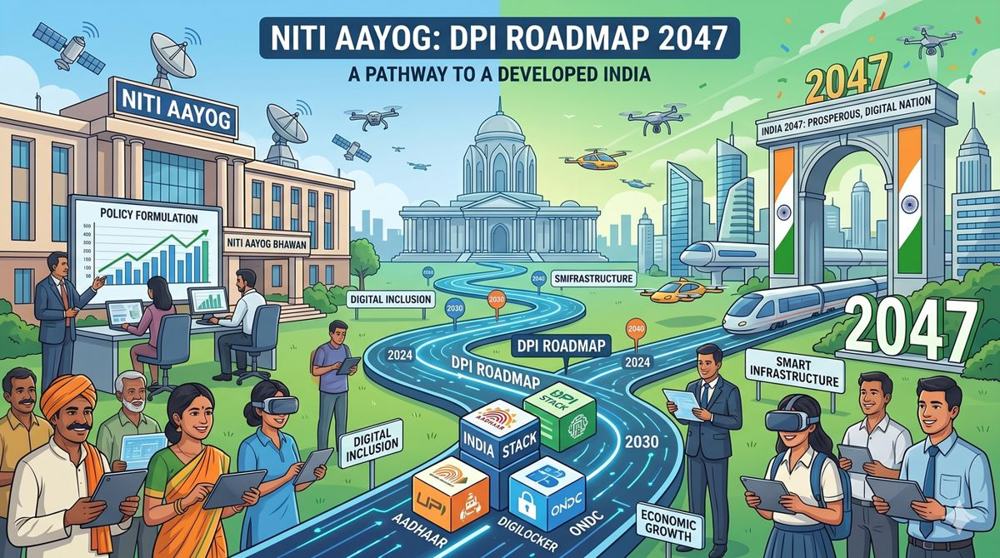 On April 27, NITI Aayog released the DPI@2047 Roadmap — its long-term plan for India’s “digital public infrastructure” (the umbrella term for things like Aadhaar, UPI, ONDC, DigiLocker).As per NITI Aayog DPI currently adds about 1% to India’s GDP, and could add 4% by 2030 if the next phase is done well. The next phase, called DPI 2.0, is meant to run till 2035 and focus on livelihoods Pilots begin in MSMEs and farming in 2026–27. News Source: The Tribune DPI 1.0 was about digital access could you make a payment, store a document, prove who you are. DPI 2.0 is about whether you can earn, which is a much harder problem especially in India’s diverse landscape. The question here also is whether NITI Aayog is asking how this will actually feel for the people who use it — on a 2G connection, in their own language, on a phone they share — and what happens, in plain words, the day the algorithm quietly says no?
From Design Futures India DFI #027, 1 May 2026. Read the full edition →
-
India’s first fully digital census but is Phase 2 really needed?
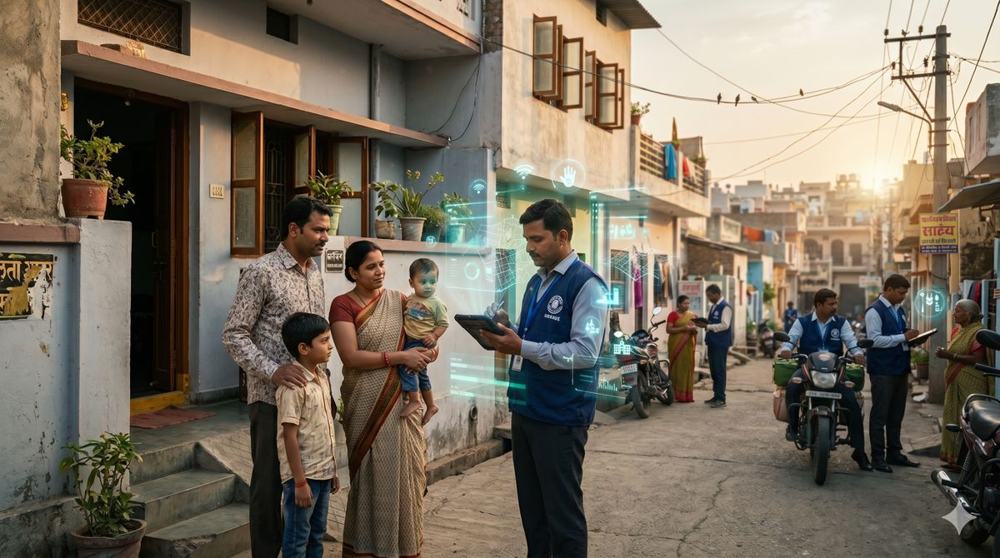 On April 1, India began its first fully digital census. About 34 lakh enumerators are now doing the rounds with a mobile app, and for the first time, residents can also self-enumerate online and skip the door knock. The Cabinet has also confirmed that the second phase, in February 2027, will record each person’s specific jati— the first proper caste enumeration since 1931. The census may look like a numbercollection exercise, but it is in fact the schema underneath every welfare scheme, every reservation and every electoral seat. Moving it online changes the speed, granularity, and possibilities of governance itself. But it also raises new questions around data accuracy, exclusion, and digital dependency. Who gets counted, how they are recorded, and how that data is interpreted will shape decisions for the next decade. In a digital world, visibility itself becomes a form of infrastructure. News Source: Press Information Bureau News Source: Press Information Bureau
From Design Futures India DFI #027, 1 May 2026. Read the full edition →
-
Is India’s IT Sector reading the AI shift correctly?
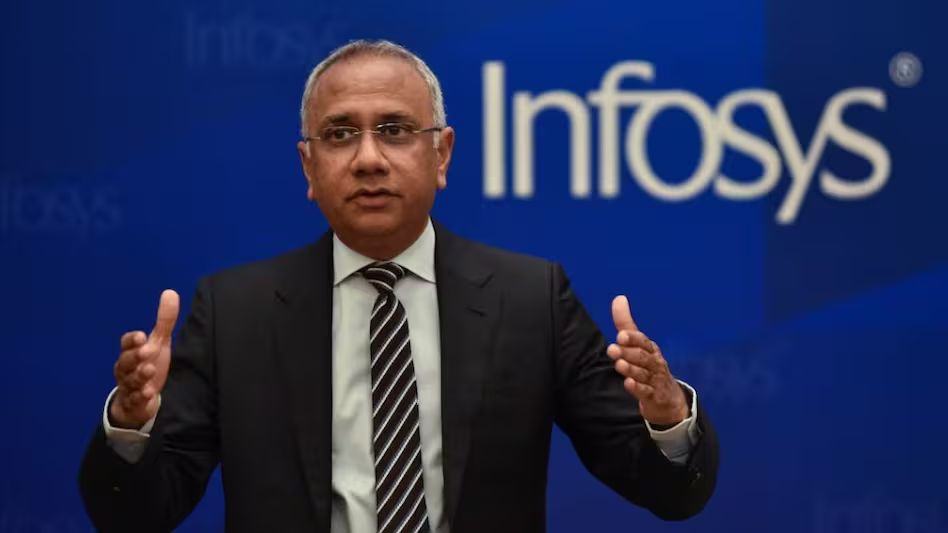 On April 30, Infosys CEO Salil Parekh ruled out layoffs and confirmed plans to onboard 20,000 freshers this financial year, suggesting that AI is expanding the work rather than shrinking it. The same week, TCS confirmed that its workforce had reduced by roughly 24,000 in FY26, with another 12,500 transitions still to come. Bernstein, the global research firm, has called this a deepening employment crisis in an open letter to the Prime Minister. Both companies are looking at the same AI shift and arriving at very different conclusions. For three decades, an Indian engineering degree came with a campus offer, a city, a slow but real climb. As that promise gets rewritten, what feels missing in both readings is the bridge — the careful, structured way people are meant to get from one version of work to the next. Right now, that transition seems to be left to each individual to figure out on their own. News Source: CNBC, Business Today News Source: CNBC, Business Today
From Design Futures India DFI #027, 1 May 2026. Read the full edition →
-
A Kashmir Willow bat rewrites the story for GI tags for India
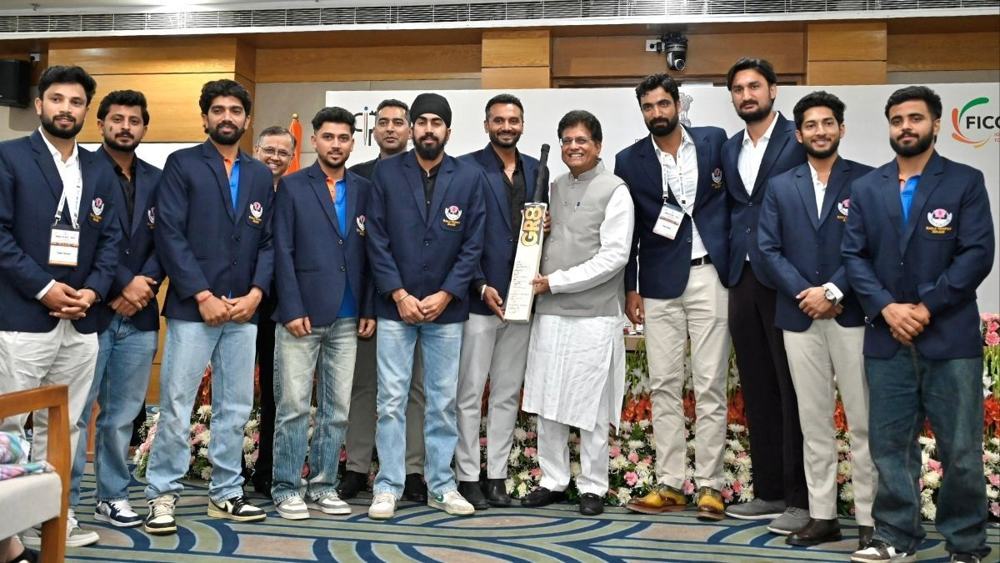 This week, at the World Intellectual Property Day celebrations in New Delhi, Union Commerce Minister Piyush Goyal held up an unusual GI-certified product — the Kashmir Willow cricket bat, made from willow trees in Anantnag, Pulwama, Baramulla and Bijbehara. It earned its GI tag in 2025, part of a batch of eight new Kashmiri products that took the Valley’s GI count to 15. Goyal then announced a three-year zero-fee News Source: The Week waiver on all sports-related IP filings — trademarks, copyrights, patents, designs, traditional knowledge and GIs. India’s GI register has long been associated with heritage and craft It now stretches into daily life: Bikaneri Bhujia in the snack tin, Kolhapuri chappals at the doorstep, Mysore Sandal soap in the bathroom, Tirupati laddu at the temple counter, Goa Feni in the glass — and now a willow cricket bat on the field.
From Design Futures India DFI #027, 1 May 2026. Read the full edition →
-
Justice gets translated into 22 languages via Nyaya Setu
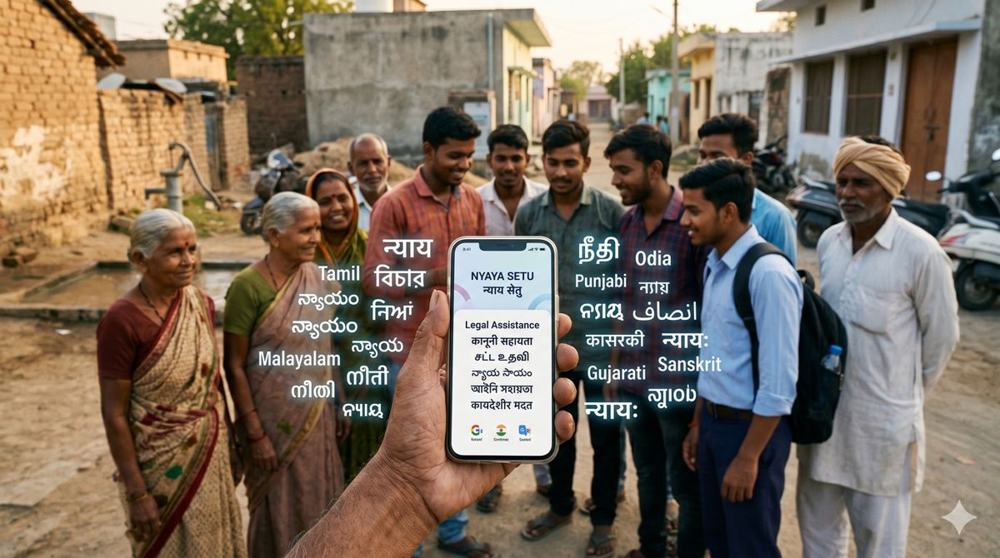 India has unveiled Nyaya Setu, an AI-powered legal assistant aimed at making justice more accessible through voice and multilingual support. Launched at Vigyan Bhawan, the platform is a multilingual legal-access chatbot built on Bhashini, India’s homegrown language AI stack — alongside its mascot Dishika. It supports voice and text across 22 scheduled languages and 36 written ones, drawing on more than 350 AI models. . News Source: Organiser The goal is simple but structural, to make India’s digital public infrastructure usable in every Indian language. . The Indian justice system has, in practice, long run in English — a quiet barrier that has excluded most citizens before they ever stepped into a courtroom. The design shift here is real: language is no longer being treated as a private problem to be solved by hiring a translator, but as public infrastructure the state itself maintains.
From Design Futures India DFI #027, 1 May 2026. Read the full edition →