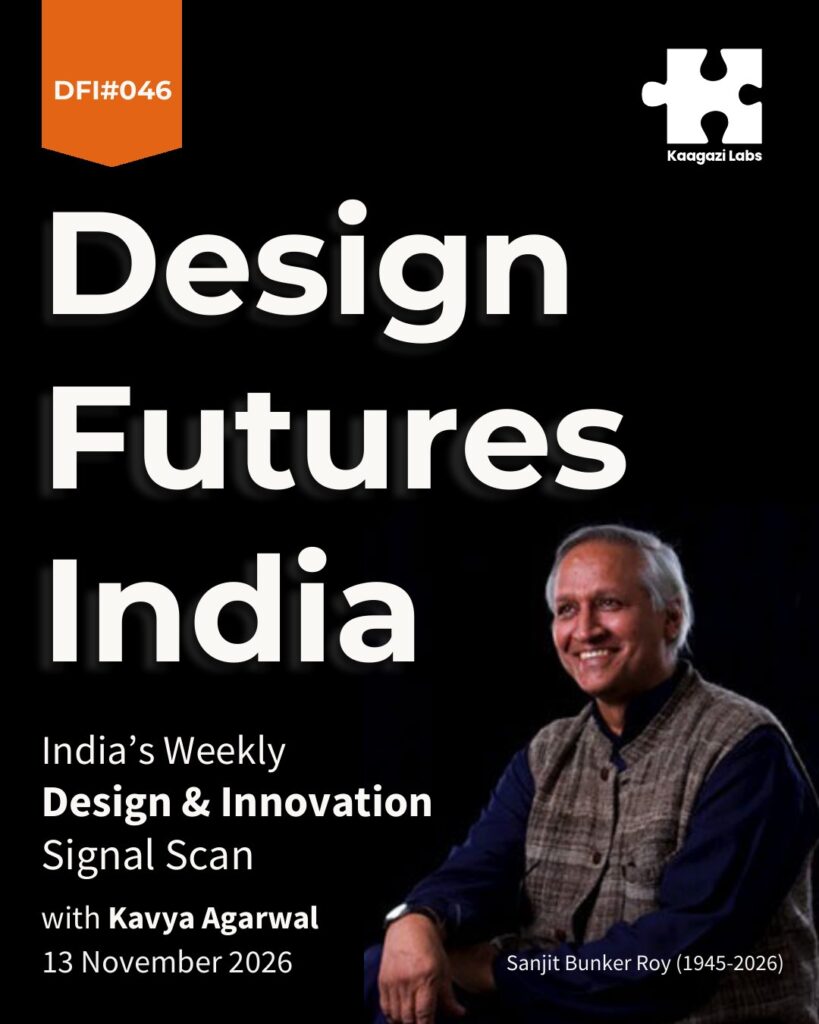
Design Futures India · 13 November 2026
DFI #046
A tribute to Bunker Roy and the Barefoot College he built, Delhi’s new pollution cruise, the workers left out by the cracker ban, and what a green cracker really does.
-
Frugal Innovation Pioneer Bunker Roy passes away at 81

In 1972, after volunteering in the Bihar famine years earlier, a young Bunker Roy went to Tilonia, in Rajasthan’s Ajmer district, and stayed. Roy, who died there on 10 November aged 81, founded the Social Work and Research Centre, later known as Barefoot College. Its idea was simple and radical. People with little or no schooling could become solar engineers, teachers, midwives and hand-pump mechanics. Grandmothers from across Africa, Asia and Latin America trained in Tilonia and went home to light their villages. “They leave as grandmothers and come back tigers,” Roy said. He received the Padma Shri and was named in Time’s 100, but his real legacy is a design principle. The people who live inside a system are often best placed to build and repair it. India now runs vast skilling missions and digital platforms. How many are designed with villagers, rather than for them?
News Source: Down to Earth
From Design Futures India DFI #046, 13 November 2026. Read the full edition →
-
Barefoot College: Frugal by Design, Social by Intent

The Barefoot College, started in Tilonia by Bunker Roy in 1972, is less a story of technology than of social and participatory design. Its solar lanterns and hand pumps used existing technology. What it redesigned was who builds, runs and teaches them. Rural women with little or no schooling trained to install and repair solar systems, learning through shape, colour and demonstration rather than manuals. Villages chose projects, set fees and selected trainees, making participation the method, not an add-on. The Solar Mamas model travelled. Barefoot centres now run in Zanzibar, Madagascar, Senegal and Guatemala, with Burkina Faso setting up its own in 2018. Its limits matter too. A Keele University study found paid work was often short-term. Without a wider ecosystem, trained capability had little to plug into. Frugal social design builds capability. Lasting changes need policy and intent. This looks like a systemic design problem!
News Source: WIPO Magazine, Barefoot College
From Design Futures India DFI #046, 13 November 2026. Read the full edition →
-
“Pollution Gazing” Delhi now wants you to pay to see it
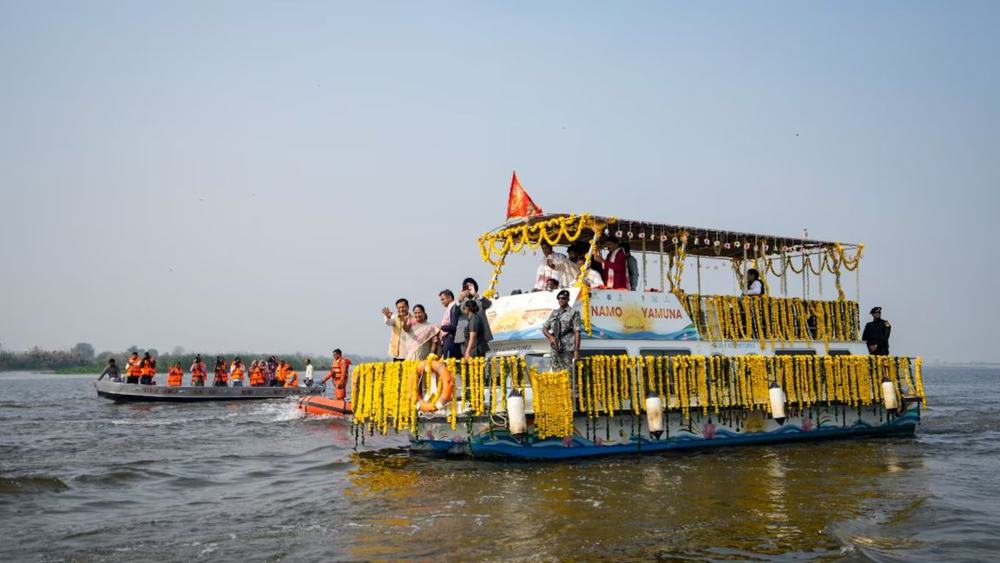
Delhi Government has recently launched a cruise on the Yamuna. If plans hold, it will have balloons above it from Saturday. The Namo Yamuna Cruise Safari, launched on 10 November, charges ₹500 a head for a 6-km electric-boat round trip. DDA’s tethered balloon at Baansera charged about ₹2,300 last winter for a ride lasting under 15 minutes. On some weekdays, only four or five people came. It returns on 14 November, at a lower fare. The view is smog bad enough to launch an aerial biew experience, and a river which is catastrophically polluted downstream. The state builds the attraction, sells the ticket and runs the ride but builds no employment ecosystem for the people livingaround it. So why sell rides on a river before cleaning it? Why should only the state run the boats, and not the boatmen and fisherfolk who already know the water? And when will Delhi build a river people want to visit, rather than one they pay to look at?
News Source: NDTV
From Design Futures India DFI #046, 13 November 2026. Read the full edition →
-
You didn’t ban Diwali crackers, but stopped our work

On 2 November, Tabrez’s contractor told workers to find other jobs. GRAP had shut Delhi’s construction sites, and Tabrez went home to Bihar. On paper, there is relief. Since a 2021 Supreme Court order, Delhi has paid registered workers a one-time allowance, ₹10,000 last year. But Delhi had an estimated 10 lakh construction workers in 2022, and only about 2.15 lakh now hold active labour cards. As of 11 November, no allowance had been announced this year. Meanwhile the firecracker ban in Delhi was flouted openly – left, right and center. Crackers were sold openly despite the ban, and the Supreme Court itself observed that “everything is available in the shops.” The rule stopped wages overnight. The other relied on goodwill. Both rules exist for the same air. When policy bends for some and breaks others, the poorest pay twice. They have no purifiers, little healthcare, and now no wages.
News Source: India Today
From Design Futures India DFI #046, 13 November 2026. Read the full edition →
-
Low cost air purifier from India wins Diana Award
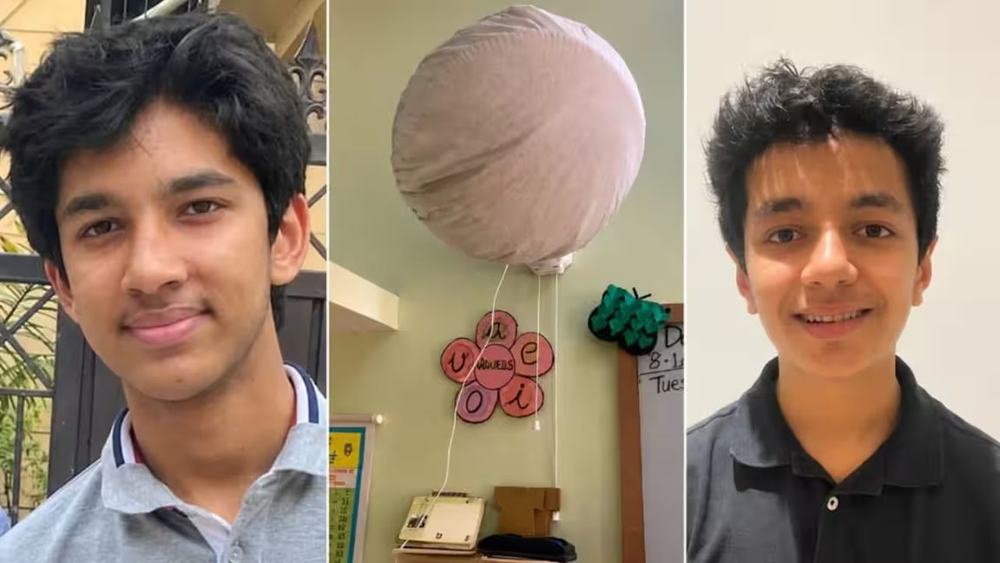
Delhi’s classrooms already have fans. Two school students asked why those fans could not clean the air too. Krish Aggarwal and Samarth Meattle co-founded Project Vayu, a filter that stretches over an ordinary fan and inflates when it runs. Each costs about ₹140 to make, and schools get them free every month. The pilot reached 295 classrooms and around 8,000 students. Recognition came promptly from the UK, with Aggarwal named to the 2026 Diana Award Roll of Honour. At home there has been no official acknowledgement from the government. . The project is still seeking partners to reach government schools. Its performance claims rest on its own closed-room test, so independent testing matters. That is exactly what a state could offer. In a city that shuts schools for smog every winter, why does a frugal fix need a foreign award before it gets a hearing at home?
News Source: India Today
From Design Futures India DFI #046, 13 November 2026. Read the full edition →
-
Greenwashing by design: What do green crackers really do?

A green cracker is not a clean cracker. Under the CSIR-NEERI standard, it must cut particulate emissions by at least 30% compared with a conventional cracker, or by 20% plus 10% in gases. It still explodes, and it still pollutes. To prove a cracker meets that standard, each box must carry a QR code linking to its manufacturer, PESO licence and NEERI registration. This Diwali, a check at Delhi’s Sadar Bazar found several codes that showed only a company name and phone number, with none of the certification details. Days before Diwali, Delhi’s AQI crossed 600. Delhi Police seized 91.9 kg of illegal crackers in raids across three areas. The QR code was designed as a signal of trust. It became a sham: a scannable square that looks like proof without being proof. That is greenwashing by design. Real change needs enforcement, honest labels, and buyers who know what a green cracker actually is.
News Source: The Print
From Design Futures India DFI #046, 13 November 2026. Read the full edition →