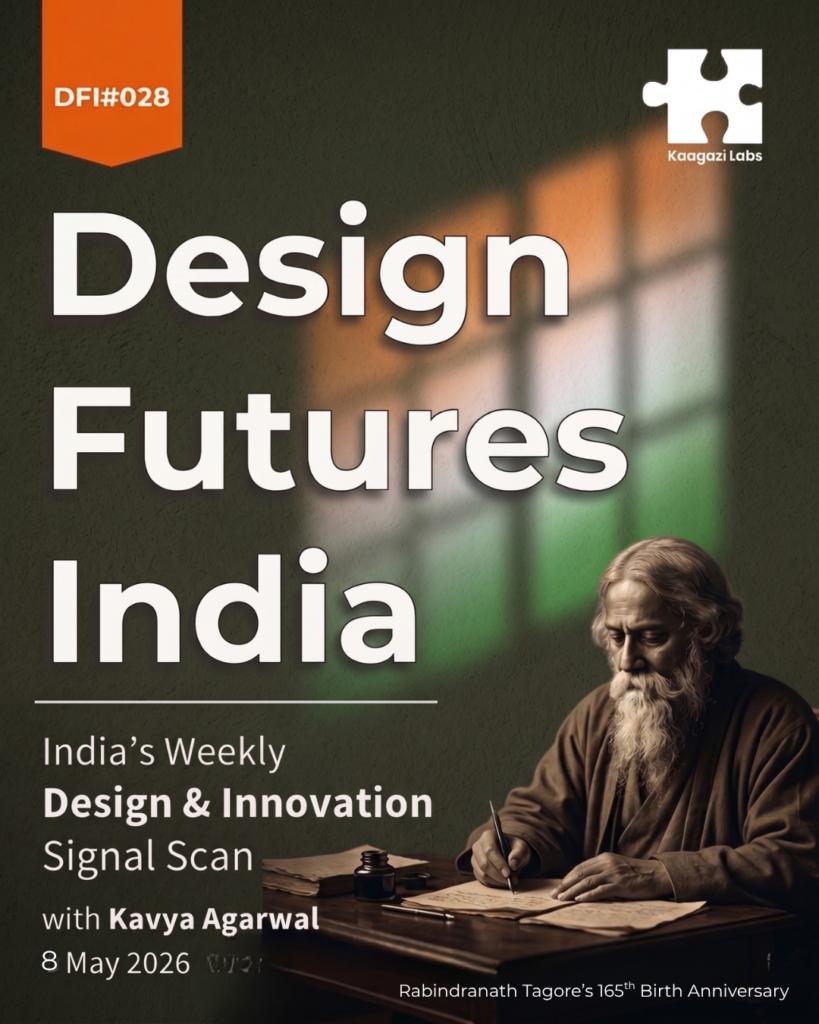
Design Futures India · 8 May 2026
DFI #028
In this edition: India built a Tagore. India forgot a Ramaswamy.; OpenAI and Anthropic just declared open war on Indian IT; India just delivered a indigenously designed stealth warship; and more.
-
India built a Tagore. India forgot a Ramaswamy.
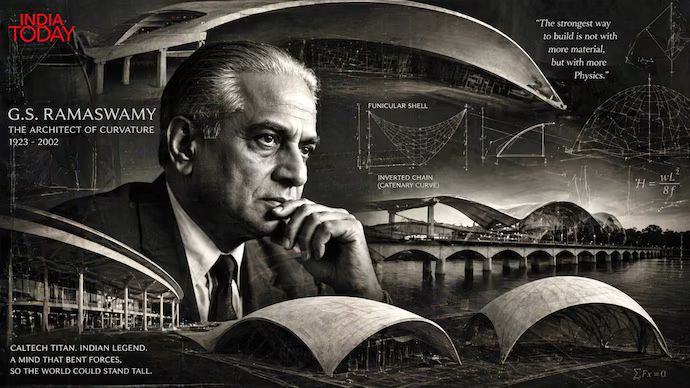 In 1965, Professor G.S. Tagore would have been 165 this week. He spent his life arguing that Ramaswamy founded the Structural Engineering Research India needed to design its own modernity. Not import it. Not reject Centre in Chennai. The lab gave it. Translate it. We recognise Tagore. India the ability to design its own buildings instead of importing We do not read him. He is on our coins, in our anthem, on every wall in everything from the West. He wrote every Bengali home in May. Ask most the global textbook on concrete Indians what he actually argued for shell roofs. While he is celebrated in Caltech, he is forgotten in and the answer is silence. We are India.That is the literacy gap. It taught his name. We are not taught does not start with Ramaswamy. It his thinking. This is why we also miss the people starts with how we were taught to remember our heroes. who carry his work forward. News Source: India Today News Source: India Today
From Design Futures India DFI #028, 8 May 2026. Read the full edition →
-
OpenAI and Anthropic just declared open war on Indian IT
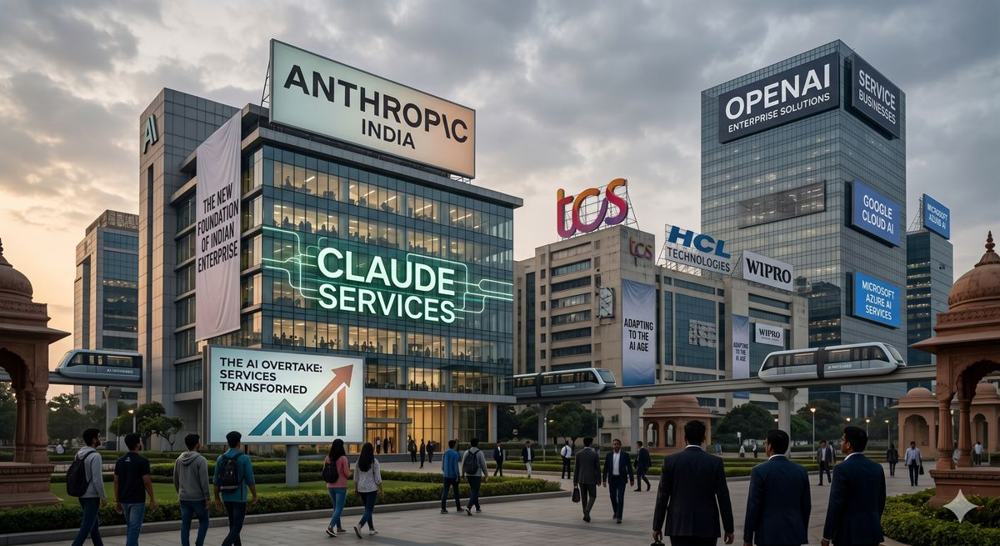 In early May, Trak.in reported that OpenAI has launched a venture called The Deployment Company. Anthropic is reportedly building a similar enterprise arm. Both ventures will help businesses install AI directly into their workflows, which is exactly what TCS, Infosys, Wipro, and HCLTech have done for the world for thirty years. The frontier of AI is no longer who builds the model. It is who installs it inside an enterprise. That is a services business, the one India taught the world how to run. News Source: Trak.in For Indian IT, this is the deepest shift in three decades. The labourarbitrage model, send Indian engineers to do American work for less, only works as long as the work needs lots of engineers. AI agents flatten that. TCS already cut 23,460 jobs this year. That number is the early signal, not the final one.The question for India is whether we let the model labs design how AI enters our offices, our hospitals, our courtrooms, our schools. Or whether we build that design capability ourselves. Or whether we build that design capability ourselves.
From Design Futures India DFI #028, 8 May 2026. Read the full edition →
-
India just delivered a indigenously designed stealth warship
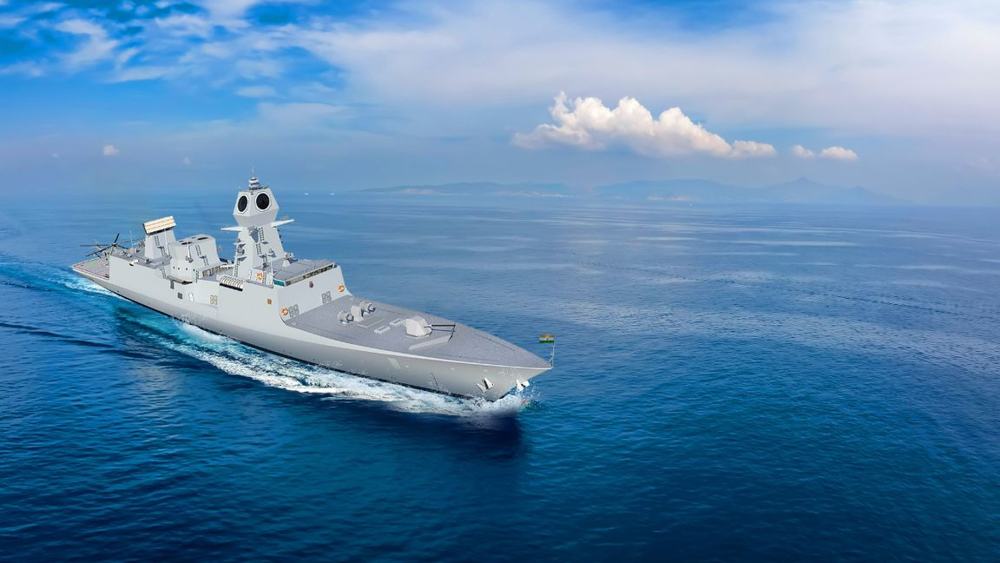 In late April, the Indian Navy received INS Mahendragiri, the fourth ship in the Project 17A series. The frigate was designed end-to-end by India’s Warship Design Bureau in Mumbai. Stealth shaping, automation systems, weapons integration, all indigenous. This is design sovereignty at the highest level of complexity. A country that can design its own warships can design its own buildings, its own cities, its own public systems. This is proof that News Source: Times of India capability exists. What is missing is the the translation of capability. We celebrate the warship as a defence achievement, not a design achievement. The same engineers who shape stealth hulls could shape climateresilient housing, if we ever asked them to. India has signalled the capability. The question is what else we point it at, and whether we can see it as design at all. The question is what else we point it at, and whether we can see it as design at all.
From Design Futures India DFI #028, 8 May 2026. Read the full edition →
-
Every Indian city is being redesigned as we speak.
 In March, the Union Cabinet approved the Urban Challenge Fund. It is the central government’s new financing model for Indian cities. One lakh crore from the centre. Four lakh crore total over five years, including private market financing. Here is how it works. The centre puts in 25 percent of any project cost. The city has to raise the remaining 50 percent from private capital. The other 25 percent comes from the state. To unlock the central money, a city has to make itself “investable” to private investors, in projects ranging from metro corridors to housing to water systems.Earlier, cities got grants from Delhi. Now they have to attract private capital by selling themselves as profitable bets. Investable to whom? Designed for whom? Decided by whom?These are not abstract questions. They will shape what your city looks like in 2030. The design of Indian cities is moving from a public conversation to a financial one. Most citizens do not know the conversation is happening. News Source: Business Standard News Source: Business Standard
From Design Futures India DFI #028, 8 May 2026. Read the full edition →
-
UPI just changed how trust works. Most of us didn’t notice.
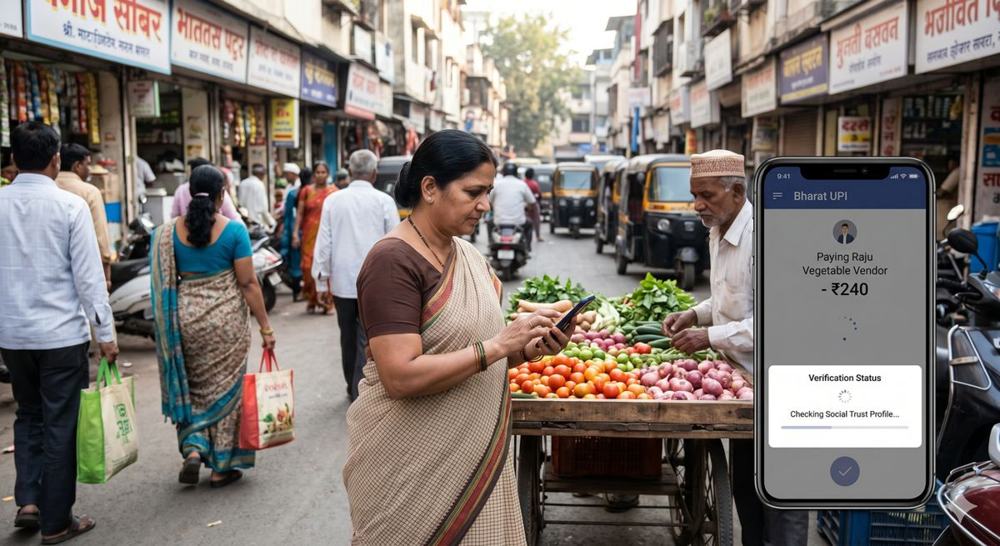 From April this year, UPI no longer treats every transaction the same way. A background risk score now decides whether you need extra verification. Some payments go through smoothly. Others hit friction. The algorithm chooses, not you. UPI runs over 16 billion transactions a month. This is the largest experiment in algorithmic trust any country has ever run on its own population. The design choice is invisible. There is no notification, no setting, no News Source: Csis.org explanation. The friction you feel at checkout is now a calculation you cannot see or contest. We have spent the last ten years celebrating UPI as design that works. The next ten years will be about who designed the rules. The first decade made payments easy. The second decade decides whose payments stay easy and whose start to feel suspicious. The second decade decides whose payments stay easy and whose start to feel suspicious.
From Design Futures India DFI #028, 8 May 2026. Read the full edition →
-
India’s nights have stopped cooling. Did we design this?
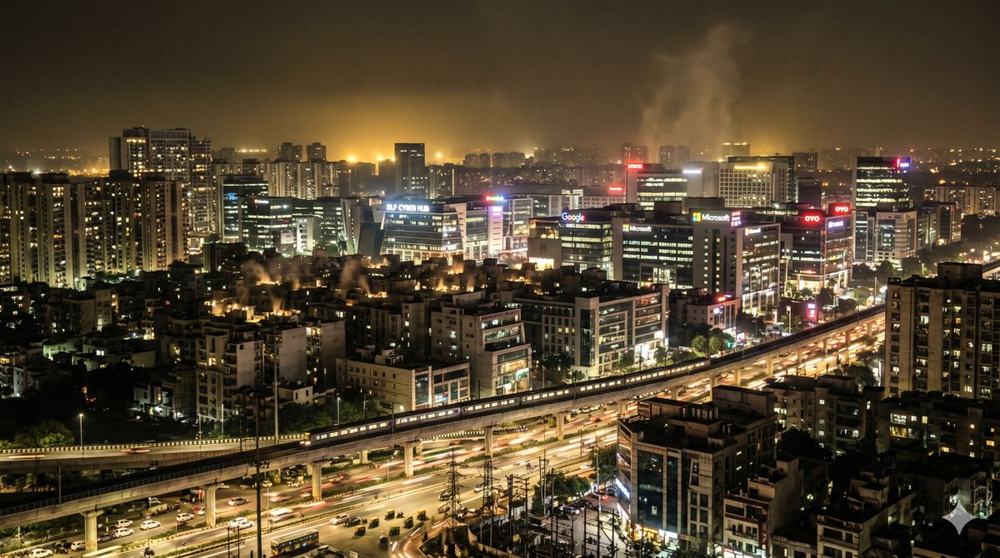 This week, 19 of the world’s 20 hottest cities are in India. The IMD has confirmed above-normal heat from April to June. The Health Ministry has ordered every state to set up dedicated heatstroke management units. The NHRC has written to 21 states asking them to protect outdoor workers and the urban poor. What is new this year is not the heat. It is that the nights are no longer cooling down. A 24-hour heatwave breaks the basic assumption every Indian building News Source: Down to Earth was designed around: that you sweat through the day and recover at night. But here is the deeper problem. Most of what we have been building for thirty years is not an Indian building at all. Sealed glass facades. Wall-towall carpets. Centralised AC. Tiny windows that do not open. We copied the office tower from Dallas and the apartment block from Singapore and pretended the climate would adjust. It did not. We have to.
From Design Futures India DFI #028, 8 May 2026. Read the full edition →