Design Futures India · 17 October 2025
DFI #005
In this edition: AI is entering Indian Schools from the next academic year; Google invests $15B to create AI Hub in Andhra Pradesh; India launches $120M circular electronics mission; and more.
-
AI is entering Indian Schools from the next academic year
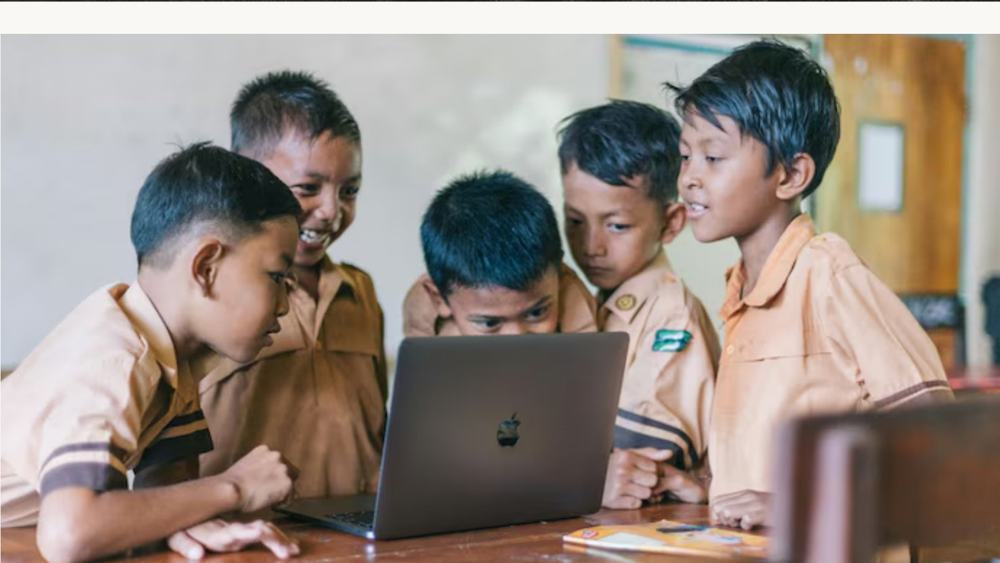 The Ministry of Education (MoE) has announced that Artificial Intelligence (AI) will officially be introduced as part of the school curriculum from Class 3 onward, beginning in the 2026–27 academic year.The move, part of the National Curriculum Framework for School Education (NCFSE), aims to equip students with an early understanding of AI, coding, digital literacy, and design thinking, preparing them to participate creatively in a tech-driven world. By introducing AI the initiative reframes early education — not just as memorization, but as imagination with purpose. By introducing AI the initiative reframes early education — not just as memorization, but as imagination with purpose.
From Design Futures India DFI #005, 17 October 2025. Read the full edition →
-
Google invests $15B to create AI Hub in Andhra Pradesh
 Google has announced a $15 billion investment to build its largest AI and data hub in Visakhapatnam, Andhra Pradesh. The site will host compute clusters, AI model training facilities, and R&D labs focused on responsible AI, cooling innovation, and regional AI adaptation. This marks a shift in how design operates in India: no longer limited to products or interfaces, but extending into ecosystems and policies. As AI infrastructure embeds into Indian geography, the design questions will be about accountability, accessibility, and environmental impact — not just efficiency. As AI infrastructure embeds into Indian geography, the design questions will be about accountability, accessibility, and environmental impact — not just efficiency.
From Design Futures India DFI #005, 17 October 2025. Read the full edition →
-
India launches $120M circular electronics mission
 India, along with UNDP and the Global Environment Facility (GEF), has launched a $120 million program to push circularity in the electronics sector. The mission will focus on e-waste reduction, repairability, material recovery, and safer product design. The initiative directly connects design to sustainability — calling for longer product lifecycles, modular repair systems, and inclusive recycling jobs that empower informal workers. This signals a future where design education must teach environmental systems, not just aesthetic systems. This signals a future where design education must teach environmental systems, not just aesthetic systems.
From Design Futures India DFI #005, 17 October 2025. Read the full edition →
-
UP students design solutions for a self-reliant nation
 The Viksit Bharat Buildathon 2025 has been launched across schools, colleges, and universities in Uttar Pradesh — inviting students to design and prototype ideas that contribute to India’s vision of Viksit Bharat 2047. The initiative encourages interdisciplinary exploration in school students to solve challenges in urban planning, agriculture, mobility, and social inclusion. It’s not a hackathon — it’s a call to reimagine development as a design problem. India’s next big innovation may not come from a startup — it may come from a student who believes in building a better nation. India’s next big innovation may not come from a startup — it may come from a student who believes in building a better nation.
From Design Futures India DFI #005, 17 October 2025. Read the full edition →
-
Jaipur’s JKLU School of Design wins Don Norman Award 2025
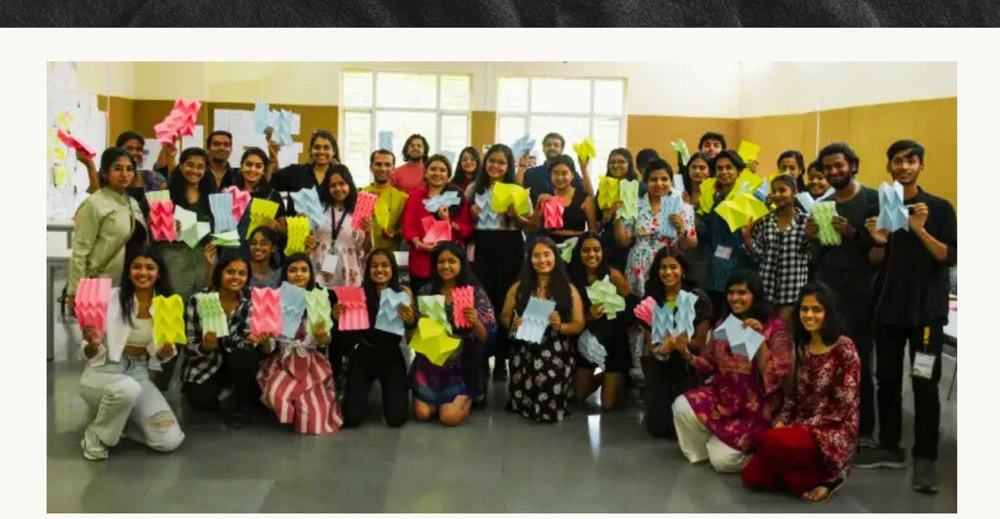 This week, JK Lakshmipat University (JKLU) became the only Indian design institute to be honoured with the Don Norman Design Award 2025 — for “transforming learning and cultivating the next generation of humanity-centred designers.” Selected alongside global institutions from the USA, Mexico, Hungary, Israel, UK and Brazil, JKLU’s B.Des and M.Des programmes were recognised for their systems design approach — balancing rigorous systems thinking with grounded community linkages. This is a milestone for India’s design education ecosystem — and a glimpse of how India can lead the next chapter of humanity-centred design. This is a milestone for India’s design education ecosystem — and a glimpse of how India can lead the next chapter of humanity-centred design.
From Design Futures India DFI #005, 17 October 2025. Read the full edition →
-
Kosa Silk Weaves a New Design Future in Chhattisgarh
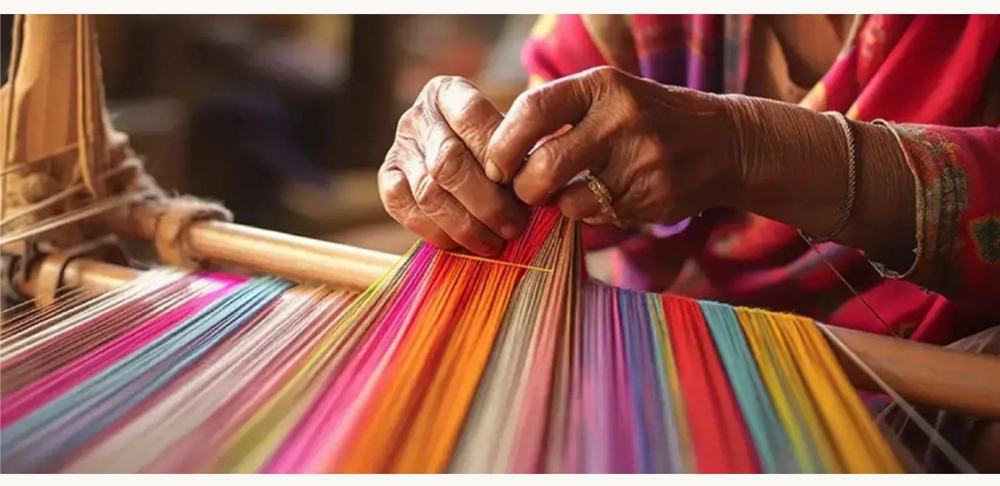 Deep in the town of Champa, Chhattisgarh’s Kosa silk weavers are rewriting what it means to preserve tradition in a modern world. The Kosala Livelihood & Social Foundation, supported by Hindalco Industries, is working to revive and modernize Kosa weaving. The weavers, many of them from marginalized communities, are being trained in natural dyeing, contemporary motifs, and digital cataloguing. The Kosa story challenges India’s design community to see craft not as nostalgia but as living innovation: biodegradable, genderempowering, sustainable and globally relevant. Kosa’s weavers are proving that true design isn’t about always what’s new — it’s about what endures. Kosa’s weavers are proving that true design isn’t about always what’s new — it’s about what endures.
From Design Futures India DFI #005, 17 October 2025. Read the full edition →