Design Futures India · 16 January 2026
DFI #016
In this edition: When Governance Starts Speaking Human; Interface design becomes a trust issue in India; Is India’s Space Failure a Design Lesson in disguise?; and more.
-
When Governance Starts Speaking Human
 India’s largest digital identity system now has a face. The Unique Identification Authority of India (UIDAI) introduced Udai, a resident-friendly Aadhaar mascot designed to make citizen interaction with the service more relatable and easier to understand. The mascot was selected through a national design contest, and will be used to simplify communication about Aadhaar updates, authentication, offline verification, and responsible usage. Many Indians encounter Aadhaar on screens, forms, and service counters. By giving the system a friendly symbol, UIDAI is acknowledging that trust and clarity matter just as much as backend technology. In a country where digital public services touch daily life for millions, design choices that speak human help make complex governance systems feel intelligible, inclusive, and less intimidating.
From Design Futures India DFI #016, 16 January 2026. Read the full edition →
-
Interface design becomes a trust issue in India
 Most Indians now meet banks, marketplaces, schools, and even the state through a screen. A tap, a swipe, a small button that says “Accept”. This month, the Advertising Standards Council of India Academy launched an elearning course on Ethical UI/UX Design, focused on dark patterns, consumer manipulation, and responsible interface choices. This matters because screens have quietly become sites of power. Interface design decides who understands, who consents, and who gets nudged into decisions they barely notice. In a digital-first country with millions of first-time users, design can protect or exploit. By naming ethical UI as a formal skill, India is beginning to treat interfaces as part of governance. Trust is no longer only legal or technical. It is designed, pixel by pixel. It is designed, pixel by pixel.
From Design Futures India DFI #016, 16 January 2026. Read the full edition →
-
Is India’s Space Failure a Design Lesson in disguise?
 India’s recent PSLV mission failed shortly after launch, leading to the loss of multiple satellites. Instead of silence or spin, the response triggered public discussion around testing gaps, redundancy, and system design choices. This marks a subtle but important shift. Complex systems fail not because of one mistake, but because of how decisions stack over time. Mature innovation cultures treat failure as feedback, not embarrassment. Space programmes, like defence and deep tech, are long games built on learning loops. Each failure exposes where design assumptions break under pressure. For India, the real progress lies in naming those weak points openly and redesigning for reliability. Innovation does not mature by avoiding failure. It matures by absorbing it into the system and building better the next time. It matures by absorbing it into the system and building better the next time.
From Design Futures India DFI #016, 16 January 2026. Read the full edition →
-
India Builds the Chip Beneath the Digital Boom
 India’s technology narrative has long lived on the surface. Apps scale. Platforms grow. Adoption soars. But the core technologies that make digital ecosystems reliable were largely imported. This month, India announced a milestone with its first indigenous 64-bit dual-core processor, a step toward semiconductor design and sovereign compute capability. What shifts here is not just hardware. It is who gets to shape future digital infrastructure. Chips and processors determine power over innovation, security, and economic leverage. Designing and building them develops deep technical skill, institutional memory, and resilience. For India, this is less about national pride and more about autonomy. A digital future anchored in homegrown hardware makes everything above it more secure and sustainable. A digital future anchored in homegrown hardware makes everything above it more secure and sustainable.
From Design Futures India DFI #016, 16 January 2026. Read the full edition →
-
India’s Learning Challenges are a Design Problem
 For years, India’s education debate has circled the same questions. More schools. More content. More exams. But learning outcomes continue to lag. Recently, voices like Vineet Nayar’s have pointed to a quieter issue. The problem is not access alone. It is how learning itself is designed. Classrooms reward memorisation over understanding. Curricula are crowded, leaving little room for curiosity or application. Teachers carry the weight of the system without the authority to shape it. Seen this way, education becomes a design problem. One of experience, incentives, feedback, and trust. India’s future workforce will not be built through content delivery alone. It will depend on whether learning environments help students think, adapt, and grow. Redesigning education means designing for capability, not compliance. Redesigning education means designing for capability, not compliance.
From Design Futures India DFI #016, 16 January 2026. Read the full edition →
-
Invisible Systems Shaping India’s Growth Story
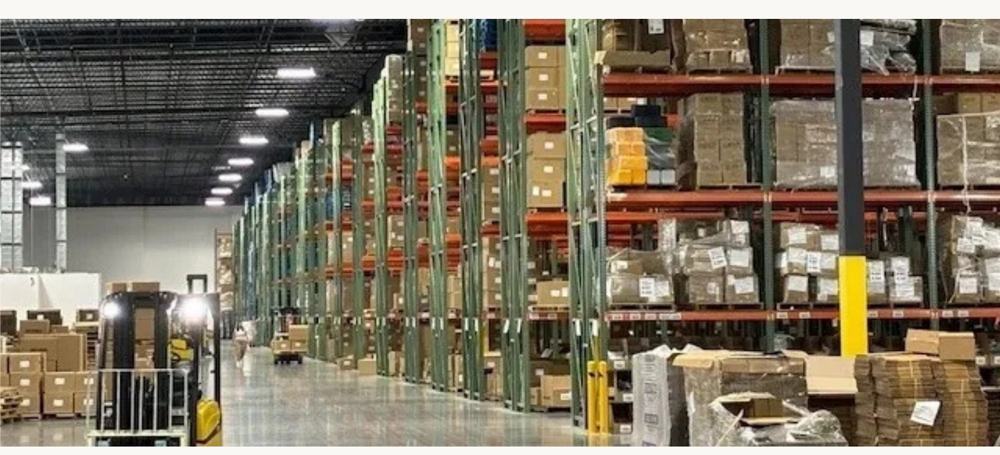 India’s industrial and logistics real estate sector hit new highs in 2025, with warehousing and logistics space absorption reaching record levels across major cities. Demand was driven by manufacturing, third-party logistics providers, and e-commerce, reflecting the country’s growing supply chain needs. What appears to be real estate activity is really a redesign of the backbone of India’s economy. Warehouses, logistics hubs, and industrial parks are not just storage spaces. They are sites of operational flows, freight movement, and jobs. Their design affects turnaround times, shipment reliability, and local livelihoods. As demand shifts from capacity to quality infrastructure, these spaces are being refined for resilience, connectivity, and future competitiveness. In a country betting on manufacturing and exports, how industrial systems are built will determine whether growth is sustainable or brittle. In a country betting on manufacturing and exports, how industrial systems are built will determine whether growth is sustainable or brittle.
From Design Futures India DFI #016, 16 January 2026. Read the full edition →
-
Delhi Metro is trying to fix last mile commute by design
 For many Delhi commuters, the problem is not the metro ride. It is everything before and after it. Short trips taken on private bikes, cars, or informal autos add congestion, idle time, and emissions. To address this gap, Delhi Metro is introducing bike taxis, auto rickshaws, and cab services at select stations to improve last mile connectivity.This shift matters in a city where transport pollution quietly accumulates through millions of short, inefficient trips. When public transport ends too far from home or work, people default to private vehicles. Designing better last mile systems nudges commuters back toward shared mobility. Cleaner air does not come only from electric buses or stricter norms. It also comes from smoother transitions between how people move. Fixing the last mile is a design choice that reduces friction, traffic, and pollution together. Fixing the last mile is a design choice that reduces friction, traffic, and pollution together.
From Design Futures India DFI #016, 16 January 2026. Read the full edition →