Design Futures India · 19 December 2025
DFI #013
In this edition: When Will India Design Airports for Reality, Not Just Rankings?; Double-Decker Design Raises Costs for Namma Metro’s Silver Line; India’s Battery Boom Is Creating a Hidden Design Crisis; and more.
-
When Will India Design Airports for Reality, Not Just Rankings?
 Delhi’s winter fog once again disrupted flights, leaving passengers stranded, frustrated, and powerless. Fog is not a black swan event. What failed was not nature, but design. Aviation systems are meant to anticipate known conditions. When airports, airlines, air traffic control, and passenger communication fail to work together under stress, citizens absorb the cost. Missed work. Lost money. Endless waiting. As India builds airports at record speed, the real risk is not falling behind globally. It is building brittle systems that look modern but fail people when it matters. This reflects a deeper design culture problem. We build for scale and spectacle, not resilience. Design proves its value on the worst days, not the best ones. Fog will prevail. The question is whether better design will. The question is whether better design will.
From Design Futures India DFI #013, 19 December 2025. Read the full edition →
-
Double-Decker Design Raises Costs for Namma Metro’s Silver Line
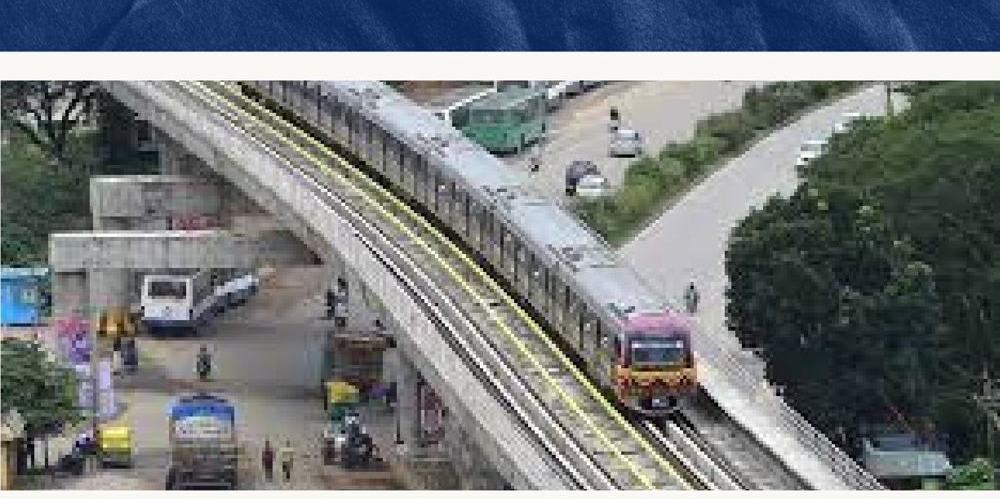 Bengaluru’s upcoming Namma Metro Silver Line will use a double-decker design, a decision that has significantly increased project costs and complexity. Officials cite space constraints and alignment challenges, but the result is clear. Design decisions taken without contextual understanding now lock the city into higher spending and longer timelines. Urban transport is not just an engineering problem. It is a design and governance question. Every structural choice shapes maintenance costs, commuter experience, and future flexibility for decades. This is the real lesson of the Silver Line. When design is rushed or deferred, citizens eventually pay through delays, overcrowding, and higher public expenditure. Indian cities need earlier, more transparent design thinking, not retrofits disguised as innovation. Indian cities need earlier, more transparent design thinking, not retrofits disguised as innovation.
From Design Futures India DFI #013, 19 December 2025. Read the full edition →
-
India’s Battery Boom Is Creating a Hidden Design Crisis
 India’s electric future runs on batteries. But long before recycling plants scale up, battery waste is already piling up in informal backyards, exposing workers to toxic fumes, fire risks, and unsafe livelihoods. The push for battery recycling promises jobs, cleaner energy, and mineral security. The reality is far messier. Right now, who recovers batteries and how is largely a design failure. Informal workers handle dangerous materials with little protection, while formal systems lag behind demand. This is not just an environmental issue. It is a labour and public health question. Battery recycling is where climate ambition meets everyday dignity. If India designs this system well, it can create safe jobs and circular growth. If not, the green transition will quietly shift risk onto the poorest hands. If not, the green transition will quietly shift risk onto the poorest hands.
From Design Futures India DFI #013, 19 December 2025. Read the full edition →
-
Green Hydrogen Will Scale Only If We Redesign the System
 India has ambitious green hydrogen targets, but IIT Madras shows why design, not intent, will decide success. Researchers redesigned electrolyser architecture to cut emissions by 25 percent, without changing policy or fuel source. The breakthrough came from rethinking how components interact, not from slogans or subsidies. Green hydrogen is often treated as a future miracle. In reality, its climate value depends on present-day engineering decisions. Poorly designed systems quietly cancel out environmental gains. Climate action advances through redesign. India’s transition will succeed only when laboratories, factories, and policymakers treat design as a core climate tool. This study proves Indian institutions can deliver when outcomes matter more than optics. This study proves Indian institutions can deliver when outcomes matter more than optics.
From Design Futures India DFI #013, 19 December 2025. Read the full edition →
-
Student AI Tool Helps IITs Identify Welfare Delivery Gaps
 Eight undergraduate students built an AI tool now being used by IITs to identify gaps in India’s welfare delivery. Instead of focusing on flashy automation, the system helps map who is excluded, where processes break down, and why benefits do not reach people on time. This reframes a familiar problem. Welfare failures are often blamed on leakage or scale, but many are design failures. Confusing interfaces, poor data flow, and weak feedback loops quietly push citizens out of the system. What makes this story powerful is not the technology, but the intent. The tool treats welfare as a service that must work for real people. It signals a shift in how young technologists see the state. Not as something to disrupt, but something to redesign. Not as something to disrupt, but something to redesign.
From Design Futures India DFI #013, 19 December 2025. Read the full edition →
-
Why DHRUV64 Is More Than a Chip. It Is a Design Statement.
 India has unveiled DHRUV64, its first indigenous 64-bit, 1.0 GHz dual-core microprocessor, developed to strengthen Electronics System Design and Manufacturing in the country. Built for reliability and adaptability, the chip is intended for strategic, industrial, and civilian applications, including power systems, transport, and secure digital infrastructure. At first glance, this looks like a technical milestone. Its real significance is deeper. Microprocessors shape how systems behave, who controls them, and how resilient they are in crisis. Import dependence creates invisible vulnerabilities. By designing its own processor, India moves from assembling technology to authoring it. In a digital nation, chip design is not just engineering. It is sovereignty by design. It is sovereignty by design.
From Design Futures India DFI #013, 19 December 2025. Read the full edition →
-
India’s Semiconductor Bet Moves Up the Design Stack
 India is positioning itself not just as a place to manufacture chips, but as a global hub for semiconductor design and innovation. Industry leaders point to a growing focus on chip architecture, intellectual property creation, and system-level design, areas that create long-term capability rather than short-term capacity. Semiconductor power today lies less in assembly and more in design control. Who designs chips decides standards, security, and future platforms across energy, transport, defence, and digital infrastructure. For India, this is a cultural change. From executing outsourced work to authoring core technology. From dependency to leverage. If sustained, a design-first semiconductor strategy can generate skilled jobs, strengthen national resilience, and anchor India’s role in future technologies. Chips are no longer components. They are infrastructure by design. They are infrastructure by design.
From Design Futures India DFI #013, 19 December 2025. Read the full edition →