Design Futures India · 26 December 2025
DFI #014
In this edition: India’s first nature-themed airport terminal opens in Assam; Chennai’s Street Code Tests a Better Way to Build Cities; Metro lines reach Central Vista. Delhi’s urban design challenges come with them.; and more.
-
India’s first nature-themed airport terminal opens in Assam
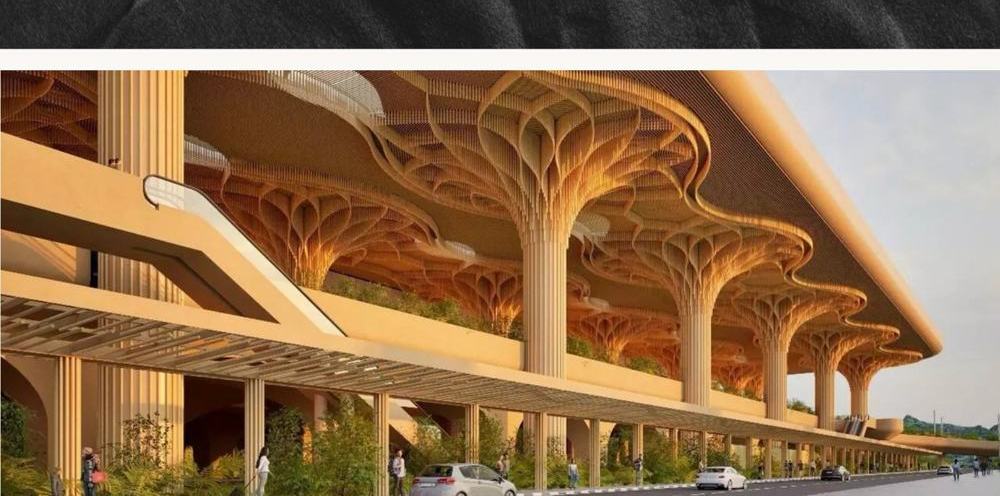 Assam inaugurated India’s first nature themed airport terminal this week, and the signal matters more than the spectacle. The new terminal at Lokpriya Gopinath Bordoloi International Airport places daylight, local materials, and landscape inspired motifs at the centre of passenger movement. This is not aesthetic indulgence. Airports are often the only public buildings in India that work predictably, where signage is legible and dignity is not negotiable. When such spaces also reflect regional ecology and culture, they reset expectations quietly. The real test will come after the ribbon cutting, in maintenance, crowd management, and last mile access. If this design thinking travels beyond airports to bus stations, hospitals, and courts, Assam’s terminal could mark a turning point for everyday governance. If this design thinking travels beyond airports to bus stations, hospitals, and courts, Assam’s terminal could mark a turning point for everyday governance.
From Design Futures India DFI #014, 26 December 2025. Read the full edition →
-
Chennai’s Street Code Tests a Better Way to Build Cities
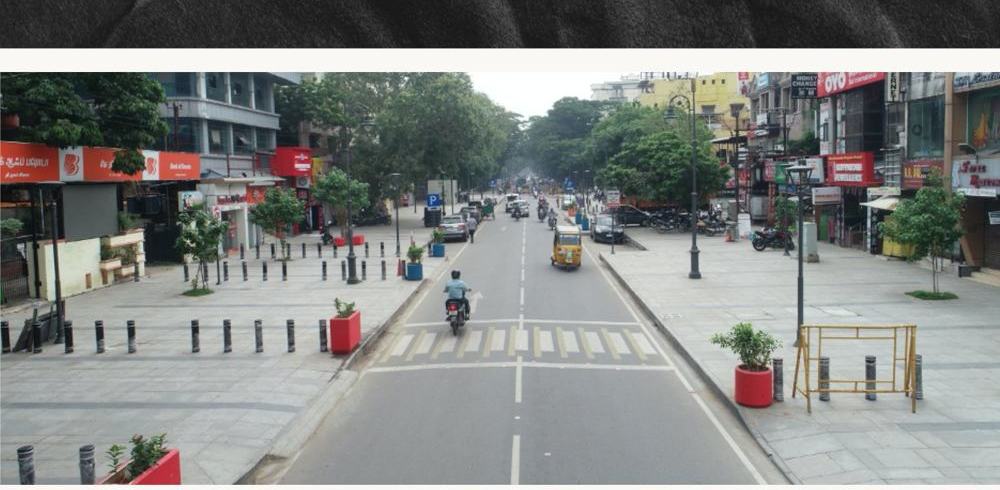 The Chennai Unified Metropolitan Transport Authority (CUMTA) has drafted a unified street design code for the entire Chennai Metropolitan Area aligning footpaths, cycle tracks, bus stops, trees, utilities, and carriageways under one rulebook. This matters because India’s street failure is not a lack of money or ideas. It is fragmentation. Multiple agencies, multiple manuals, zero coordination. The result is dug-up roads, unusable footpaths, and design that prioritises vehicles by default. If implemented well, this code could shift Indian urban design from project-based fixes to standards-based thinking. The real innovation is not wider roads. It is governance that finally treats streets as shared civic infrastructure, not leftover space. It is governance that finally treats streets as shared civic infrastructure, not leftover space.
From Design Futures India DFI #014, 26 December 2025. Read the full edition →
-
Metro lines reach Central Vista. Delhi’s urban design challenges come with them.
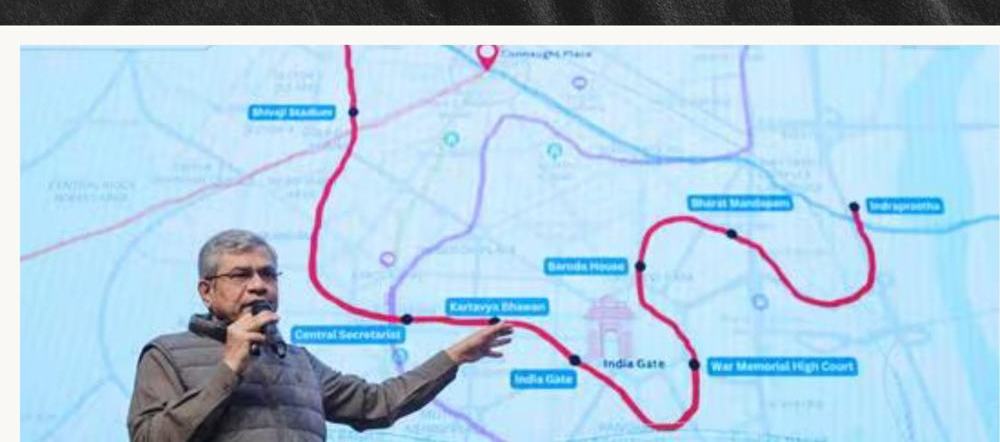 The Union Cabinet has cleared three new Metro corridors in Delhi, including a stretch linked to the Central Vista area. On paper, this expands the reach of the Delhi Metro Rail Corporation and promises faster movement across dense zones. But transport infrastructure is not neutral. Where lines run, where stations land, and who can easily access them shape land values, daily routines, and public life for decades. India has mastered the engineering of Metro systems. What remains uneven is the design integration.Without safe walking access, last-mile connectivity, and mixed-use planning, Metro corridors risk becoming isolated mobility pipes. The innovation challenge is no longer speed underground. It is designing the city above ground to actually work with the Metro. It is designing the city above ground to actually work with the Metro.
From Design Futures India DFI #014, 26 December 2025. Read the full edition →
-
India’s growth story is real but its civic systems are not keeping up
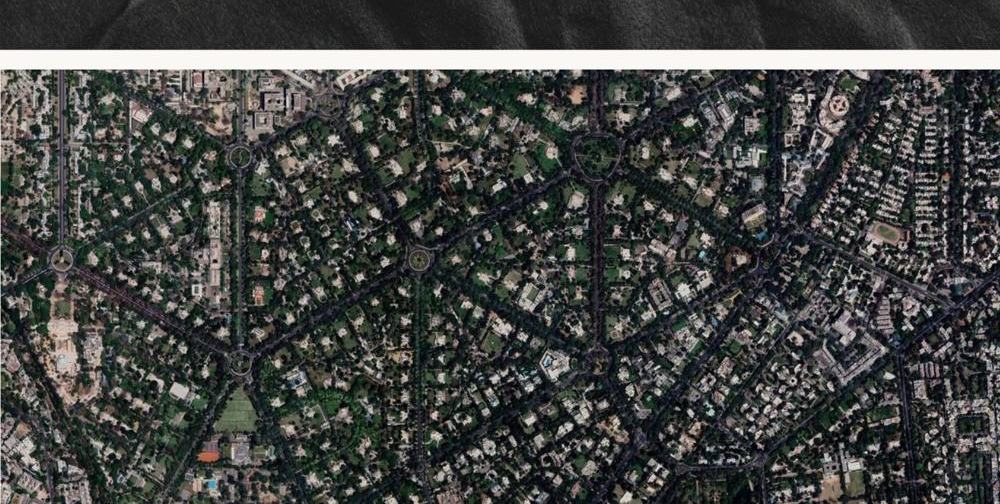 India’s economic growth is often framed through GDP, infrastructure spend, and global ambition. But as a recent essay from the Observer Research Foundation argues, a quieter crisis runs underneath. India’s civic systems are weak, uneven, and underdesigned. Cities struggle with basic service delivery, planning capacity, and institutional coordination. Local governments remain underpowered despite carrying the burden of urban growth that does not scale with population. This is not a failure of aspiration. It is a failure of civic design. India’s next phase of innovation will not come from flagship projects alone. It will come from rebuilding everyday systems that make growth livable, equitable, and durable. It will come from rebuilding everyday systems that make growth livable, equitable, and durable.
From Design Futures India DFI #014, 26 December 2025. Read the full edition →
-
Judicial appointments are a design problem hiding in plain sight
 India’s judicial appointments system, governed by the collegium, is often discussed only in legal terms. A recent analysis by Live Law asks a deeper question. How transparent and accountable is the system that decides who becomes a judge? This matters for design and innovation because institutions are designed systems. When processes are opaque, feedback is weak, and decision-making is concentrated, outcomes become fragile. The collegium’s lack of clear criteria and public reasoning makes trust harder to build. Design is not only about objects or interfaces. It is about how power flows through systems. If India wants institutions that scale with democracy, judicial governance must be designed for clarity, legitimacy, and public confidence. If India wants institutions that scale with democracy, judicial governance must be designed for clarity, legitimacy, and public confidence.
From Design Futures India DFI #014, 26 December 2025. Read the full edition →
-
India Begins Designing for Life After Inauguration
 India quietly took an important step this week when Esri India and Autodesk announced a collaboration to integrate GIS and BIM tools across infrastructure projects. This matters because India’s biggest infrastructure failures rarely happen at launch. They happen later, when roads are dug up again, utilities clash underground, and no one knows who is responsible. By linking spatial data with building and asset information, this approach treats infrastructure as a living system rather than a one-time construction project. It shifts attention from ribbon cuttings to maintenance, accountability, and long-term performance. If public agencies adopt this seriously, it could reduce waste, rework, and public frustration. This is not flashy innovation, but it is the kind of design shift that actually improves everyday life. This is not flashy innovation, but it is the kind of design shift that actually improves everyday life.
From Design Futures India DFI #014, 26 December 2025. Read the full edition →
-
Defence design talent becomes a national priority
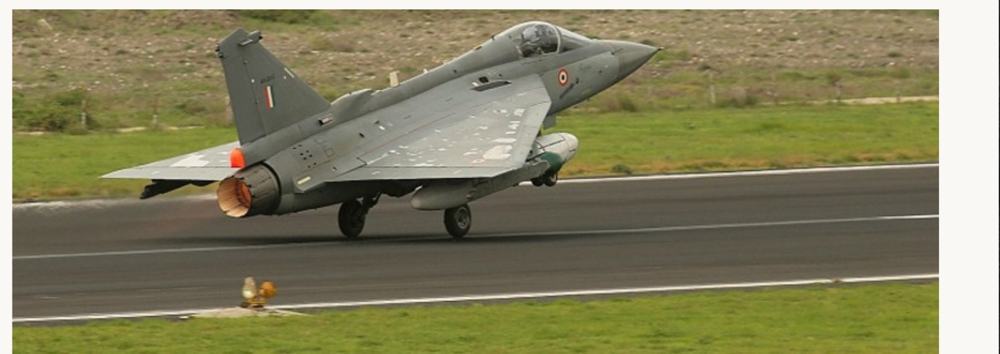 The Aeronautical Development Agency announced fresh recruitment this week to accelerate the Tejas Mk2 fighter aircraft programme. On the surface, this looks like routine hiring. In reality, it signals something deeper. India is recognising that design capability, not just manufacturing capacity, determines strategic independence. For years, India has assembled advanced systems without owning core design decisions. That model creates dependence and limits learning. By strengthening inhouse design and systems engineering, ADA is treating talent as long-term national infrastructure.This work is slow, expensive, and largely invisible to the public. But it is exactly what separates countries that build things from those that truly own them. Sovereignty is designed patiently over decades. Sovereignty is designed patiently over decades.
From Design Futures India DFI #014, 26 December 2025. Read the full edition →