Design Futures India · 24 April 2026
DFI #026
In this edition: Can Democracy be Designed?; Delayed by Design: The Politics of Women’s Representation; Delhi’s Bid to Become the Brain Behind India’s Chip Design; and more.
-
Can Democracy be Designed?
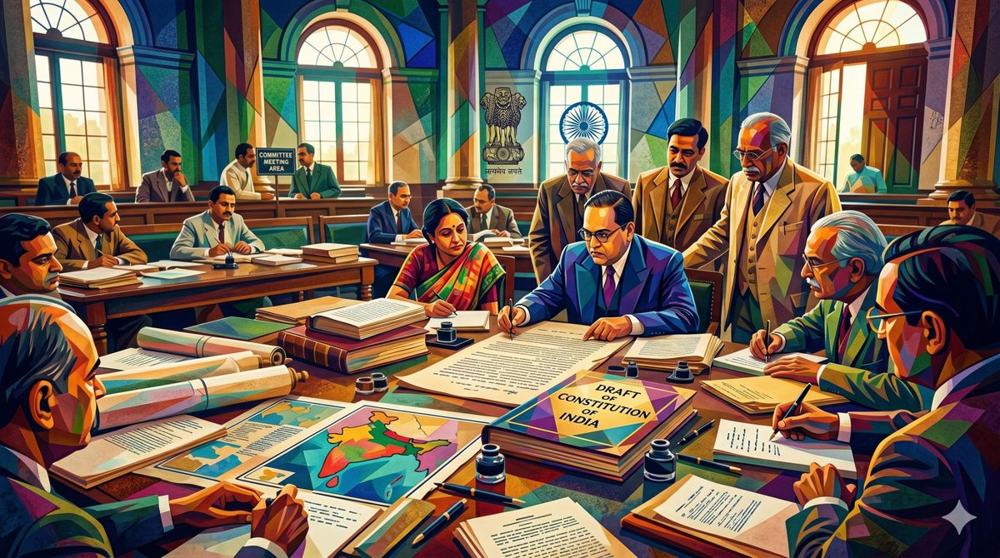 For most of us democracy is synonymous to elections. People vote, governments form, power shifts. But elections are only the visible layer. Democracy is designed through timelines, thresholds, maps, sequencing, and procedural dependencies. When a reform takes effect, what conditions must be met, how constituencies are drawn, what happens first and what must waitthese decisions shape who gets represented and when. A law may promise change, but its design determines whether that change is immediate or indefinitely deferred.This is the invisible architecture of power. If we only look at voting, we only see participation. If we look at design, we see patterns emerging. The future of India will not be decided only at the ballot box. Democracy is not only about the right to vote, but about the systems that decide when that right becomes real. Democracy is not only about the right to vote, but about the systems that decide when that right becomes real.
From Design Futures India DFI #026, 24 April 2026. Read the full edition →
-
Delayed by Design: The Politics of Women’s Representation
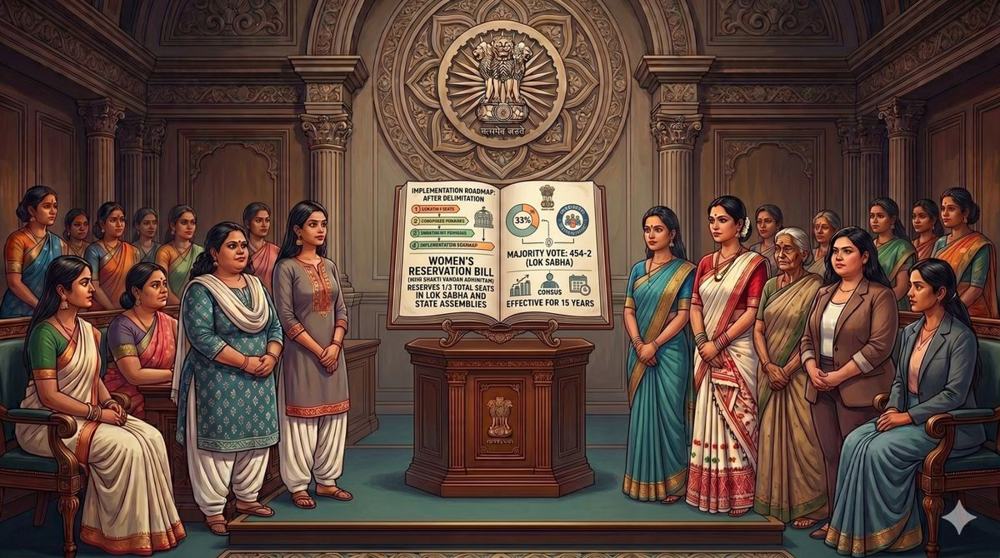 The Nari Shakti Vandan Adhiniyam promises 33% reservation for women in Parliament and state assemblies. Passed in 2023, it remains unimplemented not just due to politics, but by design. The law activates only after a fresh Census and delimitation. Until then, representation is on hold. This is not incidental. It is constraint design. Opposition parties have pushed for immediate rollout, questioned these conditions, and demanded sub-quotas for OBC women keeping the issue politically alive. Meanwhile, some parties have expanded women’s representation within their own ranks and state governments, creating parallel pathways even as the national framework remains pending. In India, democracy is not only designed by those in power-it is continuously reshaped through debate and demanding accountability on promises never met and bills never implemented. News Source: Multiple sources News Source: Multiple sources
From Design Futures India DFI #026, 24 April 2026. Read the full edition →
-
Delhi’s Bid to Become the Brain Behind India’s Chip Design
 Delhi is drafting a new semiconductor policy. Unlike states competing for fabs and manufacturing plants, Delhi is aiming at the brain of the semiconductor ecosystem: chip design, IP, research, advanced packaging, startups and talent. The state realises thats semiconductor power is not only built in factories. It is also built in design labs, universities, tools, patents and skilled ecosystems. India’s national push has already begun supporting chip-design startups through targeted incentives. Delhi’s move shows how states may now compete not just on land and subsidies, but also on knowledge infrastructure. But ambition must meet reality. Delhi is already operating under intense population pressure, pollution, and strained urban systems.The question is not just whether Delhi can design the future of chips, but whether it can support the people needed to build it. News Source: Economic Times News Source: Economic Times
From Design Futures India DFI #026, 24 April 2026. Read the full edition →
-
Is Claude Design the end of visual design as we know it?
 Anthropic has introduced Claude Design, a tool that can generate interfaces, presentations, and prototypes through simple prompts. At first glance, it looks like another AI feature. But the shift is much deeper. Visual Design is no longer confined to tools, timelines, or trained specialists. It is becoming a system capability. Users can now describe what they want and see it take shape instantly, with structure, layout, and design logic built in. News Source: Money Control This collapses the distance between idea and execution. Nondesigners can design. Designers may move from making to meaning making. What we are witnessing is not AI entering design, but design dissolving into AI.The future will not belong to those who can use design software, but to those who can think systemically & clearly with design across various domains of economy, business and technology.
From Design Futures India DFI #026, 24 April 2026. Read the full edition →
-
India’s Aviation Moment: Who Designs the Future of Flight?
 India’s aviation sector is at an inflection point. Experts are calling for a shift from manufacturing and operations to design-led growth. For decades, India has built scale in aviation through demand, assembly, and services. But the real value lies elsewhere—in design, engineering, intellectual property, and lifecycle systems. This is where control shifts. Design determines how aircraft are built, how systems perform, and how value is captured over time. India is already a global hub for aviation engineering talent. The next step is not just supporting global players, but sharpening and shaping the systems they depend on. This is not just about flying more planes in the sky. It is about deciding who designs the future of aviationIn the next phase of growth, the question is not who can build the fastest, but who gets to decide what gets built. News Source: Telangana Today News Source: Telangana Today
From Design Futures India DFI #026, 24 April 2026. Read the full edition →
-
Breastfeeding in Public Spaces: The Right That Has No Room
 In 2025,The Supreme Court of India recognised breastfeeding as a constitutional right and called for dedicated spaces in public buildings. But a year later, most buildings still do not have them. The gap is not in policy. It is in design. Public infrastructure is often imagined as neutral. In reality, it is built around an assumed user —one who does not need privacy, care, or support. For women, especially new mothers, News Source: Live Law this turns everyday spaces like railway stations, courts, and offices into places of discomfort or withdrawal. No one is explicitly excluded. Yet participation becomes difficult.This is how exclusion operates quietly in systems.The court acknowledged a right. But without design, a right cannot function. Democracy does not only depend on laws. It depends on whether everyday environments are built to support those laws. It depends on whether everyday environments are built to support those laws.
From Design Futures India DFI #026, 24 April 2026. Read the full edition →
-
India’s first Petroglyph Conservation Park in Ladakh
 India is building its first Petroglyph Conservation Park in Ladakh to protect ancient rock carvings known as petroglyphs. These are images and symbols carved directly onto stone surfaces, often thousands of years ago. Some of Ladakh’s petroglyphs date back to the Palaeolithic period, making them several thousand years old. They show scenes of early human life, animals like ibex and snow leopards, and later signs of Buddhist culture and News Source: Ladakh.gov.in trade routes. Today, many of these carvings are at risk due to tourism, construction, and climate stress. So India is making a design choice: move heritage to save it. This marks a shift from passive preservation to active curation—where history is reorganised, protected, and made accessible through modern systems. This initiative is no longer just about preserving the past, but how we redesign it to survive the future and make it accessible to the coming generation of Indians. This initiative is no longer just about preserving the past, but how we redesign it to survive the future and make it accessible to the coming generation of Indians.
From Design Futures India DFI #026, 24 April 2026. Read the full edition →