Design Futures India · 5 June 2026
DFI #030
In this edition: The South Asian Gen Z protest arrives in India; India is writing the Global South’s first UX design laws; India designs roadmap to design the world’s most advanced chips; and more.
-
The South Asian Gen Z protest arrives in India
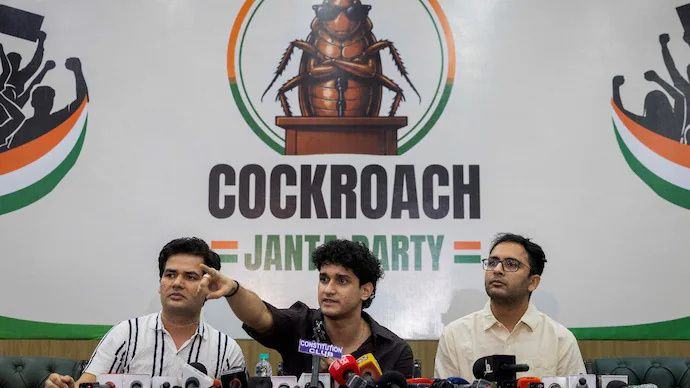 India is the latest entry in a regional pattern reshaping South Asian politics. Nepal’s government collapsed in five days last September after Gen Z protests, Bangladesh ended a 15year regime in weeks in 2024. Sri Lanka toppled its rulers in 2022. Indonesia, Madagascar, Morocco followed through 2025. India’s Cockroach Janta Party (CJP) crossed 20 million Instagram followers in three weeks. Founder Abhijeet Dipke leads a Delhi protest on June 6 demanding the News Source: The Wire Education Minister’s resignation. While most of us see these as isolated cases, these movements share a deeper DNA — leaderless, social media-organised, satirical, meme-first, fast. CJP is the most constitutionially aware and oragnised version yet. Indian government still thinks it’s being protested against. The fact is that it might be out-designed by a generation demanding accountability, efficiency and a functioning democracy. The fact is that it might be out-designed by a generation demanding accountability, efficiency and a functioning democracy.
From Design Futures India DFI #030, 5 June 2026. Read the full edition →
-
India is writing the Global South’s first UX design laws
 From June 1, every UPI transaction shows the recipient’s verified bankregistered name before payment. A small interface change. A large policy one. It joins two recent moves. The IT Rules 2026 made platforms liable for deepfakes with three-hour takedowns. The Central Consumer Protection Authority named 13 “dark patterns” and asked e-commerce platforms to self-audit. 26 platforms have already declared compliance. For decades, design in India was treated as decoration. From this year, it is being treated as infrastructure the state can regulate. India is the first major Global South economy to legally name UX as a consumer harm vector. It recognises the impact of UX design on decision making, security, mental health and economy. Design is no longer something India consumes. It is something India is actively starting to regulate. News Source: NPCI, MeitY (IT Rules 2026) News Source: NPCI, MeitY (IT Rules 2026)
From Design Futures India DFI #030, 5 June 2026. Read the full edition →
-
India designs roadmap to design the world’s most advanced chips
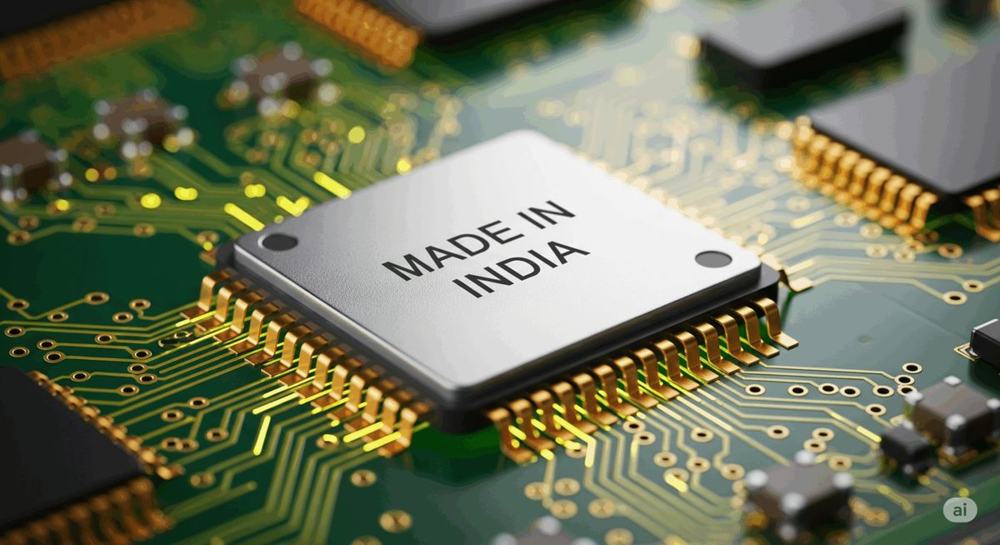 On May 30, NITI Aayog released Future of India’s Semiconductor Industry — a ten-year roadmap targeting a $120–150 billion value chain by 2035. Instead of chasing cutting-edge wafer fabrication, it proposes a “Morethan-Moore” strategy: maturenode manufacturing, advanced packaging, and design innovation as core pillars. India already houses 20% of the world’s semiconductor design workforce. Twelve fab projects and 24 design projects have been approved under the India Semiconductor Mission. India’s first 3nm chip design centres opened in Noida and Bengaluru last year. For thirty years, India has been the world’s back office — building software for IP it didn’t own. The roadmap signals a shift. India is entering the chip value chain through its strength, not its weakness. The country that has long made designs for others is staking a claim to design its own. However, India needs to make the implementation as good as policy. News Source: Press Information Bureau News Source: Press Information Bureau
From Design Futures India DFI #030, 5 June 2026. Read the full edition →
-
India designed the syllabus. Microsoft is designing the teacher.
 Microsoft launched Elevate for Educators in India — its first Asian rollout. The goal: train 2 million teachers, reach 200,000 schools, and equip 8 million students by 2030 with AI skills. The program runs through DIKSHA and Skill India Digital Hub, in partnership with CBSE, NCERT, AICTE, and state departments. It sits inside Microsoft’s broader commitment to skill 20 million Indians in AI by 2030. AI from Class 3 before training the teachers who’d deliver it. Microsoft is filling the gap. India gets scale it cannot build alone. Microsoft gets a decade-long relationship with 2 million teachers, 8 million students, and the Indian platform stack — DIKSHA, Skill India, every classroom that follows. The curriculum is Indian. The teacher relationship is American. That is a design choice with a long shadow.The question isn’t whether India can teach AI. It’s who owns the relationship with the teachers who teach it. News Source: Microsoft Source Asia News Source: Microsoft Source Asia
From Design Futures India DFI #030, 5 June 2026. Read the full edition →
-
CBSE is teaching AI to students before the basics are met
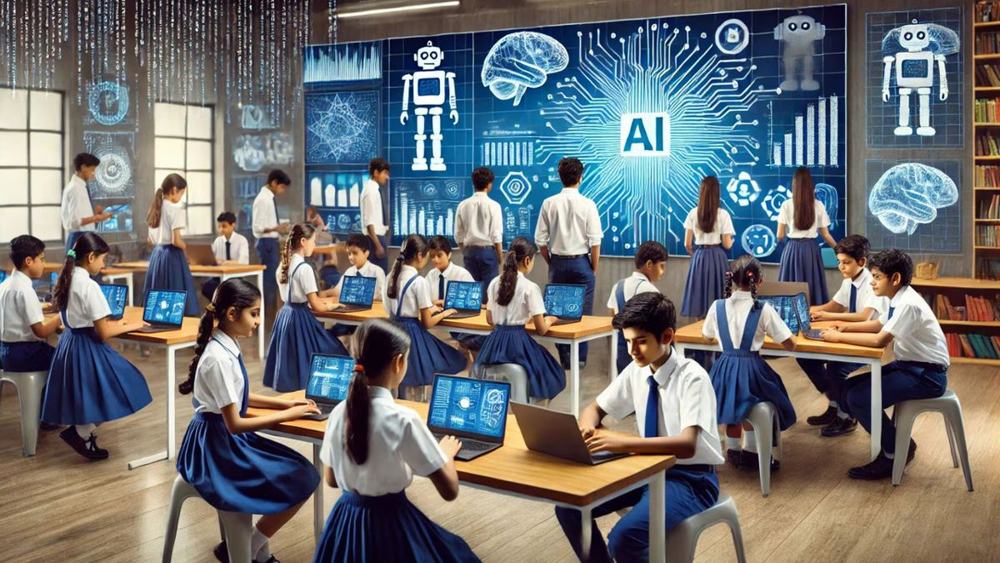 CBSE has introduced Artificial Intelligence and Computational Thinking (AI&CT) as a mandatory for Classes 3–8 from the 2026-27 academic session. The curriculum framed as “AI for Public Good” was designed by an IIT Madras-led expert committee. The curriculum reframes how India understand foundational skills. These are no longer limited to literacy and numeracy alone; they now include logical thinking, pattern recognition, problem solving and ethical responsibility.. News Source: Times of India While the curriculum looks promising, India’s ground reality is different. Only 57% of Indian schools had computers in 2023-24. Only 27% of children aged 6-14 have basic internet access. Schools still differ widely in the availability of functioning devices, bandwidth, teacher preparedness, lab time, maintenance, and integrating technology into everyday teaching. What remains to be seen is whether or not the promised scale translates into depth on ground esp. for educators
From Design Futures India DFI #030, 5 June 2026. Read the full edition →
-
When Design enters the financial vocabulary
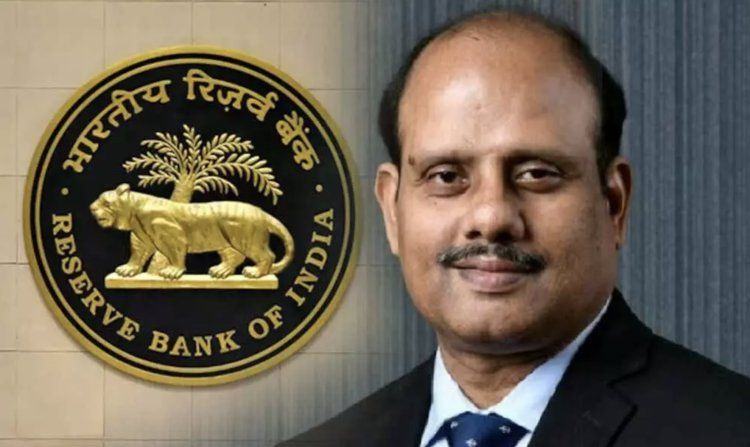 In a speech delivered at Columbia University, RBI Deputy Governor Swaminathan J said banking resilience is “not an accident of growth” — it must be designed. He laid out five dimensions of “resilience by design”: transparent recognition of stress, stronger balance sheets, sharper supervision, adaptive regulation, and responsible conduct inside banks. India’s post-2015 Asset Quality Review and the Insolvency and Bankruptcy Code were cited as News Source: ANI News resilience design choices, not crisis responses. A senior central banker using “designed” as a verb is a quiet but important shift. For decades, institutional strength in India has been framed as a byproduct of growth. Swaminathan inverted that. Resilience is now spoken of as an intentional architecture — built in good times, tested in bad ones. The next test he named: AI, cyber, climate, interconnectedness. These are design problems in waiting, not market problems. These are design problems in waiting, not market problems.
From Design Futures India DFI #030, 5 June 2026. Read the full edition →
-
Delhi is designing building approvals and redesigning access
 The Delhi Development Authority launched an AI-driven single-window system for building permits under the Online Building Permit System (OBPS). Citizens, architects, and developers can now submit plans, documents, and multiple NOCs through one portal. AI scrutinises plans automatically. Geo-tagged inspections replace office visits. Approvals are digitally signed. The Lieutenant Governor’s brief was simple: reduce corruption, harassment, and the endless trips News Source: The Hindu to government offices. Anyone who has tried to get a Delhi building approval knows the agent, the chaipaani, the file that moves only when it moves. Removing those frictions is a genuine design win. However, every digital system innovation silently asks three questions: who gets access, who stays safe, and who can challenge it. The real question for India is whether we can design digital systems that uphold constitutional values — access, dignity, equality, the right to question and be heard. The real question for India is whether we can design digital systems that uphold constitutional values — access, dignity, equality, the right to question and be heard.
From Design Futures India DFI #030, 5 June 2026. Read the full edition →