Design Futures India · 12 June 2026
DFI #031
In this edition: NEP 2020 and India’s Unfolding Education Crisis; The next wave of Indian design may not look like design at all; India’s language stack just crossed its first border; and more.
-
NEP 2020 and India’s Unfolding Education Crisis
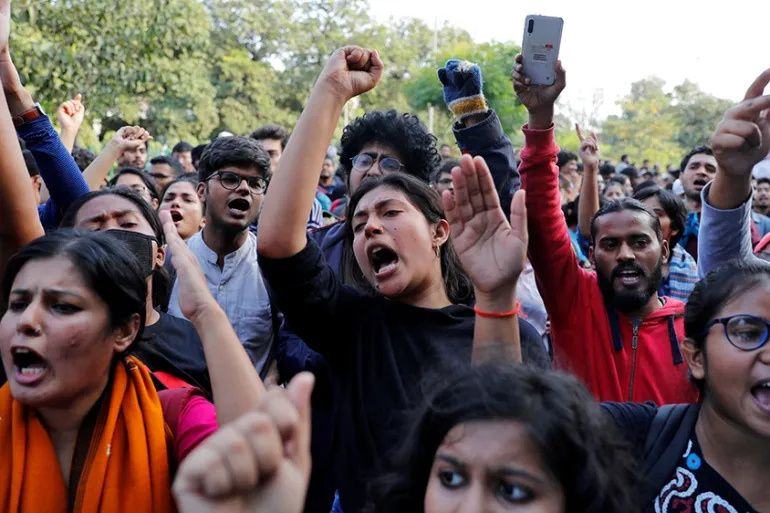 In the last few weeks, India’s education crisis has unfolded dramatically. Paper leaks. Student deaths. Protests across cities. The crisis was long in the making. Especially after NEP 2020. India now has 50 million active online learners. NITI Aayog says 35% of state university teaching posts lie vacant. Forty to fifty percent of faculty in many states are contractual. In 2013-14, the Department of Higher Education received 2.52% of the Union Budget. By 2024-25, it News Source: Frontline received 0.91%. Two-thirds of India’s higher education institutions are now privately managed. Fees now pay for what budgets used to. NEP 2020’s promise of 6% of GDP on education has never been met. Students and citizens have begun to ask a quieter, sharper question. Does the system want them educated at all? In the silence of the government, that question lingers. Are we optimising to evolve as a nation, or are we letting optics and IT cells do the talking? Are we optimising to evolve as a nation, or are we letting optics and IT cells do the talking?
From Design Futures India DFI #031, 12 June 2026. Read the full edition →
-
The next wave of Indian design may not look like design at all
 On June 11, Union Minister Ashwini Vaishnaw inaugurated an advanced quantum computing and AI lab at MNIT Jaipur. The Makers Lab will provide students with experiential and hands-on training opportunities in both software and hardware. This will include sensors, embedded systems, compute devices. Vaishnaw said that while the current technological wave is being led by AI, the next wave will be lead by quantum computing. News Source: Times of India Encouraging students, the minister said that there is a demand for over a million semiconductor design workforce. For most Indians, design is still what you see. A poster. A car. A shop window. The quieter shift is what design is becoming beneath those surfaces. A chip is designed before it is made. A quantum protocol is designed before it is used. The most important design happening in India over the next decade will increasingly be invisible. That is the point.
From Design Futures India DFI #031, 12 June 2026. Read the full edition →
-
India’s language stack just crossed its first border
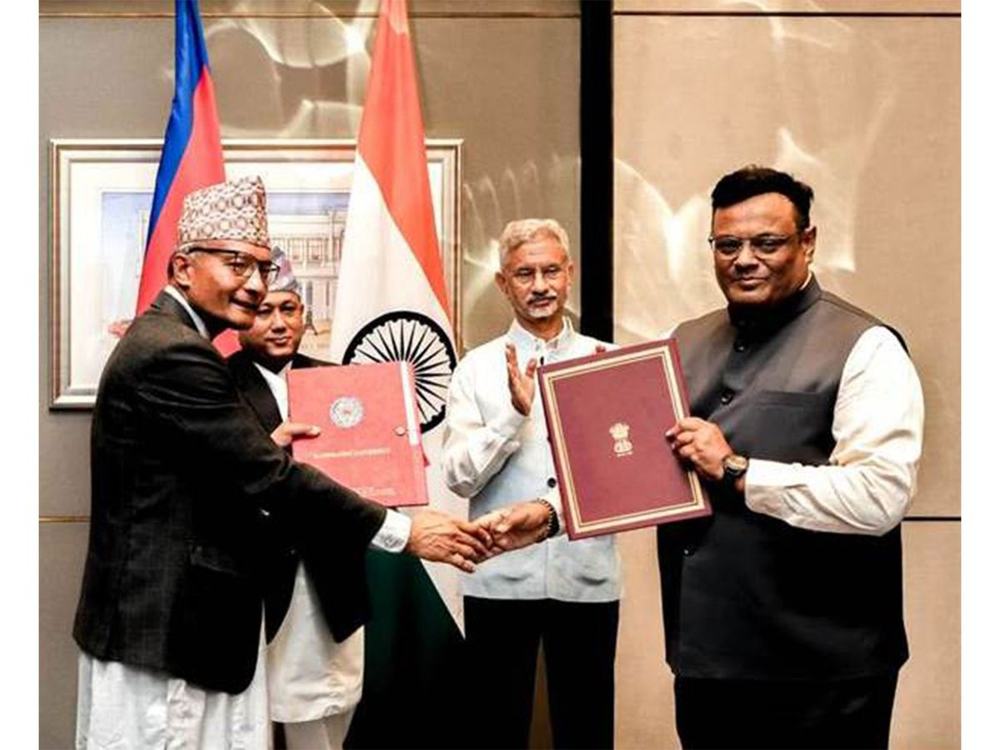 On 7 June 2026, the Digital India Bhashini Division signed an MoU with Kathmandu University’s Centre for Digital Public Infrastructure and AI to co-build a voice-first multilingual translation platform for Nepal. The agreement covers Nepali datasets, speech corpora, speech-to-text, text-to-speech, and machine translation. It also commits both sides to preserving low-resource Himalayan languages at risk of News Source: ANI what the partnership calls “digital extinction.” While most countries treat translation as a private product. India treats it as public infrastructure: open APIs, voice-first, free at the point of use, designed for the non-literate. That reframe is what crossed the border this week. Nepal isn’t licensing an app. It’s adopting an architecture. The bigger story is whether the rest of the Global South follows. The bigger story is whether the rest of the Global South follows.
From Design Futures India DFI #031, 12 June 2026. Read the full edition →
-
When Consent is designed for Legibility
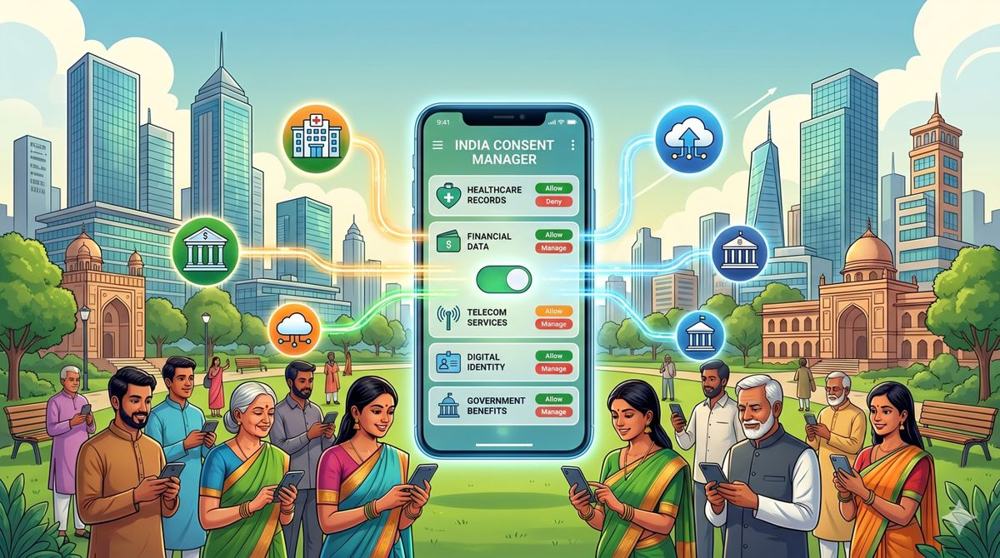 Between June and August 2026, the central government is expected to operationalise the Consent Manager framework under the Digital Personal Data Protection Act, 2023. The Consent Manager is an interoperable platform that lets citizens grant, review, and withdraw data permissions across multiple digital services from one place. The framework also requires privacy notices to be available in English or any of the 22 official Indian languages . News Source: MeitY on request. Full enforcement, including penalties up to ₹250 crore, begins May 2027. Indian consent flows today are illegible long, defaulted-to-yes, near-impossible to reverse. A working Consent Manager turns consent into a designed object: legible, multilingual, and reversible. Whether citizens use it depends less on the law than on whether the interface earns their attention. Privacy regimes usually fail at usability, not at law. Privacy regimes usually fail at usability, not at law.
From Design Futures India DFI #031, 12 June 2026. Read the full edition →
-
India’s muga silk gets a redesigned value chain
 Mission Senehjori, launched on 2 June 2026, sets out a three-year plan to rebuild Assam’s Muga silk economy from cocoon to export. The scale is modest but the structure is ambitious: ₹396–411 crore across eight districts, 30 Farmer Producer Organisations, 1,180 Farmer Interest Groups, regeneration of 5,000 hectares of host plants. By 2028, the mission aims for 80% of traded Muga silk to carry GI authentication, with digital traceability linked to over 8,000 weaver households. The design lesson sits in what’s being treated as infrastructure. Not the silk. The value chain of reeling units, common facility centres, branding, traceability, even cultural tourism — is the thing being built. The world’s only naturally golden silk supports 2.6 lakh families who currently earn ₹18,000–21,000 a year. The mission’s success is whether that number moves and provides the weavers a sustainable livelihood. News Source: Press Information Bureau News Source: Press Information Bureau
From Design Futures India DFI #031, 12 June 2026. Read the full edition →
-
Bengaluru gets a lesson in designing interoperability
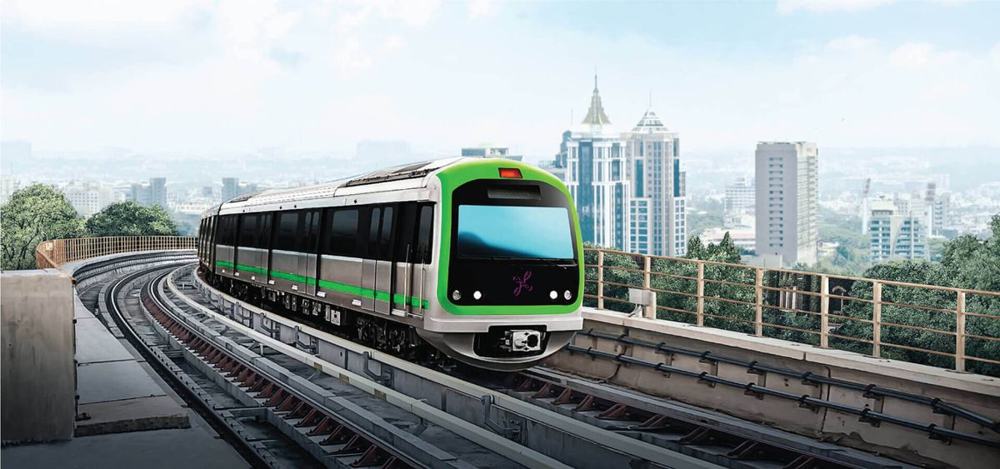 Starting June 2026, BMTC buses begin accepting the National Common Mobility Card under India’s One Nation One Card framework, which also works on Namma Metro. One card, multiple modes — and, eventually, multiple cities. Bengaluru loses an estimated 700,000 productive hours each year to traffic; the city’s metro is expanding to cover 175 km this year. The card existed for three years before it worked across modes — because BMTC’s News Source: ANI machines couldn’t read it. That delay is the design lesson in interoperability. Cards don’t solve congestion. But they remove friction at the seams between modes — which is where most public transport users actually drop out. The deeper signal: India is learning (the hard way) to design systems before it finishes building transit options. Interoperability is the cheaper when systems are being designed than upgrading later. Interoperability is the cheaper when systems are being designed than upgrading later.
From Design Futures India DFI #031, 12 June 2026. Read the full edition →
-
Sikkim is adding design to its rural enterprise toolkit
 On 8 June 2026, a day-long workshop on product design, branding, packaging, and storytelling was held at the Kabi Block Administrative Centre in Mangan district, North Sikkim. The session, run by Sikkim Inspires (IEIAP) in collaboration with Mumbai-based ALSISAR Impact, was attended by SHG members, rural entrepreneurs, and artisans. The stated goal: transforming traditional skills and locally available resources into market-ready products that can travel beyond the state. Most rural enterprise programmes in India lean on credit, skilling, and market linkages. Storytelling and identity rarely make the toolkit. Sikkim is treating these as core competencies — and delivering them at block level, the smallest administrative tier above the panchayat. Whether SHGs see better margins is the test that matters in this world. News Source: Government of Sikkim News Source: Government of Sikkim
From Design Futures India DFI #031, 12 June 2026. Read the full edition →