Design Futures India · 19 June 2026
DFI #032
In this edition: Design against Design: India’s emerging new visual culture; One year of worst air disaster, India misses its own deadline; Can AI Agents spend your hard earned money through UPI?; and more.
-
Design against Design: India’s emerging new visual culture
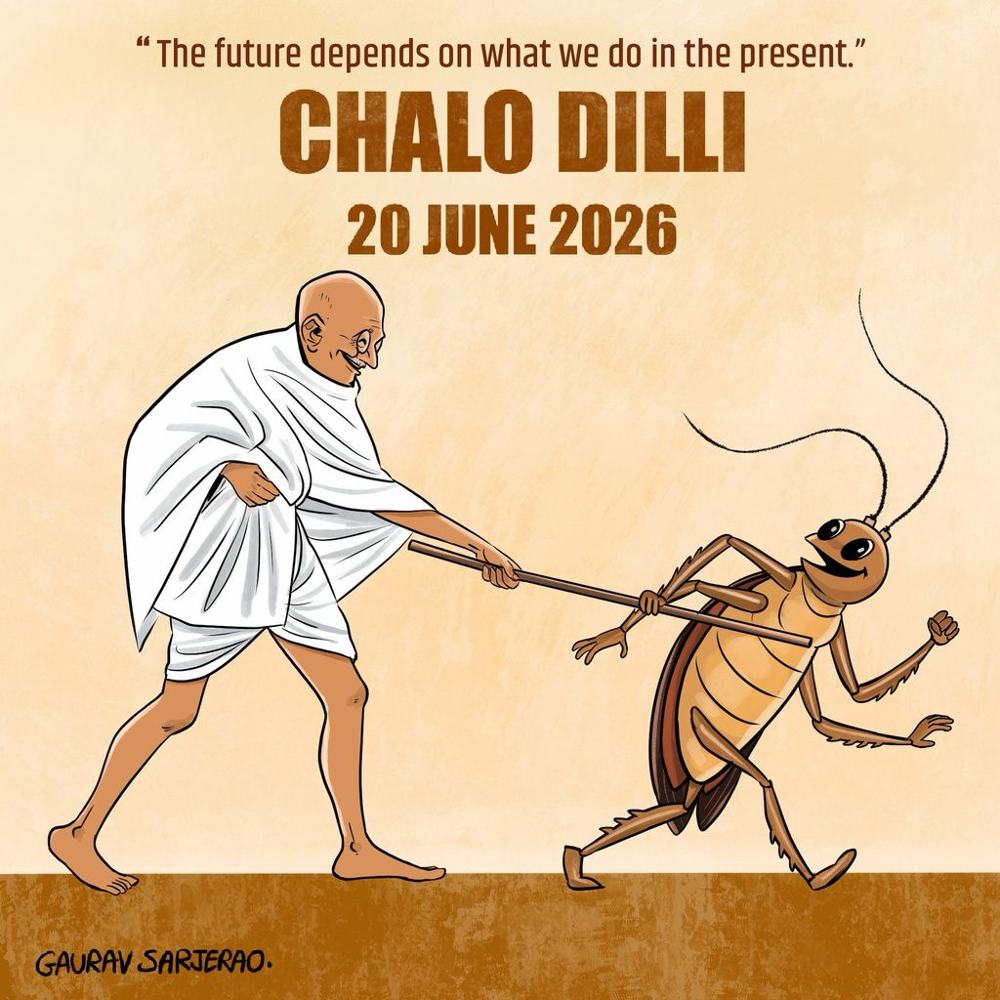 In five weeks, a six-legged insect has become one of the most reproduced symbols in Indian visual culture. It is on masks. It is in posters. It is being illustrated, animated, stitched, stencilled, sung about, and printed on t-shirts. One artist, Gaurav Sardana, drew a Gandhi figure being pulled forward by one. Nobody owns the copyright. Nobody licenses it. There is no style guide. Every cockroach looks slightly different from the last and that is the design. The symbol works because of how badly it was meant. A word chosen to diminish a generation has been reclaimed until the original sting is no longer recoverable. The cockroach is now ugly, friendly, defiant, sometimes even funny on purpose. It is rare to encounter an Indian symbol with no authority deciding what it should look like and even rarer, to have its meaning gets sharper over time. This is what makes the cockroach the most universal design move of 2026! Illustration Credits: Gaurav Sardana Illustration Credits: Gaurav Sardana
From Design Futures India DFI #032, 19 June 2026. Read the full edition →
-
One year of worst air disaster, India misses its own deadline
 12 June 2026, India marked one year since Air India Flight AI171 crashed seconds after takeoff from Ahmedabad, killing 260 people. The preliminary report from July 2025 had identified that both engine fuel control switches transitioned from RUN to CUTOFF within seconds of liftoff. Engine examination in the US is still pending. The Federation of Indian Pilots has urged that no interim findings be issued. The captain’s father has petitioned the Supreme Court for an independent investigation. Under international rules, a final report is due within twelve months. India is the world’s third largest aviation market and has now missed that deadline on its worst aviation crash. The crash investigation has become a long study in how accountability dissolves into procedural delay. Aviation safety in India rests on a chain of small design choices that are invisible to passengers, until one of them breaks. News Source: Outlook Business News Source: Outlook Business
From Design Futures India DFI #032, 19 June 2026. Read the full edition →
-
Can AI Agents spend your hard earned money through UPI?
 On 11 June 2026, Pine Labs launched the Pine Labs Payment Protocol (P3P), a system that allows AI agents to complete UPI payments without the user authenticating each transaction. It works on top of UPI ReservePay and One Time Mandate. The user authorises once, the agent transacts within set limits. Vijay Sales is testing. RBI and NPCI have not issued guidance on liability, privacy, or audit for autonomous agent News Source: Medianama payments. This is important for financial security as P3P P3P quietly removes the person from that loop. The most successful piece of Indian digital public infrastructure is now being extended into a layer where consent is given once and exercised forever by software. The regulatory questions are not technical, they are constitutional in spirit. Will financial consent in India become a one-time act? Will financial consent in India become a one-time act?
From Design Futures India DFI #032, 19 June 2026. Read the full edition →
-
Omission by Design? India’s new Telecommunications Law
 On 12 June 2026, the Ministry of Information and Broadcasting released the draft Telecommunications (Television, Radio and Associated Services) Rules, 2026. The rules consolidate six legacy frameworks into one. They cover satellite TV, DTH, HITS, FM radio, community radio, and IPTV. They replace the colonial Indian Telegraph Act of 1885. However, they do not cover FAST channels, social media, digital news, or creators on YouTube and Instagram. The omission is striking because it comes at a moment when regulators are actively debating whether such services should be brought under formal oversight. The issue has already exposed a fault line across the media industry. A 1885 law has been redesigned for satellite and cable in 2026. The internet is being left to a different room. The omission is not a gap. It is a deliberate design choice. News Source: Press Information Bureau News Source: Press Information Bureau
From Design Futures India DFI #032, 19 June 2026. Read the full edition →
-
Is Indian folk culture and music an act of design?
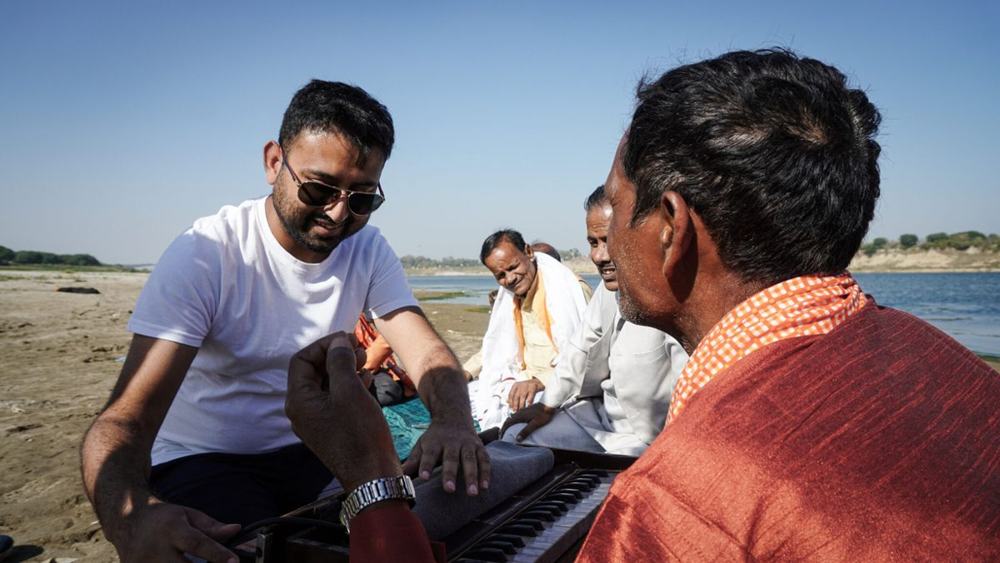 On 13 June 2026, a research paper presented at the Design Research Society Conference in Edinburgh argued that India’s folk musicians about how folk artists are recognised, credited and compensated. They are firstgeneration creators using music to respond to environment, gender, communal harmony and social reform. The paper, titled “Co-designing Culture,” is by Abhinav Agrawal, Mudit Chaturvedi and Gaurang Agrawal of the Anahad Foundation, which has worked with over 10,000 folk artists across 15 states for 13 years. It draws on interviews with 23 firstgeneration artists in 14 states. Today, a GI tag may protect a craft from imitation but there is no such framework for folk and oral traditions. The Anahad paper at a conference like DRS is the first serious attempt to challenge existing definitions on copyright and ownership. As the orange economy expands, the hardest design move is to collectively agree on all the new domains entering “design” News Source: The New Indian Express As the orange economy expands, the hardest design move is to collectively agree on all the new domains entering “design” News Source: The New Indian Express
From Design Futures India DFI #032, 19 June 2026. Read the full edition →
-
Jharkhand’s Bhagaiya silk, Munda jewellery, bamboo craft get GI tag
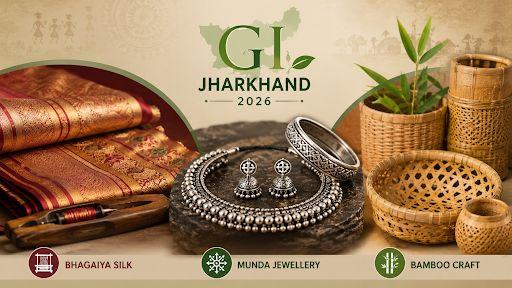 On June 14, Jharkhand’s Bhagaiya silk, Kuchai silk, Munda jewellery, and bamboo craft products have received the Geographical Indication (GI) tag. National Bank for Agriculture and Rural Development (NABARD), in the statement, said it was a significant milestone for the artisans and weavers of Jharkhand. The GI recognition is the culmination of years of focused efforts undertaken by the bank in collaboration with producer groups, artisans, self- help groups, farmer producer organisations, government departments, technical institutions and other stakeholders, the statement said. The recognition brings national attention to Jharkhand’s rich sericulture traditions. The GI tag not only provides recognition and commercial value to craft products but also encourages younger generations to continue producing these traditional crafts, thereby ensuring their preservation. News Source: Business Standard News Source: Business Standard
From Design Futures India DFI #032, 19 June 2026. Read the full edition →
-
How Tata Motors is changing its design approach
 On 16 June 2026, Tata Motors’ chief design officer Martin Uhlarik said the company will reintroduce physical buttons and switches in upcoming models. The Punch, Nexon, Curvv, Harrier, Safari and Sierra were all designed around touchscreens and haptic steering controls. Customers pushed back. Uhlarik told Autocar India: “We did go down the no-button route with a number of our products. But the reality is people do want to have some level of interface, News Source: Autocar India and we’re in the process of introducing it.” The plan is not a full reversal. Tata will keep the screens, add fewer buttons, and make those buttons better. For a decade, the entire global auto industry has been removing physical controls and calling the result modern. India’s largest carmaker has now publicly said that was the wrong design due to user feedback. The people using the car told the people designing it that the design was bad. The design is changing. The design is changing.
From Design Futures India DFI #032, 19 June 2026. Read the full edition →