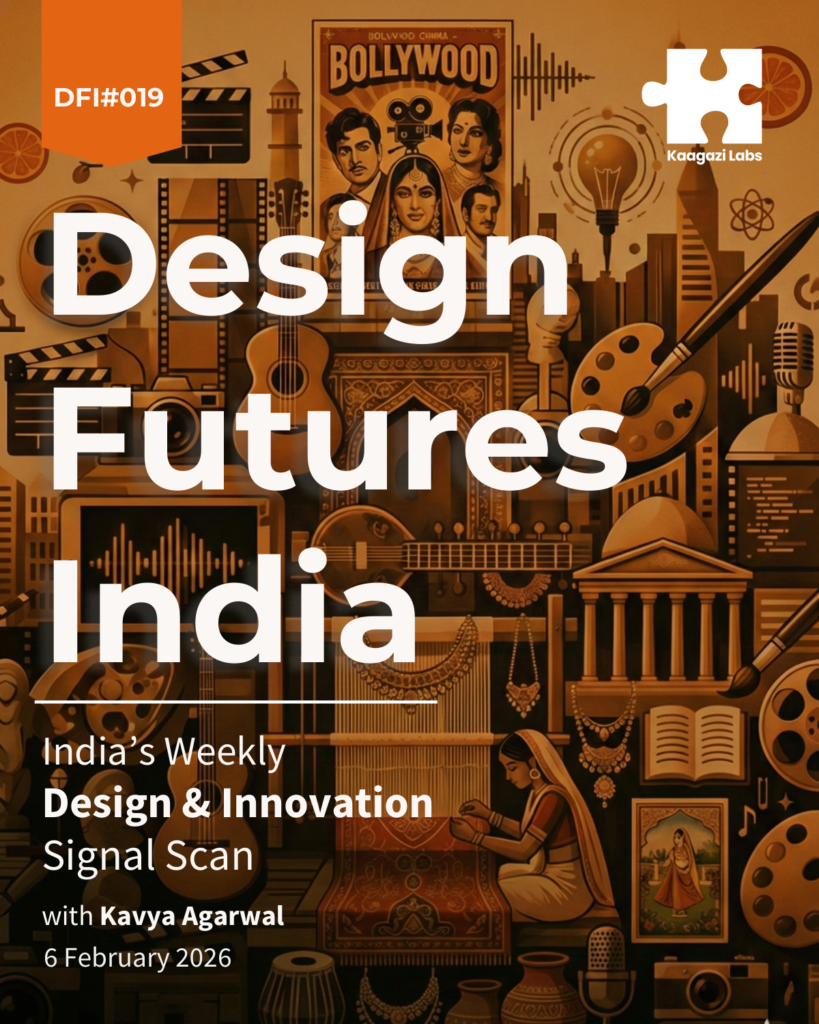
Design Futures India · 6 February 2026
DFI #019
In this edition: The Budget names Creativity as Economic Infrastructure; What the Orange Economy actually demands from India?; A new NID signals intent, but is it enough in 2026?; and more.
-
The Budget names Creativity as Economic Infrastructure
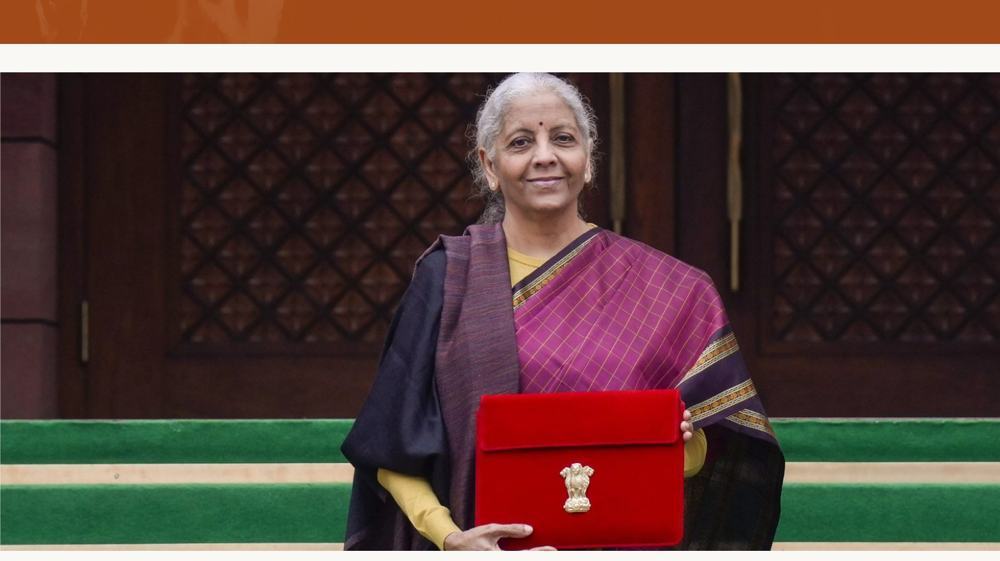 The Union Budget 2026 did something that the policy language has long avoided. For the first time, the Orange Economy was explicitly flagged as an economic priority, not just cultural soft power. The Budget acknowledged sectors like AVGC, film, design, digital content, and advertising as engines of jobs and skills, announcing creator labs in 15,000 schools and 500 colleges nationwide.This matters because it reframes creativity as structured work, not talent on the margins. The Orange Economy is built on ideas, culture, and intellectual property, aligning naturally with India’s digital, services-led future. By backing labs, pathways, and institutions, the state is signalling that creativity is no longer incidental. It is infrastructure. Something to be designed, scaled, and sustained as part of India’s growth story. Something to be designed, scaled, and sustained as part of India’s growth story.
From Design Futures India DFI #019, 6 February 2026. Read the full edition →
-
What the Orange Economy actually demands from India?
 The Orange Economy is often described as creativity-led growth, but its real test lies in creating systems, not public sentiment. It spans AVGC, film, music, design, advertising, publishing, digital content, crafts, and creator-led platforms, sectors where value is created through intellectual property and cultural labour. India already participates in these industries at scale, largely as an execution hub. The challenge now is ownership. For this economy to work, skilling alone is insufficient. Creators need enforceable IP rights, fair contracts, predictable payments, updated curricula, and access to markets beyond platforms that concentrate value. Without these, the Orange Economy risks producing trained workers without sustainable livelihoods. India’s bet is timely, but its success will depend on whether creativity is governed with the same seriousness. India’s bet is timely, but its success will depend on whether creativity is governed with the same seriousness.
From Design Futures India DFI #019, 6 February 2026. Read the full edition →
-
A new NID signals intent, but is it enough in 2026?
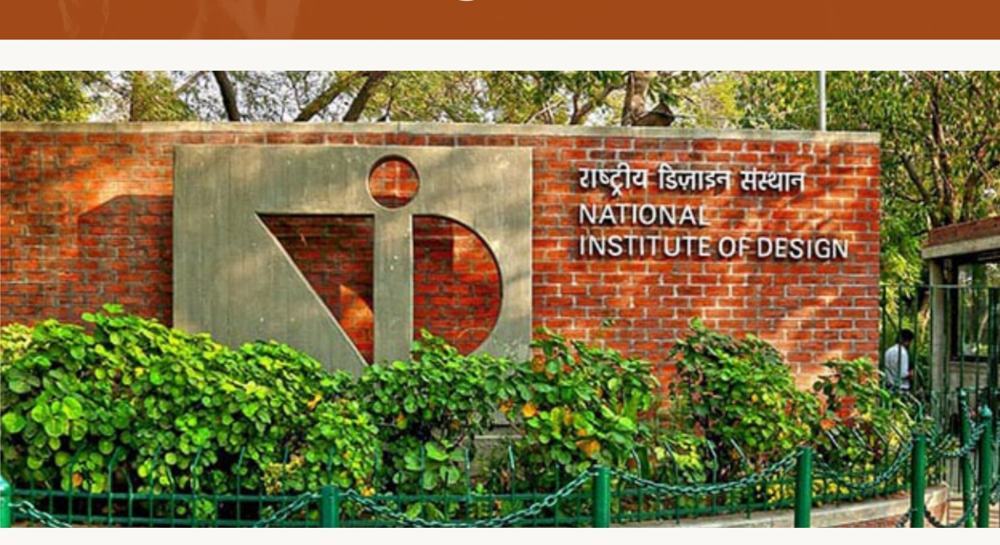 The Union Budget 2026 announced a new National Institute of Design in eastern India, acknowledging that while the design industry is expanding, India faces a shortage of designers. The move widens geographic access and adds another national institution to India’s design education landscape. Yet the announcement also surfaces a larger question. Is institutional expansion alone enough to meet this scale and demand? Or does the shortage point to something deeper? India already has a growing number of private design institutions across the country. Yet the real constraint lies in a persistent shortage of experienced faculty, limited pathways for educators, and curricula that struggle to stay updated with fast-changing public, digital, and industrial systems. Adding one more national institute may offer some access, but is it enough in 2026? Adding one more national institute may offer some access, but is it enough in 2026?
From Design Futures India DFI #019, 6 February 2026. Read the full edition →
-
India’s chip ambition is shifting from assembly to authorship
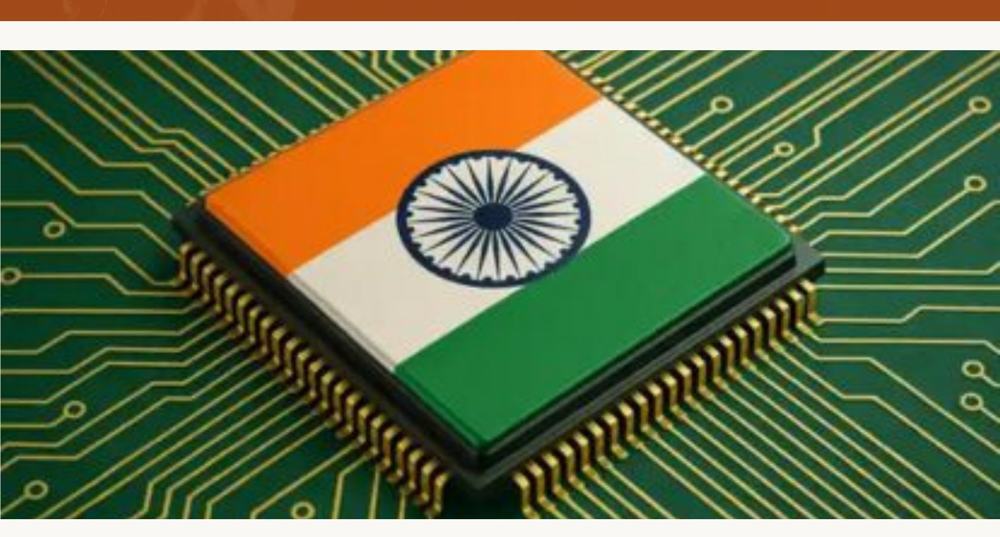 The Design Linked Incentive (DLI) is the government’s attempt to shift India’s role in the semiconductor world from talent supplier to design owner. Instead of only assembling or importing chips, the scheme supports Indian startups and institutions to design chips and develop intellectual property, where most of the value actually lies. It does this by funding early-stage design work and giving access to expensive tools that are otherwise out of reach. The momentum is real. Several projects have completed tape-outs and begun building reusable IP. But gaps remain. Chip design needs long timelines, deep mentorship, steady demand, and risk capital beyond incentives. DLI lowers the entry barrier. Building enduring capability will require patience, ecosystem depth, and sustained market pull. This is India’s opportunity to move deliberately from assembly to authorship, and to claim design as a strategic capability This is India’s opportunity to move deliberately from assembly to authorship, and to claim design as a strategic capability
From Design Futures India DFI #019, 6 February 2026. Read the full edition →
-
Designing the backbone of India’s digital ID at scale
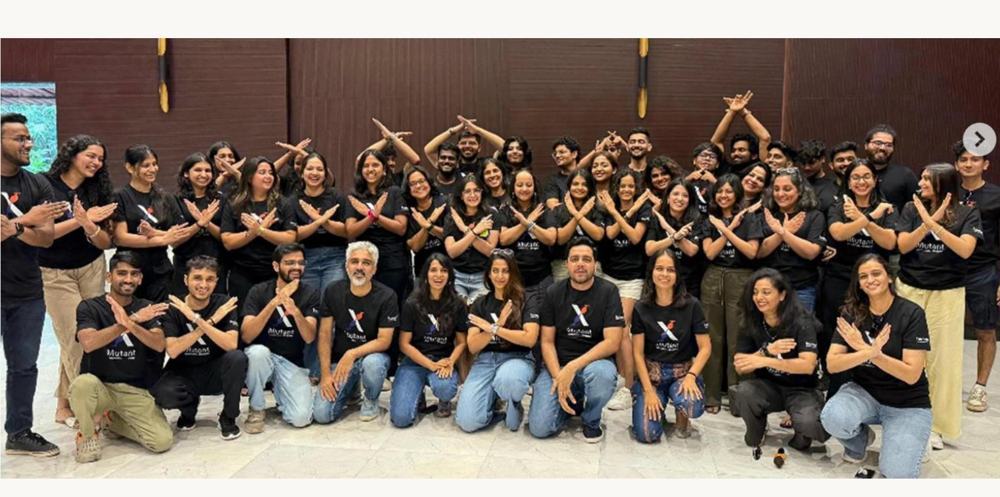 Mumbai-based experience design studio HumanX has secured the strategic mandate to overhaul the digital experience of India’s Aadhaar platform, responsible for over 137 crore unique identities across the country. The engagement goes beyond aesthetics to reimagine how residents interact with a population-wide digital credential system across devices, channels, geographies, and connectivity contexts. The effort places inclusion and trust by default at the centre of design recognising the diversity of skills, networks, and digital literacy levels among users. Such work may be one of the largest ever CX design assignments in India, making India’s foundational identity system not just usable, but genuinely accessible for every citizen. This is where public digital systems meet human-centred design at the largest possible scale. This is where public digital systems meet human-centred design at the largest possible scale.
From Design Futures India DFI #019, 6 February 2026. Read the full edition →
-
India’s FM radio is quietly preparing for a digital redesign
 India’s FM radio sector is beginning a long-overdue transition from analogue to digital, with broadcasters, device makers, and the government backing the adoption of HD Radio standards. The move promises clearer audio, data services, and better resilience, while remaining accessible on low-cost devices like feature phones, car systems, and Bluetooth speakers.What makes this shift significant is scale. Radio remains India’s most widely reachable public medium, cutting across language, literacy, and connectivity barriers. Redesigning it is not about novelty, but continuity. If implemented thoughtfully, digital radio could strengthen public communication, emergency broadcasting, and regional voices without demanding smartphones or constant data. This is infrastructure redesign in its quietest form, where inclusion depends less on apps and more on how everyday systems evolve. This is infrastructure redesign in its quietest form, where inclusion depends less on apps and more on how everyday systems evolve.
From Design Futures India DFI #019, 6 February 2026. Read the full edition →
-
India Art Fair is where Indian art shapes cultural memory
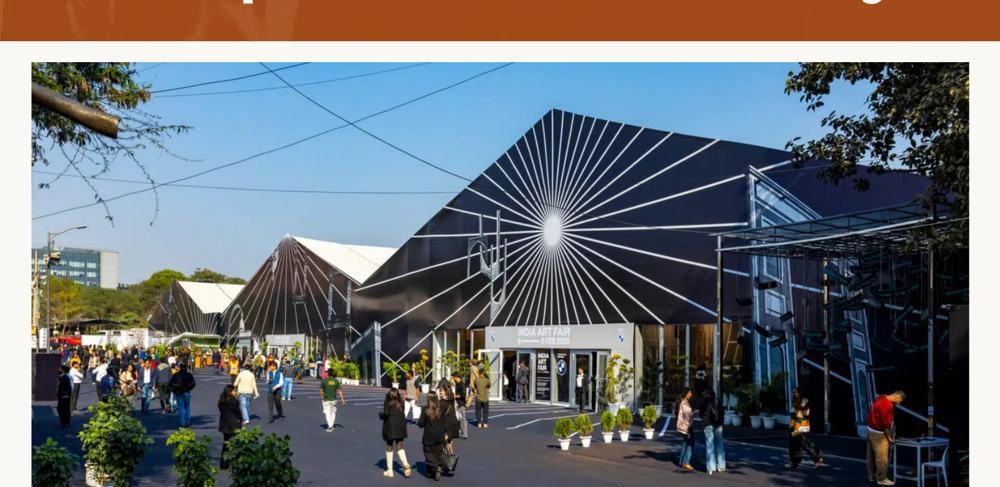 India Art Fair 2026 is being held at the NSIC Exhibition Grounds in New Delhi from 5 to 8 February, bringing together galleries, artists, collectors, and the wider public in one of the country’s most accessible cultural gatherings. Open to both seasoned collectors and first-time visitors, the fair is reachable via the Okhla metro and major arterial roads, reinforcing its role as a public-facing cultural commons rather than an elite enclave. The loudest signals are not coming from foreign pavilions, but from Indian artists and galleries quietly shaping cultural authorship at scale. Indian galleries and artists dominate the fair with confidence, depth, and continuity. What emerges is not a search for validation. Indian art here functions as cultural infrastructure, shaping narratives, markets, and memory from withinIndian art here functions as cultural infrastructure, shaping memory from within rather than waiting for external validation.
From Design Futures India DFI #019, 6 February 2026. Read the full edition →