Design Futures India · 23 January 2026
DFI #017
In this edition: India’s Women Cricket Team reshapes the gender narrative; Delhi’s January festivals show what public life could be; OpenAI makes ChatGPT Go Free for a Year in India; and more.
-
India’s Women Cricket Team reshapes the gender narrative
 India’s women lifting their maiden ICC World Cup wasn’t just a sporting victory — they lifted the ceiling of imagination. For a billion people, gender took a backseat as the nation cheered for excellence, not expectation. Legends like Rohit Sharma and Sachin Tendulkar turned up — not as mentors, but as equals — marking a rare moment where representation stood side by side. But here’s why this story belongs here: Because moments like these show us that narratives can also be designed. In that instant, the field became a canvas of representation where optics, culture, and identity collided. This is the design of emotion and possibility —a design that will inspire millions of Indian households to believe in their daughters a little more boldly. This is the design of emotion and possibility —a design that will inspire millions of Indian households to believe in their daughters a little more boldly.
From Design Futures India DFI #017, 23 January 2026. Read the full edition →
-
Delhi’s January festivals show what public life could be
Every January, Delhi briefly feels like a shared city again. The calendar fills up with the World Book Fair, Ramayan Mela, crafts haats, music performances, and neighbourhood festivals that draw families, students, artisans, and first-time visitors into public spaces. These events are not just cultural programming; they are civic rituals that make the city legible, welcoming, and participatory after a long year of routine and strain. For India’s design and governance ecosystem, it creates low-cost access to learning, memory, and leisure in a city where private spaces dominate. Yet participation remains uneven, shaped quietly by weather, health advisories, and air quality. The future question is simple: can Indian cities sustain open, inclusive public culture without making it conditional on who can afford to step outside? The future question is simple: can Indian cities sustain open, inclusive public culture without making it conditional on who can afford to step outside?From Design Futures India DFI #017, 23 January 2026. Read the full edition →
-
OpenAI makes ChatGPT Go Free for a Year in India
 OpenAI seems to have understood two truths about India — that the future of AI adoption begins here, and that Indians love a good freebie. In a strategic move that blends business foresight with cultural intuition, OpenAI has announced that ChatGPT will be free for all Indian users for one year starting Nov 4. The decision marks OpenAI’s most direct investment in India’s rapidly growing AI ecosystem — one driven by personalised learning and frugal innovation. It signals a new era of democratized learning putting creativity and knowledge at the fingertips of innovators across India. It signals a new era of democratized learning putting creativity and knowledge at the fingertips of innovators across India.
From Design Futures India DFI #017, 23 January 2026. Read the full edition →
-
150 years of Vande Mataram
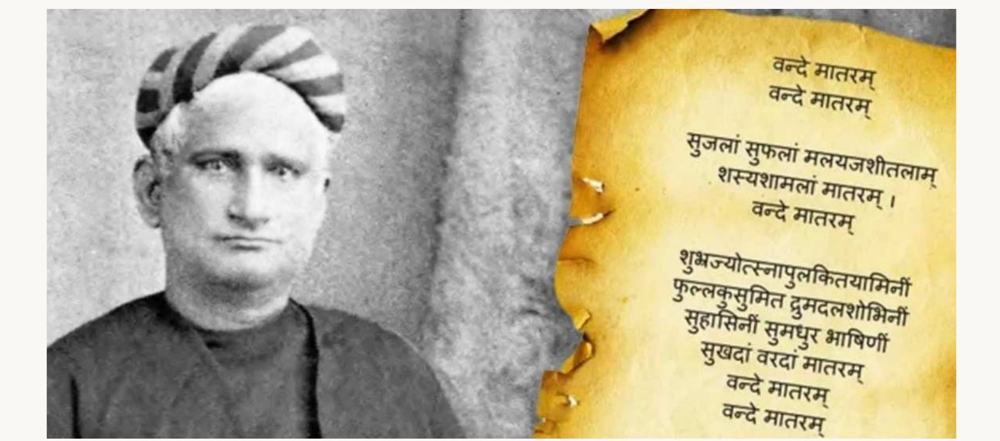 First written in 1876 by Bankim Chandra Chattopadhyay, Vande Mataram has travelled across a century and a half of India’s political, cultural, and emotional life. It has been a poem, a protest song, a rallying cry, and a national symbol. In 2026, as India marks 150 years of Vande Mataram, the song reminds us that nationhood is designed as much through shared language and feeling as through borders and institutions. What makes Vande Mataram endure is not repetition, but reinterpretation. Every generation has re-framed it through art, performance, education, and public ritual. This is design at work across time. Symbols that survive are those flexible enough to carry memory, dissent, pride, and renewal together. India’s future will depend on how thoughtfully it continues to design its shared cultural systems. India’s future will depend on how thoughtfully it continues to design its shared cultural systems.
From Design Futures India DFI #017, 23 January 2026. Read the full edition →
-
Republic Day as Design: How the nation stages itself
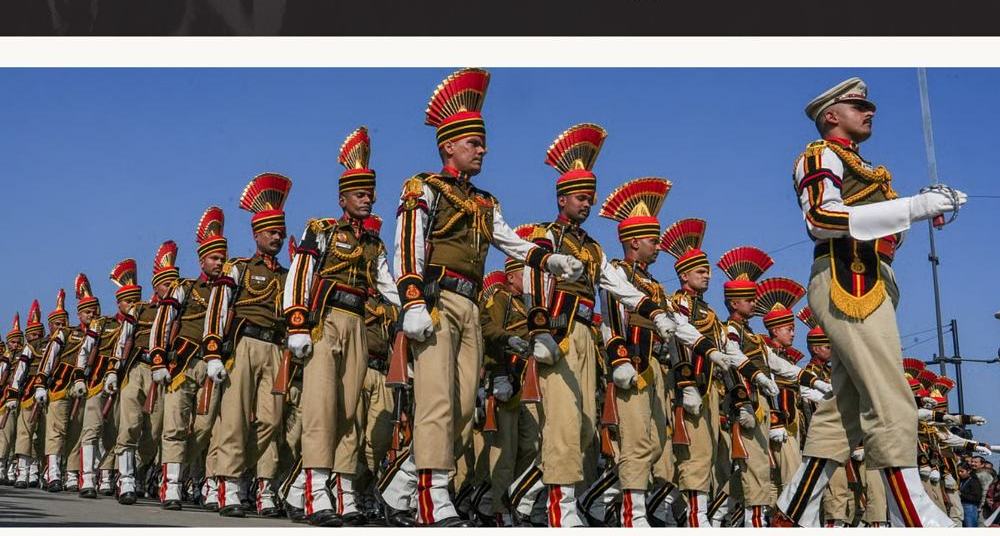 Every Republic Day, India doesn’t just celebrate the Constitution, it designs a narrative about itself. The 2026 parade, marking 150 years of Vande Mataram, brings together choreography, typography, sound, uniforms, tableaux, and spatial planning along Kartavya Path. From the sequencing of contingents to the symbolism embedded in state tableaux and military formations, Republic Day is one of India’s most complex pieces of public design. Author: Kavya Agarwal At this scale, form becomes meaning. Coordination signals capability, symbolism shapes memory, and repetition builds trust. Republic Day quietly demonstrates how large systems communicate values through design. As India builds new infrastructure and technologies, the parade offers a reminder: visibility, participation, and coherence are designed, not accidental. As India builds new infrastructure and technologies, the parade offers a reminder: visibility, participation, and coherence are designed, not accidental.
From Design Futures India DFI #017, 23 January 2026. Read the full edition →
-
Vande Bharat Reimagines India’s Night Train Journey
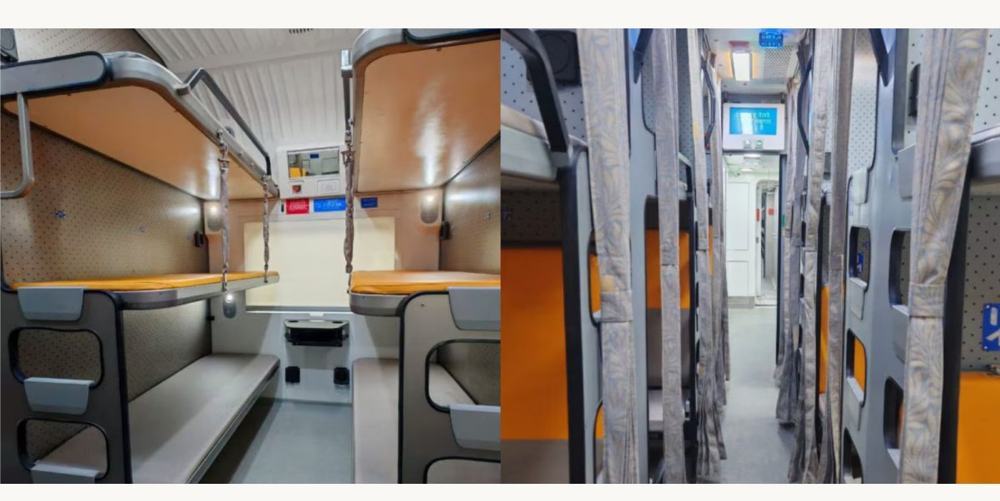 India’s Vande Bharat programme is expanding beyond short, daytime routes. The newly announced Vande Bharat Sleeper Express will operate overnight between Kamakhya and Howrah, covering long distances with sleeper coaches designed for comfort, speed, and modern amenities. This shift matters because overnight rail travel is where Indian infrastructure meets everyday dignity. Millions rely on night trains for work, family, and migration, often enduring overcrowded and aging coaches. Designing high-speed sleeper trains is not just about faster travel. It is about recognising time, rest, and safety as part of public service. For eastern and northeastern India, better long-distance rail connectivity also reshapes economic and cultural integration. When infrastructure respects how people actually move, innovation stops being symbolic and starts becoming lived experience. When infrastructure respects how people actually move, innovation stops being symbolic and starts becoming lived experience.
From Design Futures India DFI #017, 23 January 2026. Read the full edition →
-
India’s Data Protection Act Rewrites Consent Design
 India’s Digital Personal Data Protection Act, 2023 changes how consent must be taken online. A recent legal explainer makes it clear that consent must be free, informed, specific, unconditional, and easy to withdraw. That requirement lands directly on screens, flows, and interaction design. This reframes UI and UX as sites of legal accountability. Buttons, default settings, copy hierarchy, and timing now decide whether consent is valid or manipulative.Dark patterns, preticked boxes, and buried opt-outs are no longer just poor practice. They are legal risks. In a country where millions are first-time internet users, the interface often becomes the only explanation of rights. India’s data protection regime will not be enforced only through penalties. It will be enforced through everyday design choices, pixel by pixel. It will be enforced through everyday design choices, pixel by pixel.
From Design Futures India DFI #017, 23 January 2026. Read the full edition →
-
NIFT Signals Design as Economic Infrastructure
 India’s fashion and design ecosystem gathered in Mumbai for the NIFT International Conference 2026 on “Design for Inclusive Futures,” marking four decades of the institute’s impact on education, industry, and craft. Union textiles minister Giriraj Singh said NIFT has become a key economic driver for textiles and craft, and its design expertise now extends into sectors from automobiles to logistics. The conference included peer-reviewed research, workshops on accessibility and sustainability, and the unveiling of a new NIFT@40 identity. Key policy shifts like reduced GST on affordable clothing and eased trade barriers were highlighted as enablers of India-specific design standards and forecasting. Design, the minister noted, is not ornamental. It creates jobs, supports supply-chain innovation, and fuels India’s transition from consumption to indigenous design capability. It creates jobs, supports supply-chain innovation, and fuels India’s transition from consumption to indigenous design capability.
From Design Futures India DFI #017, 23 January 2026. Read the full edition →
-
Atlas SkillTech Pushes Design Education Closer to Industry
 Atlas ISDI has appointed Tanu Sinha, global design leader at PepsiCo, to its Advisory Board, bringing industry-facing design leadership into the governance of a private design and innovation institution. The move is part of a broader effort to align curriculum, industry relevance, and global design practice. This appointment signals a shift in how Indian design education is being shaped. Advisory boards are no longer ceremonial. They influence curriculum direction, industry exposure, and the values institutions pass on to students. When experienced practitioners enter education governance, design moves closer to real systems, constraints, and accountability. For a country investing in skills and creative capability, who sits at the table matters. Design education will shape not just careers, but how future products, services, and systems are imagined for India. Design education will shape not just careers, but how future products, services, and systems are imagined for India.
From Design Futures India DFI #017, 23 January 2026. Read the full edition →
-
NID’s 45th convocation marks a subtle shift
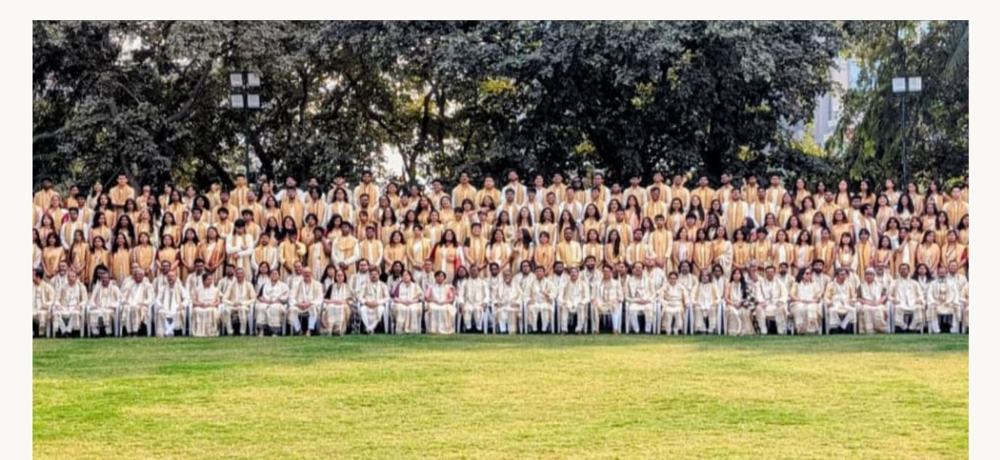 At its 45th convocation, the National Institute of Design conferred degrees on 505 graduates, but this year marked a quiet first. The ceremony was held in Gandhinagar, not Ahmedabad, shifting the spotlight to NID’s satellite campus. Addressing students, ISRO Chairman Dr. V Narayanan spoke about risk, resilience, and learning from failure. The subtle change of venue signals more than logistics. It reflects an evolving stance on design democratization, where institutional gravity is shared rather than centralised. As India produces thousands of design graduates annually, such spatial decisions matter. They show how access, visibility, and legitimacy can be redesigned through subtle shifts, not grand declarations. Sometimes, expanding design’s future begins by redistributing where it gathers. Sometimes, expanding design’s future begins by redistributing where it gathers.
From Design Futures India DFI #017, 23 January 2026. Read the full edition →