Design Futures India · 3 July 2026
DFI #033
In this edition: India launches a new aadhar app: Share only what is required; Is India’s electoral roll being redesigned?; Indian IT confronts an identity crisis as AI reshapes work; and more.
-
India launches a new aadhar app: Share only what is required
 For years, Aadhaar trained us to over-share. A photocopy at every hotel. The full number for a SIM. Your whole profile for one small check. Instead of handing over a full Aadhaar profile, a person can now reveal just their name, photo, age, or address depending on what a service actually needs. It adds face authentication as an extra verification layer, lets users lock and unlock their fingerprint, iris, and face biometrics from the phone, and shows an authentication history of when News Source: Republic World and where their Aadhaar was used. It supports up to five profiles per device for families, allows mobile-number and address updates without a trip to an enrolment centre, and crossed 21 million downloads within three months of launch. This is a real win for privacy and dignity. Control is being handed back to the user. The test is who gets left out. Face scans have failed acidattack survivors and the visually impaired. Let’s see if the new app remembers everyone. Let’s see if the new app remembers everyone.
From Design Futures India DFI #033, 3 July 2026. Read the full edition →
-
Is India’s electoral roll being redesigned?
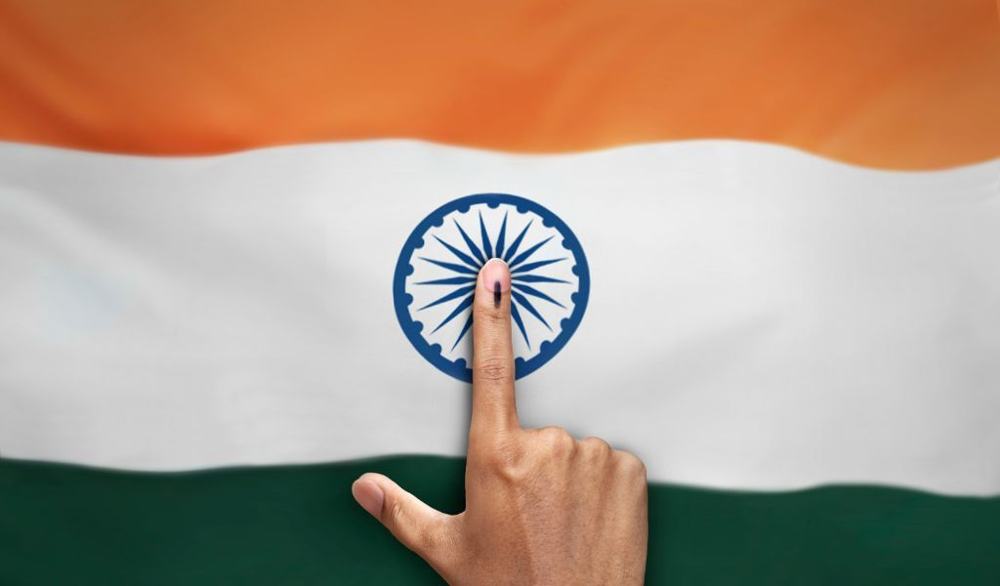 The voter list is being rebuilt. The design of that rebuild decides who stays on it.The Supreme Court has upheld the Election Commission’s intensive revision of Bihar’s electoral rolls, the process that decides who appears on the voter list. To stay on it, people had to prove their eligibility through a fixed set of documents.The Court called the exercise valid and said its safeguards, the notices, the draft rolls, the chance to object, kept it fair, and it widened the accepted proofs by adding Aadhaar as a twelfth document. But sitting underneath the legal language is a quiet design decision. A voter roll is not just a list. It is a system, and the choice of which papers count sets the boundary of who belongs. People who move often, or hold few documents, sit closest to that edge. Rules can look fair on paper and still hard to meet in a remote village. The real shift is that document design, not just eligibility, now decides who gets to vote. News Source: Supreme Court Observer News Source: Supreme Court Observer
From Design Futures India DFI #033, 3 July 2026. Read the full edition →
-
Indian IT confronts an identity crisis as AI reshapes work
 For more than three decades, India’s IT industry embodied one of the most celebrated stories of globalisation. These companies became the epitome of career growth, job stability and volumeled employment. That door is narrowing. In early June, IT stocks slid as AI fears swept the sector. Hiring hit a 28-month low. Demand for freshers fell by 44 %. Indian IT companies built enormous scale on compliance and cost efficiency but little agility and innovation excellence. While high paying News Source: Storyboard 18 opportunities remain available, the competition has intensified. The challenge for India’s technology champions is no longer to deliver services more efficiently. It is to build resilient innovation ecosystems where work is not dependent on only effective execution. The lesson is uncomfortable.For 30 years, India learned to execute the world’s work with unmatched efficiency. The next decade asks a harder question. Can a system built to follow instructions also learn how to innovate? Can a system built to follow instructions also learn how to innovate?
From Design Futures India DFI #033, 3 July 2026. Read the full edition →
-
What’s in a name? On India renaming cities and landmarks
 A gazette notification can rename a state, a station, or a road overnight. Kerala becomes Keralam. A Delhi metro stop gets a new board. But a name is not just a label. It is an entry in thousands of systems, and every one has to catch up. Maps, land records, railway tickets, postal routes, bank files, Aadhaar, passports, voter IDs, school certificates. Estimates put the cost of renaming a large city anywhere from a few hundred to a thousand crore. The Supreme Court metro station change alone News Source: Times of India was pegged at 40 to 45 lakh per station. And even after the paperwork updates, public memory does not. Banaras survives in speech. Allahabad slips back into daily talk all the time. The old name and the new one live side by side, one official, one remembered. The real nuance is that renaming is a costly affair. The exercise, if at all should be done with caution and respect for the tax payer money. The exercise, if at all should be done with caution and respect for the tax payer money.
From Design Futures India DFI #033, 3 July 2026. Read the full edition →
-
Are craftspersons real designers? The story of Vimor Museum
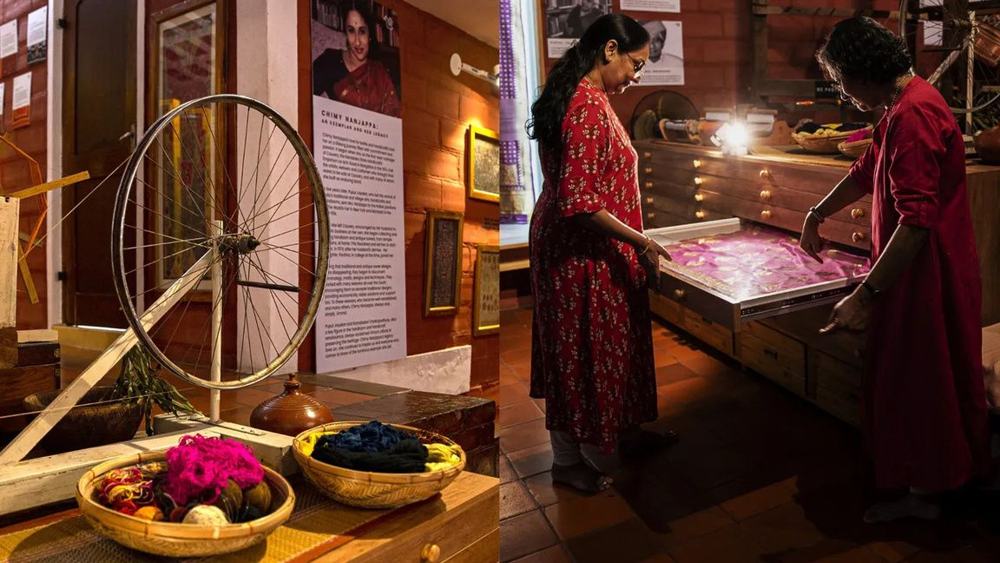 At the Vimor Museum of Living Textiles in Bengaluru, revivalist Pavithra Muddaya has spent five decades reviving forgotten South Indian handloom weaves. What makes her work a design signal is a quiet choice. Some Vimor designs have circulated in the market for over 45 years without the brand’s name attached, because she believes design should be shared, not owned. She pushes her weavers to leave a bit of themselves in every piece. One added a flash of blue to every pallu, News Source: Elle India his tribute to Tamil Nadu’s painted doors, and called himself Bluemania. This is the opposite of how India usually credits craft, where the designer gets named and the weaver disappears. Muddaya’s museum argues that the person at the loom was the original designer all along. The museum now features a collection of about 60-70 sarees that have been carefully built over decades of Vimor’s research and revival work, The museum now features a collection of about 60-70 sarees that have been carefully built over decades of Vimor’s research and revival work,
From Design Futures India DFI #033, 3 July 2026. Read the full edition →
-
Design as documentation: A weave lost during partition
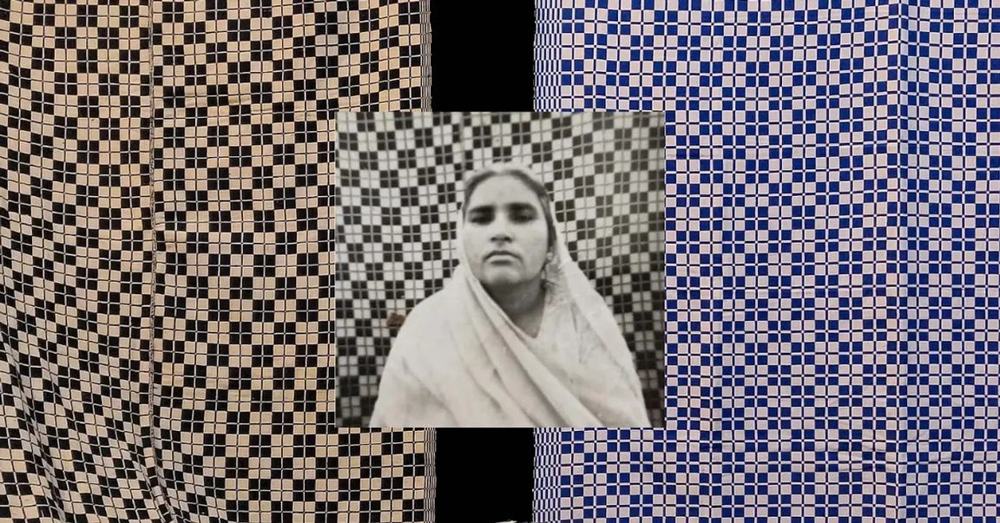 In 2018, NID textile students Arjunvir Singh and Rashi Sharma went looking for Majnu Khes, the most intricate form of a Punjabi double-cloth weave. No weaver in Panipat, Amritsar, or Ludhiana had heard of it. The search ended in Arjunvir’s own home in Jalandhar, in a trunk his grandfather had carried across the border in 1947. Their fieldwork revealed why the weave had vanished from Indian Punjab. Almost everyone who owned a Majnu piece had migrated from the west during Partition. The News Source: The Better India complex loom setup stayed on the Pakistan side. What began as a college project became a four-year archive, tracing the weave to living weavers in Multan and Sindh. It shows documentation itself as a design act, saving not just a pattern but the public memory attached to it. Other efforts to keep handloom heritage alive and revivals of nearextinct Indian weaves elsewhere depend on exactly this kind of work. Before a craft can be rebuilt, someone has to first prove it was lost, and find out precisely where. Before a craft can be rebuilt, someone has to first prove it was lost, and find out precisely where.
From Design Futures India DFI #033, 3 July 2026. Read the full edition →