
Design Futures India · 31 July 2026
DFI #037
In this edition: Is mainstream media replaced by mobile?; A resignation is not exactly repair; Gen Alpha joins the protest bandwagon; and more.
-
Is mainstream media replaced by mobile?

When the exam protests grew, mainstream television gave the movement little attention, so protestors started documenting it themselves. But the phone did more than record. It shaped how the protest was built. With no single leader to lead, coordination lived on screens, distributed across group chats and feeds rather than a stage. Clashes with police became recorded evidence, and confrontation became content. The format lowered the cost of joining to almost nothing. Citizens took part through reaction videos, remixes and parody edits, widening the movement well beyond its physical site. Every phone was a witness, which made the story hard to suppress and harder to spin. Instead of speaking through news channels, the government addressed protesters directly, through a selfie-style video on the same platform. Both sides had moved to the feed. When a protest is designed for the phone, who still controls the frame?
From Design Futures India DFI #037, 31 July 2026. Read the full edition →
-
A resignation is not exactly repair
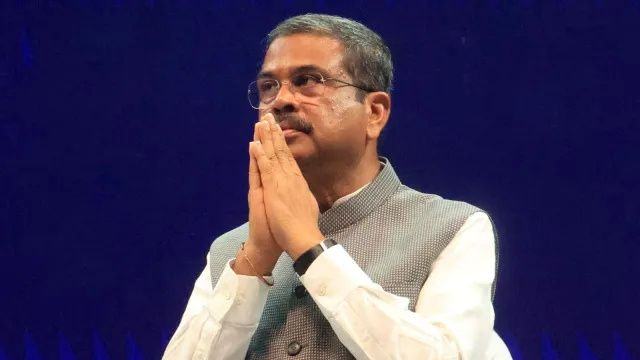
On 25 July, Dharmendra Pradhan stepped down as education minister. Weeks of student protest had demanded his exit after a national medical entrance paper leaked, forcing nearly two million candidates to sit the test again. The resignation was the visible win for sytemic accountability. What it did not change was the machinery underneath. After the 2024 leaks, the government formed a committee led by former ISRO chief K. Radhakrishnan to suggest reforms. The panel heard from more than 37,000 students and parents and returned 101 recommendations, grouped into 46 action points across six areas. The deeper fix however, is not a new minister but a system built to hold. This is where design earns its place. A policy can be prototyped, stress-tested, and run against real students before it goes live, not after it fails. The methods already exist. The question is whether the government cares enough to use them.
From Design Futures India DFI #037, 31 July 2026. Read the full edition →
-
Gen Alpha joins the protest bandwagon
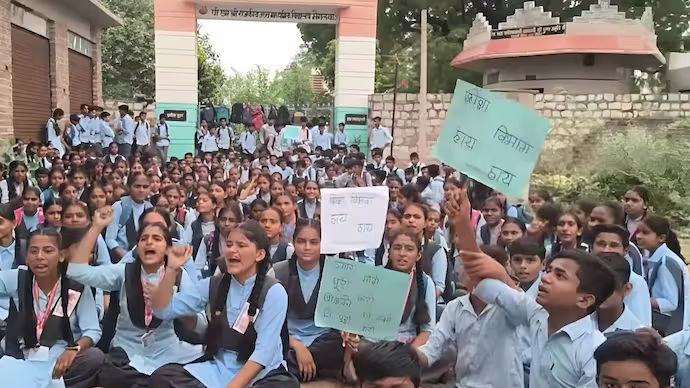
Days after the Gen Z protests, a younger cohort took the same street. Across Uttar Pradesh, Bihar and Rajasthan, school students walked out to demand what should already exist. Clean drinking water. Working fans. Usable toilets. Teachers for classes that had none. In Fatehpur, hundreds marched carrying banners and portraits of Ambedkar. In two Rajasthan schools, children locked the gates because the early grades had no teacher. Their slogan drew the line. We are not begging for charity, we are demanding our rights. Officials arrived fast, promised fixes within a day, and ordered inquiries. The speed of that reassurance is its own signal. The Gen Alphas born after 2010 have already learned how to make their voices heard, and they are not waiting for adults to solve their problems. At DFI, we are however wondering what does it say about a government when the system’s youngest are forced to design their own escalation?
News Source: India Today
From Design Futures India DFI #037, 31 July 2026. Read the full edition →
-
Who owns the colour saffron?
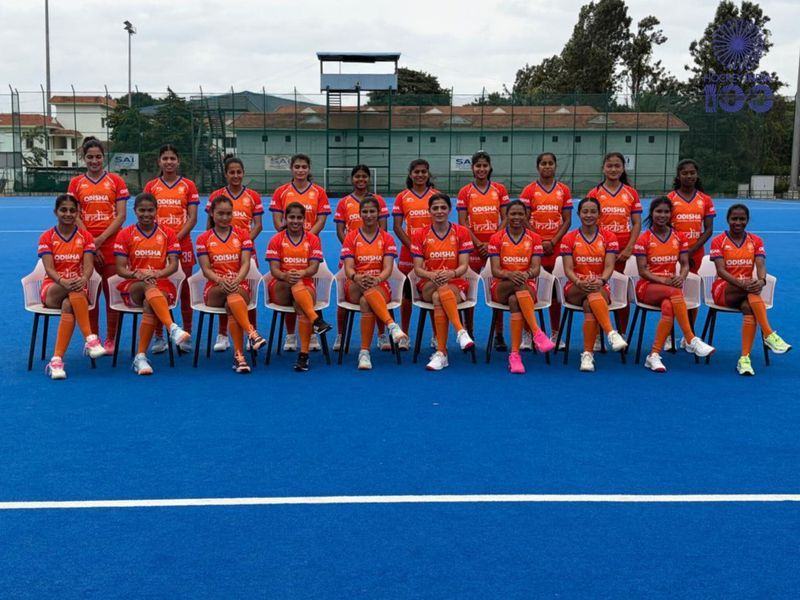
Ahead of next month’s hockey World Cup, the national team’s jersey turned from blue to saffron, and the change became a national argument dominated by a design choice. The federation said the kit tells a story of pride, that saffron belongs to the tricolour, and that a blue jersey on a blue turf makes players hard to see. Critics read it differently. They claim it is part of a larger saffronization drive. A former captain called blue the team’s identity, worn through decades of Olympic medals. A former chief minister called it politics. Both sides were claiming the same right, to decide what the colour means. You see how colour is a store of collective memory. Change it and you redistribute that memory, which is why a jersey can be a national debate point. India tried an orange cricket kit in 2019 and dropped it after protest. Colour as a public symbol is never neutral. It produces interesting associations, interpretations and memories of all hues.
News Source: Times of India
From Design Futures India DFI #037, 31 July 2026. Read the full edition →
-
Viksit Bharat Shiksha Adhistan Bill

Beneath the exam crisis sits a quieter redesign of who governs higher education. A bill introduced last December, now before a parliamentary committee, folds three regulators into one. The University Grants Commission, the technical education council and the teacher-training body would give way to a single apex authority with councils for regulation, accreditation and standards. On paper it is tidier. One window instead of three. But education is a shared subject between the Centre and the states. and the design leaves state higher education councils largely unrepresented. The new body sets standards, and teachers’ associations warn it thins institutional autonomy and public funding. The minister who introduced it stepped down in July over the exam leak. A cleaner chart is easier to run and harder to question. When one authority replaces many, who is left to check it?
News Source: Press Information Bureau
From Design Futures India DFI #037, 31 July 2026. Read the full edition →
-
India launches a new Toy sector playbook

This week the government launched a Toy Sector Playbook and a task force, aiming to capture five percent of the global toy market by 2032. The plan is mostly about scale. Its six objectives are led by global value chain integration, manufacturing, exports and ease of doing business, with design and innovation among them. The speeches invoked India’s rich cultural heritage. The instruments favour the factory. That gap is the design choice. A market-share target moves only on volume, and volume comes from organised plants making standardised, certified, exportable toys. The craft clusters get named, but not counted. Channapatna’s wood and lacquer toys, carved by around 2,500 artisans, are place-bound and low-volume by nature. Rules exempt registered artisans and GI crafts, so the issue is not the rule. It is the yardstick. When success is measured in global share, which toys become the future, and which becomes its backdrop?
News Source: Press Information Bureau
From Design Futures India DFI #037, 31 July 2026. Read the full edition →
-
How regional languages are getting built into AI ?

Goa this week hosted a push to make government services speak Konkani. The idea is that a citizen reaches the state in the language they think in, through translation, speech recognition and voice tools built into public platforms. Language is being treated as a layer of infrastructure, not a courtesy. That is a real shift. But infrastructure encodes priorities. For an AI to understand you, your language needs data, models and voice recordings, and the state builds those for the languages it resources first. India recognises 22 official languages and speaks hundreds more. A tongue without a dataset is one the digital state cannot hear. Konkani gets a workshop. The dialect with fewer speakers online waits, and the gap can widen as better-resourced languages train faster. Inclusion here is not a promise. It is a build order. Who decides which voices become machine-readable first and who benefits from the transition?
News Source: Times of India
From Design Futures India DFI #037, 31 July 2026. Read the full edition →