
Design Futures India · 14 August 2026
DFI #038
In this edition: 79 years of freedom on 80th Independence Day; India’s lone teacher problem; The Education Raj: Foreign universities on Indian soil; and more.
-
79 years of freedom on 80th Independence Day

On 15 August 2026, India unfurls the flag for the 80th time and completes 79 years of freedom. Both numbers are right. The gap between them is not an error but a choice about where you begin counting. The first Independence Day in 1947 was day one, so the 80th celebration rests on 79 completed years. It reads like trivia. It is the question this edition is built on. What a country counts, and the point it counts from, shapes the story it tells itself about progress. A target met on paper can sit above a target missed in on actual ground. A scheme counted as launched is not a scheme counted as reached. The 80th independence day is the ceremony. The 79 years are the record of actual progress. This Independence Day we sit at the crossroads between the two, across India’s schools and ask which number the system is being built to serve. Are we literate or are we educated?
News Source: Newsonair
From Design Futures India DFI #038, 14 August 2026. Read the full edition →
-
India’s lone teacher problem
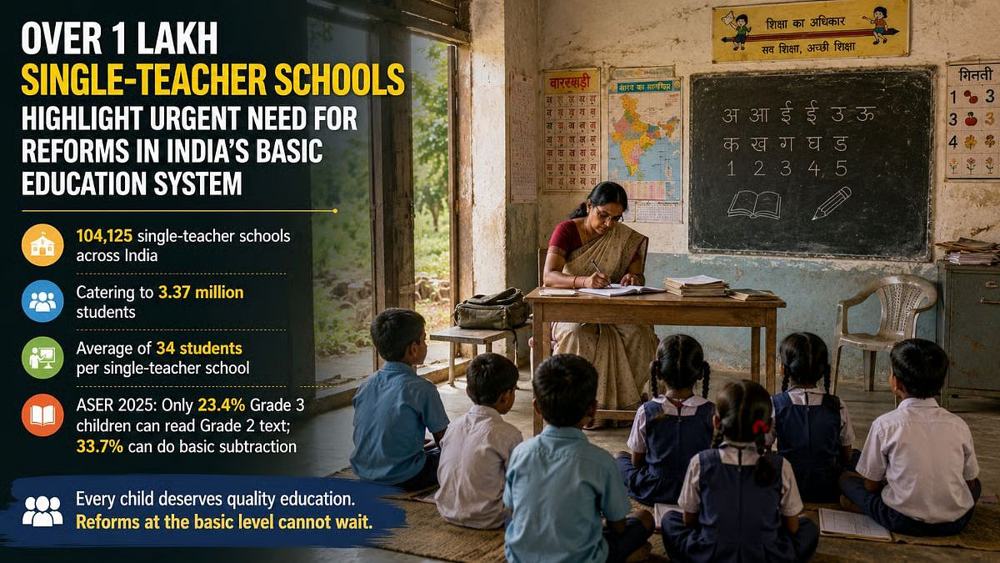
How badly reforms are needed at the basic school level, not merely at the higher secondary and competitive examination levels, was brought home in a stark manner this week when the Union Ministry of Education disclosed in Parliament that over one lakh schools across India are single-teacher schools.1,04,125 of them, teaching 3.37 million children at an average of thirty-four per school. Andhra Pradesh has the most such schools; Uttar Pradesh has the most children sitting inside them. They are barely seven per cent of India’s fifteen lakh schools, easy to round off and walk past. But the NEP asks that lone teacher to run competency-based, multi-age instruction, clear every administrative box, and now to gather census and survey data on the side. These children are India’s future, the data disclosed now adds critical question on whether this will be a demographic dividend or disaster.
News Source: Free Press Journal
From Design Futures India DFI #038, 14 August 2026. Read the full edition →
-
The Education Raj: Foreign universities on Indian soil

The education protests happening all over India simultaneously are no coincidence, they are a reaction to systemic failure. They say that each time history repeats itself, the cost goes up. The collapse of education system has also given rise to foreign universities entering India. To some Indian academics this rhymes with an older arrival. The so called “educational East India Companies,” warn of a fresh drain of wealth that enriches foreign brands while public universities and Indian systems are left starved. Now a University of Bristol located in a corporate building in Powai can charge premium fee in exchange of a “foreign degree” while families struggle to pay off education loans. While the trust in Indian public education system is at an all time low, the trojan horse has quietly entered the Indian market. Only time will tell if the Raj analogy hold, or is India importing capability or renting out prestige?
News Source: The Wire
From Design Futures India DFI #038, 14 August 2026. Read the full edition →
-
CBSE and dark UX patterns

The CBSE’s recent directive to make the APAAR ID mandatory for Class 10 and 12 board exam registrations from 2026 represents a concerning escalation in India’s march towards compulsory digital identification. While the move is presented as a step towards “Digital Public Infrastructure”, it threatens to exclude millions of students from accessing their fundamental right to education, particularly those from marginalized communities who are vulnerable to digital authentication failures and exclusion. This pattern already has a name in design: Dark UX are deceptive design tricks such as forced action, bait and switch, consent presumed through a pre-ticked box. Read CBSE’s APAAR mandate against that rulebook and the resemblance is uncomfortable. With only 18.47% of rural schools having internet, the numbers paint a stark picture. The question is now about the futures at stake due to digital exclusion by design.
News Source: Internetfreedom.in
From Design Futures India DFI #038, 14 August 2026. Read the full edition →
-
Smartphone is the Charkha of modern Indian revolution
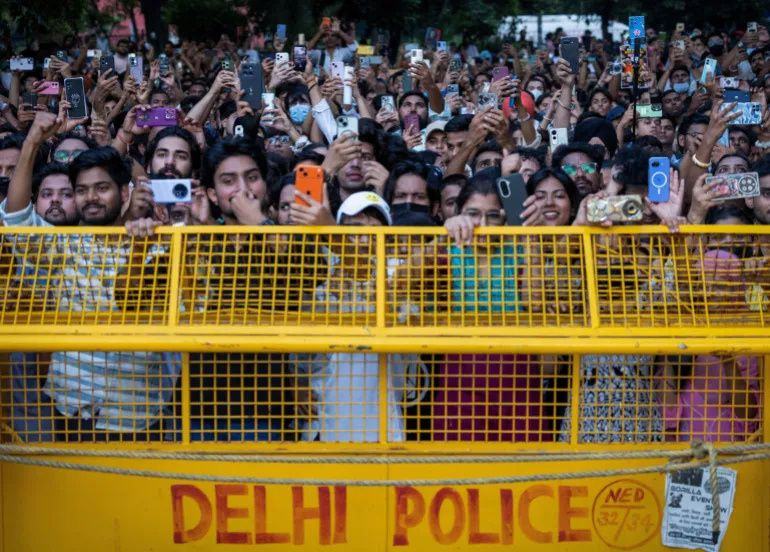
In the freedom struggle, the object of revolt was a spinning wheel, a designed tool that doubled as a symbol of self-reliance and mass participation. This season, the first object is a smartphone. Every revolution reaches for symbols. The freedom struggle had the spinning wheel and the salt march, and at today it is the Tiranga and mobile phones. The phone is the object of revolt and record, where millions are able to record their experience, share their POV, learn from each other. It is also the object that is helping an entire generation counter the mainstream narrative, defy publicly and peacefully. The second object of revoultion was given by the Constitution itself, the tiranga. This generation did not burn the flag or reject the republic. It held the flag up proudly and reminded the state to honour what it means. In many cases, it was the protective gear against police brutality. So here they are, the objects of revolution!
From Design Futures India DFI #038, 14 August 2026. Read the full edition →
-
Too young to vote: Gen Alpha knows fundamental rights

On 11 August, more than two hundred schoolchildren from Chandupur in Hamirpur walked several kms to the district Collectorate, carrying the Tricolour and demanding a usable road to their school, a 1.5 km stretch that turns to slush each monsoon. Officials tried to persuade them to withdraw the protest, but the children did not budge. They are not alone. In Jharkhand, students protested and blacked the road until their principal’s transfer was stopped. These are not isolated incidences, this is India’s first-of-its-kind, visible, multi-state wave of protests by Gen Alpha, people born from roughly 2010 to 2025. Gen Alpha protests, as many have called them, have taken place in many parts of Uttar Pradesh, Bihar, Rajasthan, Madhya Pradesh and Maharashtra so far. Although too young to vote, Gen Alpha seems to understand their constituional right and duties better than any other generation.
News Source: The Hindu, India Today
From Design Futures India DFI #038, 14 August 2026. Read the full edition →