
Design Futures India · 18 September 2026
DFI #041
In this edition: The Design of Food Safety & Nutritional Literacy in India; Bigger is not Better: India’s recent infrastructure push; UPI and the design of subsidy; and more.
-
The Design of Food Safety & Nutritional Literacy in India

The Food Safety and Standards Authority of India has proposed a red hexagon for the front of packets — a plain mark that says HIGH FAT, HIGH SALT, HIGH SUGAR, or HIGHLY SWEETENED BEVERAGE. On 10 September, the Supreme Court sought clarification on the design details of the red hexagon noting that many Indians identify the colour red on packaging as non- vegetarian. The Court also asked FSSAI t to explain how schools would build nutritional literacy into the curriculum, how children would actually be taught to interpret the labels. The apex court, in a food-safety case, has effectively ruled that design and literacy are one system. Public design is becoming public literacy. Shipping the symbol is no longer enough you also have to ship the understanding of it. It calls for communication around food safety to be designed for classrooms and citizens.
News Source: Legal Live
From Design Futures India DFI #041, 18 September 2026. Read the full edition →
-
Bigger is not Better: India’s recent infrastructure push

India’s recent infrastructure push suffers from an obsession with form and display over substance, marked by preference for grandiose rather than sustainable and inclusive infrastructure for all. Let’s be fair first. India has added over 50,000 km of national highways in a decade, and this year devoted more than a fifth of the federal budget to capital spending on infrastructure. The problem is how we build, and what we’re optimising for. Increasingly, it looks like we’re optimising for the photograph, social media and banners. The country in love with new construction has almost no culture of maintaining what it already has. A bridge is not a one-time achievement it’s a promise that has to be kept even after the fiftieth monsoon. Real infrastructure is a relationship between a structure and the ground it sits on, the climate it must survive, the people who use it, and the decades it has to last.
News Source: Frontline
From Design Futures India DFI #041, 18 September 2026. Read the full edition →
-
UPI and the design of subsidy

Until now UPI carried a chai payment and a crore with the same tap, for the same price: nothing. That “nothing” was never an accident it was designed. UPI was introduced in 2016 and processes over 20 billion transactions a month. It became the crown jewel of India’s digital public infrastructure, and its first genuine tech export. It may appear free to the user but those transactions cost estimated ₹10,000 crore a year. The framing from the government is that MDR is a merchant charge, not a consumer levy. Critics call it the thin end of a wedge, and the industry itself is split, with some hailing sustainability and others wary of the burden on mid-sized businesses. The point beneath the story is that UPI was always a designed subsidy. The genius was making the cost invisible, so a billion people experienced it as effortless. The risk of invisibility is that a system running at a loss looks free right until it isn’t.
News Source: Storyboard18
From Design Futures India DFI #041, 18 September 2026. Read the full edition →
-
SIR counts who counts

India is re-verifying every voter on its rolls. For most people, the form is a formality but for some, the same form is a wall. The Special Intensive Revision is the Election Commission’s house-to-house re-verification of the electoral rolls. Its stated aim, in the Commission’s own words, is that “no eligible citizen is left out while no ineligible person is included.” The cleanup is not controversial in itself. The argument is about how the cleaning is designed. And design, here, is destiny. Strip away the politics and look at the artifact. An enumeration form is not neutral. Every field on it, and every rule about who must fill what, encodes an assumption about the person. Who’s presumed in, which papers count, how little time is allowed that is where the vote is quietly kept or lost. A clean roll and an inclusive roll may not be the same roll. Voter verification is becoming a documentation test and whoever must prove they exist is whoever risks being erased.
News Source: Vajiram & Ravi
From Design Futures India DFI #041, 18 September 2026. Read the full edition →
-
Capacity-building training for Ladakh’s textile artisans
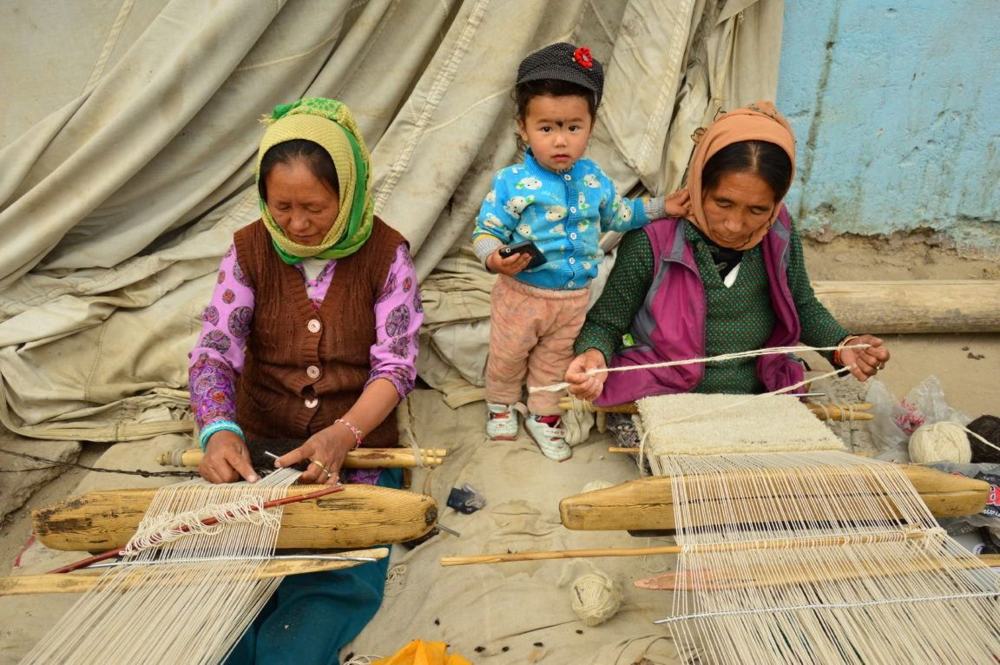
In Leh this month, Ladakh’s textile artisans sat down for a different kind of training not in weaving, which they’ve mastered for generations, but in design, product development, and reaching markets. Run by the Industries & Commerce Department with NIFT Srinagar under the MSME RAMP scheme, the programme pairs traditional pashmina and wool craft with contemporary design, quality upgrades, and market linkages. Alongside it, GI registration is underway for 26 Ladakhi products, with a push for Udyam registration and early plans for a Ladakh showroom brand and stalls with the Fashion Design Council in Delhi. It is a small, practical move, connecting artisans to designers, buyers, and brands so the value of the craft stays closer to the people who make it, while the traditional character is meant to be preserved rather than diluted. Quietly, craft is being treated as a design economy, where skill, origin, and market access are built to work.
News Source: Ladakh.gov.in
From Design Futures India DFI #041, 18 September 2026. Read the full edition →
-
Did you know? Indian Army has a design bureau

Most people have never heard of it, but the Indian Army has a design bureau. It was raised in August 2016, without much noise, as part of the Make in India push, and it does something more interesting than its name suggests. It does more than design weapons. It designs the connection between a soldier’s need and the people who might solve it. For decades India made its military kit through a closed loop of government labs and public factories, and imported the test. The bureau exists to open that loop, sitting as an interface between the Army and everyone outside it. Its quiet tool is the Compendium of Problem Statements, which turns what soldiers struggle on the field into clearly framed problems. That translation, from lived need to solvable brief, is design work in its purest form. The bureau makes not only product, but also the pipeline through which better ones reach a soldier. Worth asking how many other systems quietly lack exactly that.
News Source: Defence News India
From Design Futures India DFI #041, 18 September 2026. Read the full edition →