
Design Futures India · 2 October 2026
DFI #043
In this edition: 2 October: International Day of Non-Violence; Was Gandhi a Designer?; How India Is Designing Dissent; and more.
-
2 October: International Day of Non-Violence

Today is not just Gandhi Jayanti. Fewer people know that, since 2007, the United Nations has marked 2 October as the International Day of Non-Violence. The world’s respect runs deep. In 1931, Winston Churchill sneered at Gandhi as a “half-naked fakir”. In 2015, Britain placed a nine-foot Gandhi in Parliament Square, a short walk from Churchill’s own statue. In 1969, it had broken its own tradition to put an adversary on a postal stamp. More than 90 countries have done the same. Why? Because his method travelled. Martin Luther King Jr. and Nelson Mandela adapted satyagraha to their own struggles. A spinning wheel, a march, a fast: none needed an army, a budget or permission. The respect is not unanimous. In 2018, the University of Ghana removed his statue over his early writings on Black Africans. The world honours the method. The only question we must ask today, does India still make room for it?
News Source: United Nations
From Design Futures India DFI #043, 2 October 2026. Read the full edition →
-
Was Gandhi a Designer?
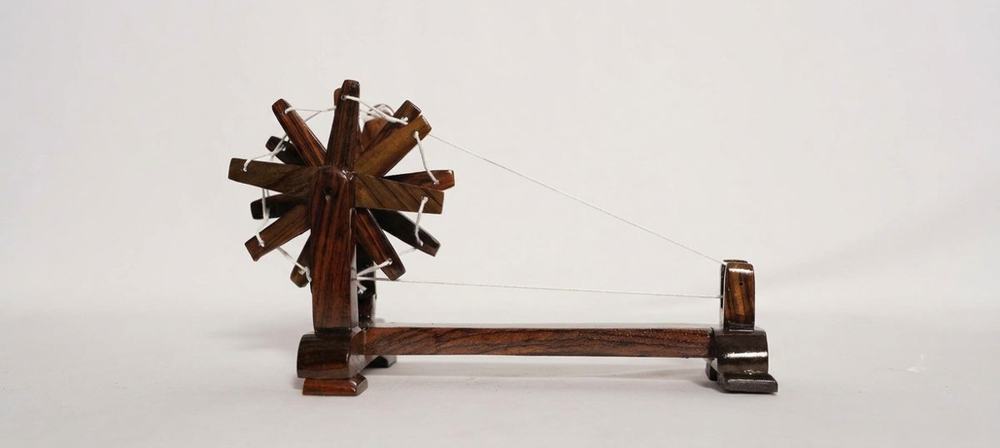
In 1929, Mahatma Gandhi wrote a design brief. The Charkha Sangh offered one lakh rupees for a better spinning wheel design: light, portable, usable by a woman for eight hours without strain. The winner had to hand the patent , so the tool could belong to everyone. Gandhi tested ideas himself too. While held in Yerawada Jail, he worked on a portable charkha that could be carried anywhere. The charkha brought along a whole chain of linked work. Khadi turned the charkha into a system of income, supply chain and uniform. The Salt March picked the one thing in every kitchen, so anyone could break an unjust law. His Sevagram hut had to use local materials and local artisans. Decades before “frugal innovation” became a phrase, he was setting constraints and designing within them. His tools were cheap, repeatable and open to all. As citizens protest peacefully again, what would a charkha for this century look like?
News Source: Techpedia, Sevagram Ashram
From Design Futures India DFI #043, 2 October 2026. Read the full edition →
-
How India Is Designing Dissent

Look closely at this season’s protests and you see design choices. In May, the Chief Justice compared jobless youth to cockroaches. Students made the insult an identity, swapping their profile pictures for cockroach avatars, and the Cockroach Janta Party drew over 20 million Instagram followers. In Delhi, students, mostly women, marched at night after an alleged gang rape. Walking at night was the demand itself. Protesters seeking the Chief Election Commissioner’s removal over voter-roll allegations, which the Commission denies, wore masks of his face and chained their hands. The state designs too: fixed protest hours, barricades, detention buses. And today, the CJP starts its nationwide protest from Mumbai on Gandhi Jayanti, borrowing the date of India’s most famous protester. His charkha asked little of its users. A cockroach avatar asks even less. Is cheap participation building lasting power, or only faster outrage?
From Design Futures India DFI #043, 2 October 2026. Read the full edition →
-
Sabarmati Ashram to undergo a massive redevelopment
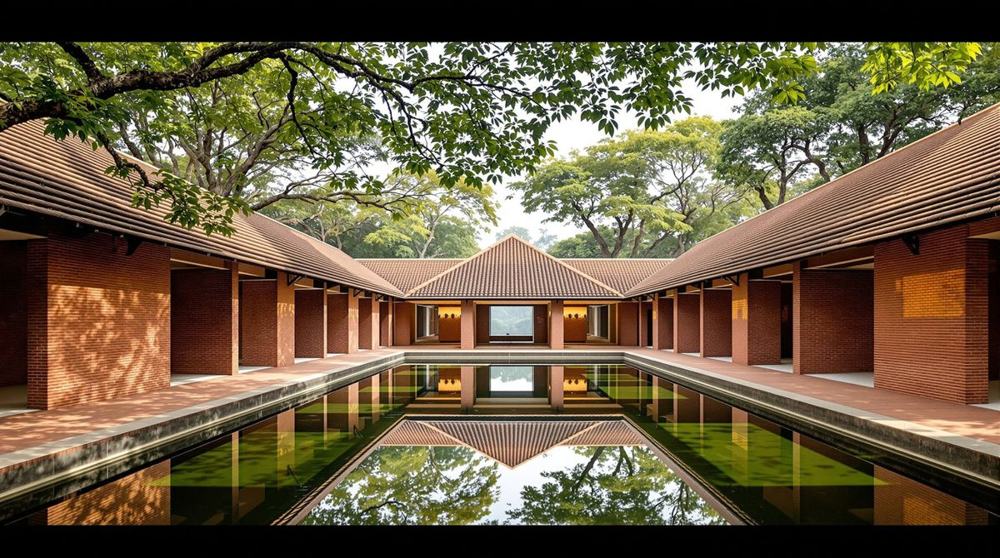
In 1963, Charles Correa built the museum at Sabarmati Ashram from brick, stone and tile, a modest building often read as an expression of swadeshi. Now the ashram is being rebuilt as a ₹1,200-crore memorial, expanding from five acres to 55. The central and Gujarat governments are implementing it jointly, with a masterplan and civil works by Bimal Patel’s HCP Design. Gandhi’s old buildings are being restored with their original materials: brick, teak and lime plaster bound with urad, jaggery and fenugreek. A ₹113-crore contract to design museums in 23 of them has gone to Ecofirst, a Tata engineering subsidiary. Its content passes through a nine-member advisory committee of historians, museologists and public figures. NID then reviews and approves the designs. Digital content is capped at 30%. Correa needed one modest building to hold Gandhi’s story. How many layers does it take now, and what gets lost in translation?
News Source: Indian Express
From Design Futures India DFI #043, 2 October 2026. Read the full edition →
-
Is the Mother of Democracy Scared of Cartoons?
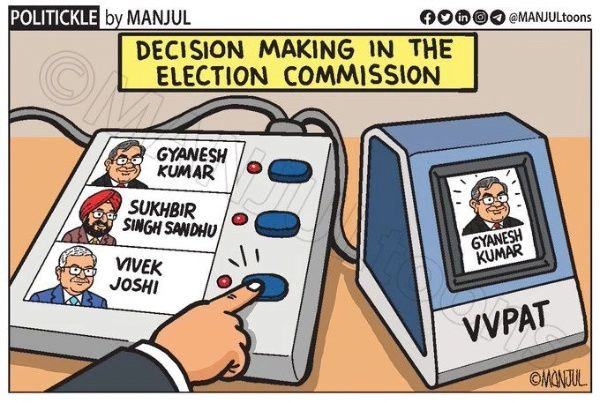
Satish Acharya and Manjul are India’s best-known editorial cartoonists. This year, their work met a new editor: a notification. On 24 and 25 September, cartoonists Manjul and Satish Acharya posted cartoons critical of the voter-roll revision now under national scrutiny. By 28 September, both their Instagram accounts were blocked in India, , under a legal provision meant to address threats to national security and public order. Their accounts on X, YouTube, Facebook and Threads, the last two also owned by Meta, still appear to work. The block is a switch, applied with no reasons made public. The Kerala Cartoon Academy condemned the bans, noting that many other cartoonists facing similar blocks stay silent. Cartoons are how a democracy laughs at its own power. When that laughter can be switched off quietly, account by account, who decides what the public gets to see?
News Source: The Daily Cartoonist
From Design Futures India DFI #043, 2 October 2026. Read the full edition →
-
Why India keeps painting women’s problems Pink?

Indian governments keep reaching for one design tool to signal care for women: pink. Delhi has pink toilets, pink coaches and now a Pink Saheli card. Elections have pink booths; several states run pink autos. Some of the policy underneath works. Free bus travel lifted women’s share of Delhi’s bus riders from 25% to 33%, with the biggest employment gains among poorer women. But the pink itself rarely helps. Bengaluru’s pink auto subsidy found no women takers; Pune has 17 pink e-autos after two years. Now schools are adding pink rooms for menstrual rest, where a pink door can announce to a whole class who is on her period. Psychologists Glick and Fiske describe “benevolent sexism”: well-meant protection that still frames women as fragile. Pink marks women as a separate category, accommodated rather than equal. Should safety, mobility and dignity come in a colour, or as a right?
News Source: Daily Pioneer
From Design Futures India DFI #043, 2 October 2026. Read the full edition →
-
India’s Own Design System, now in version 3.0
UX4G is the Government of India’s design system, built by MeitY to make public websites and apps easier to use. Version 3.0 offers 50+ components shaped by real government workflows, from a six-box OTP field to a three-level grievance escalation tree. Its biggest claim: teams inherit DPDP consent flows, GIGW 3.0 accessibility standards and Right to Service accountability by default. There are three ways to use it. Designers can search “UX4G Design System” in Figma’s Community tab, duplicate it and publish it as a team library. Developers can install it via CDN or npm, with setup guides for HTML, React and Angular. The Theme Craft 2.0 plugin lets anyone re-skin components without breaking their accessibility. Try redesigning a service you know, like a ration card or scholarship form, using only UX4G parts. Where does the system fall short for real users? That gap is your contribution.
News Source: UX4G
From Design Futures India DFI #043, 2 October 2026. Read the full edition →